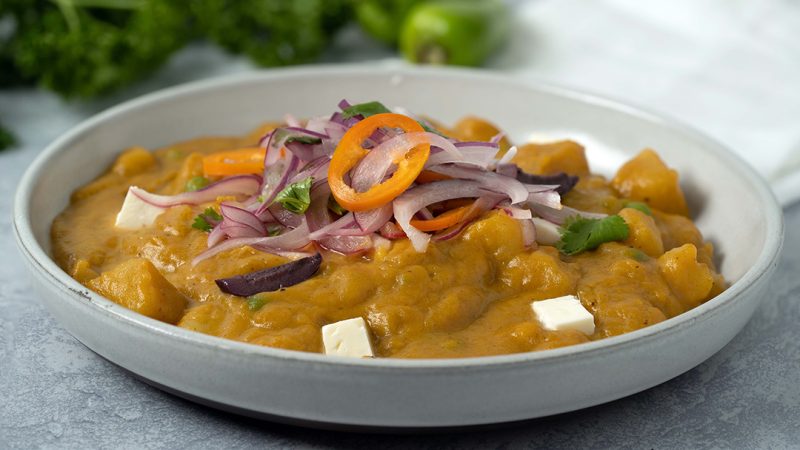
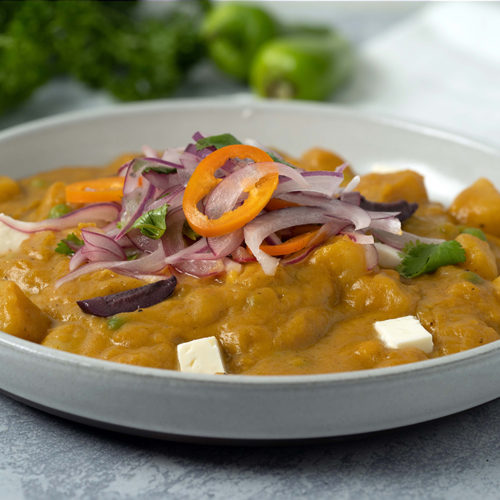
Locro de Zapallo: Peruvian Pumpkin Stew (Spicy & Creamy)
Disclosure: As an Amazon Associate I earn from qualifying purchases. Some links in this post are affiliate links, meaning I may earn a small commission at no extra cost to you.
Locro is one of those dishes I never had to think about growing up — it was just there. My grandmother Ismelda, the one I grew up with, used to make it with fish on some days and chicken on others, and no matter which version it was, it always tasted right. That’s the best way I can describe it. Not fancy. Not complicated. Just right.
Now I run a house full of kids and I understand something my grandmother probably knew all along: finding food that everyone likes, that fills everyone up, and that doesn’t take all day to make is one of the hardest things about cooking for a family. Locro de Zapallo does all three. It’s warm, creamy, subtly spicy, and deeply satisfying in the way that only simple food can be. A bowl of this and a plate of rice and you’re done. Everyone is happy. Nobody is asking for something else.
I’ve made this dish more times than I can count. It’s the first thing I make when the weather starts to turn cold, it’s what I cook when someone in the house isn’t feeling well, and it’s what I bring to any gathering where I need to feed a crowd without stress. Every time I make it I think of Ismelda’s kitchen in Lima — and every time it tastes exactly the way it should.
Locro de Zapallo is a traditional Peruvian pumpkin stew, creamy, slightly spicy, and built around a base of soft, broken-down squash. “Locro” refers to a family of thick stews made throughout the Andes, and “zapallo” is the Peruvian word for pumpkin or squash. Together they describe a dish that’s been cooked in Peruvian homes for generations.
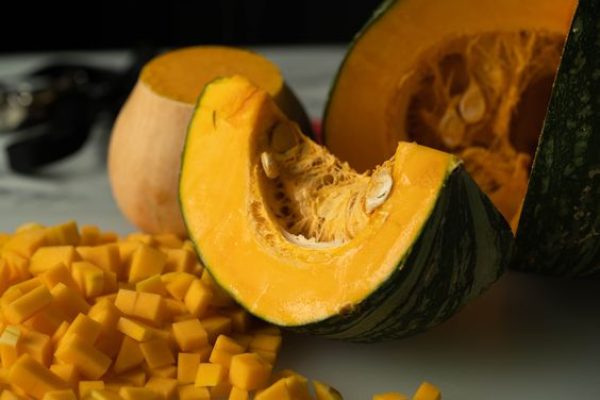
The version most common in Lima uses Zapallo Macre, a large, dense, deeply orange variety of Cucurbita Maxima that grows in parts of Peru and South America. It has a starchy, sweet flesh that breaks down as it cooks, creating a naturally thick, creamy base without needing to add cream or flour. When you add evaporated milk at the end, you get something that’s rich and velvety without feeling heavy.
What makes the Peruvian version distinct from other Andean locros is the pepper combination. In Peru, the flavor base comes from ají amarillo, ají panca, and huacatay, three ingredients that give the stew its characteristic color (that deep orange-gold), its warmth, and that specific Peruvian aroma that’s hard to describe but immediately recognizable if you grew up eating it.
Other countries near Peru have their own versions; Ecuador, Argentina, and Bolivia all have dishes called locro with similar concepts but different ingredients and flavor profiles. The Peruvian version is what we’re making here.
This is where the dish goes from “pumpkin stew” to “Peruvian pumpkin stew.” The combination of peruvian ingredients is what gives Locro de Zapallo its color, its warmth, and that specific flavor that no other pumpkin stew has.
Ají Amarillo: The yellow-orange Peruvian pepper that provides the characteristic heat and fruity brightness. It’s medium-hot with a flavor that’s floral and fruity rather than just spicy. This is the pepper that wakes the whole stew up.
Ají Panca: A dried dark-red Peruvian pepper with a deep, slightly smoky, earthy flavor and very mild heat. It contributes color (that deep orange-gold you see in the stew) and a richness that rounds out the brightness of the ají amarillo.
Huacatay: Peruvian black mint, an herb with a flavor unlike anything else. It’s slightly anise-like, slightly citrusy, deeply herbal, and completely Peruvian. In northern Peru, some regions add loche (a local squash) alongside the huacatay for an even more aromatic result. The combination of loche and huacatay is hard to replicate here in the US; both are very difficult to find, but huacatay paste alone gets you most of the way there.
Together these three create a flavor base that is specifically, unmistakably Peruvian. Skip any one of them and the stew is still good. Use all three and it tastes like Lima.
Squash and most vegetables are at any supermarket. The peppers and Huacatay are the only things you need to seek out — and they’re easier to find than they used to be.
Ají Amarillo Paste: Available at Latin grocery stores or on Amazon. I use Inca’s Food Ají Amarillo Paste, a Peruvian brand with consistent flavor. [Link: Inca’s Food Aji Amarillo Paste on Amazon]
Ají Panca Paste: Same availability. Inca’s Food makes this too, and it’s my go to brand. [Link: Inca’s Food Aji Panca Paste on Amazon]
Huacatay Paste: The hardest of the three to find in stores. Amazon is the most reliable option. [Link: Inca’s Food Huacatay Paste on Amazon]
Queso Fresco: Available at most American supermarkets in the Hispanic dairy section, or at any Latin grocery store. Cotija cheese is a good substitute if you can’t find queso fresco — it has a similar salty, crumbly texture.
Evaporated Milk: Any supermarket.
Let the squash break down naturally
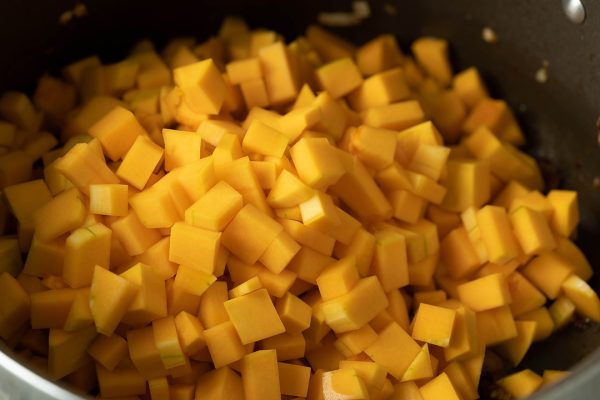
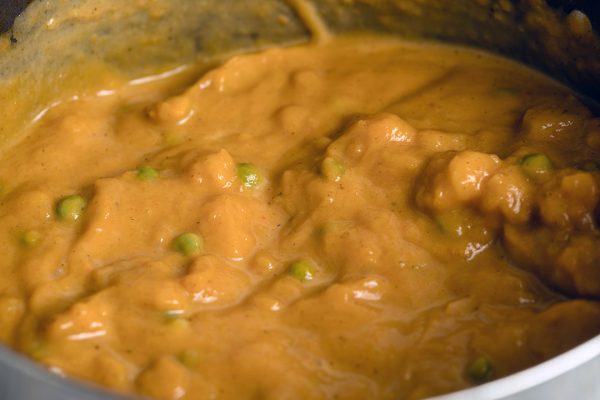
Resist the urge to blend the whole stew. The best locro has a thick, naturally creamy base with some soft chunks still visible, not a smooth purée. Let the squash cook until it starts falling apart on its own, then use a spoon to break down about half of it. That texture contrast, creamy base with soft chunks, is what makes the stew feel substantial.
Use residual heat for the peas.
If using frozen peas, turn off the stove before adding the peas. Put the lid on and let the residual heat cook them for 2-3 minutes. Peas cooked on active heat turn grey and mushy. Peas cooked in residual heat stay bright green and slightly firm. It’s a small detail that makes a visible difference in the bowl.
Season in layers, not at the end.
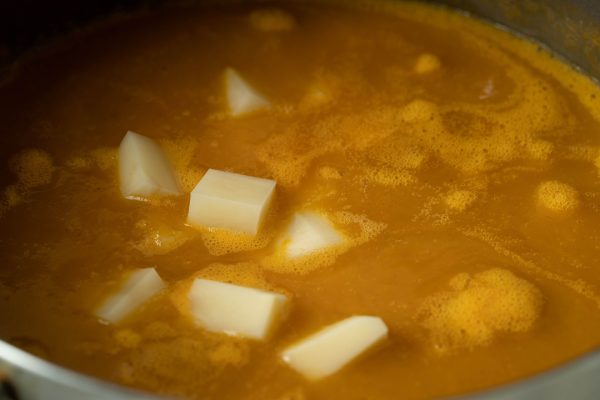
Add a pinch of salt when you sauté the onion and garlic. Taste again after you add the squash. Taste again after the potatoes. Final seasoning adjustment after the milk. Seasoning in layers means each component gets properly seasoned as it cooks, rather than trying to fix everything at the end with a large amount of salt.
Stir from time to time during cooking The squash settles to the bottom of the pot as it breaks down, and the natural sugars can scorch if you leave it completely alone. A stir every 5 minutes or so is enough to prevent any burning on the bottom. This is especially important in the last 10 minutes when the stew has thickened.
If you are in Peru, and you have access to Zapallo Macre go for it. I suggested on the recipe Kabocha and butternut squashes since both have a similar texture and flavor to the Zapallo Macre
This is a great fall dish; the sweetness and texture of the squashes make this dish really good.
if your squashes take too long to fall apart, you can use a hand blender or blender to mush them.
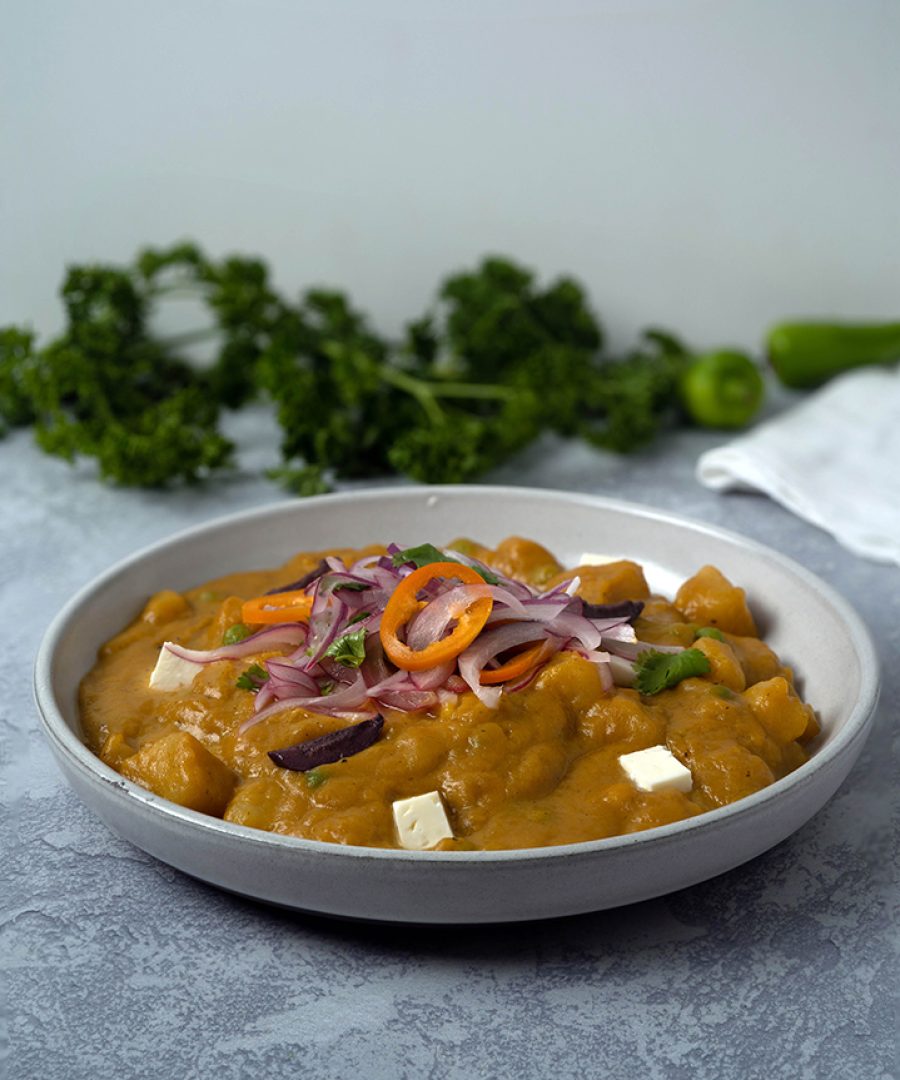
Sarsa Criolla is the traditional topping — the pickled red onion relish with ají amarillo and lime that you’ll see in the photos. It adds brightness and acidity that cuts through the richness of the stew. Don’t skip it. [Link to Salsa Criolla post]
White rice alongside is the standard Peruvian pairing. A scoop of rice next to a bowl of locro is how this dish is eaten in Lima.
Queso fresco on top or folded in adds salty contrast to the sweet squash. If you’re serving this to guests who haven’t had locro before, the cheese on top is also visually striking.
Bread for dipping, not traditional but completely valid. The thick, creamy broth is exactly what bread was made for.
Locro de Zapallo stores exceptionally well and often tastes better the next day after the flavors have had time to deepen.
Refrigerator: Up to 3 days in a sealed container. The stew will thicken further as it cools — this is normal. Add a splash of stock or water when reheating to bring it back to the right consistency.
Reheating: Medium-low heat on the stovetop, stirring frequently, with a little added liquid. Microwave works fine for individual portions for 2-3 minutes, stirring once halfway through.
Freezing: Yes, locro freezes well. Freeze for up to 2 months. Note that potatoes can change texture slightly when frozen and thawed — they become a bit grainy. If you plan to freeze the stew, consider leaving the potatoes out and adding freshly cooked potatoes when you reheat. The squash base freezes perfectly.
What does locro taste like?
Creamy, slightly spicy, earthy, and warm — with a natural sweetness from the squash that balances the heat of the ají amarillo. The huacatay adds an herbal note that’s hard to describe but immediately distinctive. The overall flavor is rich and comforting without being heavy. If you’ve eaten Peruvian food before, the ají amarillo + ají panca combination will be familiar — it’s the same flavor base that shows up in many Peruvian dishes.
Can I use canned pumpkin?
Not recommended. Canned pumpkin is already cooked and puréed — it will make your locro too smooth and too uniform in texture. You want the squash to start as cubes, break down naturally during cooking, and create a thick base with some texture. Fresh or frozen cubed squash is the right ingredient here.
Can I make it in a slow cooker?
Yes. Sauté the onion, garlic, and pepper pastes in a pan first (don’t skip this step — you need that frying action). Transfer to the slow cooker with the squash, potatoes, and stock. Cook on low for 6-7 hours or high for 3-4 hours. Add the milk and peas in the last 30 minutes. Queso fresco goes in at serving.
What is huacatay and can I skip it?
Huacatay is Peruvian black mint, an herb with a flavor unlike anything else. It’s slightly anise-like, slightly citrusy, and completely unique to Andean cooking. You can skip it if you can’t find it, and the stew will still be very good. But huacatay is available on Amazon as a paste, and adding it takes the dish from “pumpkin stew” to “Peruvian pumpkin stew.” I’d encourage you to seek it out.
Is this the same locro as the Argentinian locro?
Different dish, same name. The Argentinian locro is a thick stew made with corn, beans, and pork, very hearty and meaty, and quite different in flavor and texture from the Peruvian version. Ecuador and Bolivia also have their own locros. The Peruvian locro de zapallo is specifically built around squash and the Peruvian pepper combination, making it lighter and more vegetable-forward than its South American cousins.
How spicy is Locro de Zapallo?
Mildly to moderately spicy depending on how much ají amarillo you use. With 2 tablespoons of paste the stew is warm and flavorful without being overwhelming; kids can generally handle it. The ají panca adds almost no heat (it’s about color and earthy flavor) and huacatay adds none at all. The evaporated milk at the end softens the heat further. Want more heat? Increase ají amarillo to 3 tablespoons. Want it milder? Drop to 1 tablespoon or less.
Is Locro de Zapallo vegetarian?
Could be. Use vegetable stock, and if you skip the queso fresco, it’s also vegan. My grandmother Ismelda served it with fish or chicken on the side. That’s the traditional Peruvian approach: locro as the main event, protein as an accompaniment. Grilled chicken thighs or pan-fried white fish alongside work beautifully if you want to add protein.
Made This Locro de Zapallo? Tell Me About It.
This is one of those recipes that’s close to my heart — I hope it finds its way into your regular rotation the way it found its way into mine.
If you made it, leave a star rating on the recipe card above ⭐ — it genuinely helps other home cooks find this recipe when they’re looking for something warming and different.
And if you have questions about the squash substitutions, the pepper pastes, or anything else — drop them in the comments below. I read every one.