Disclosure: As an Amazon Associate I earn from qualifying purchases. Some links in this post are affiliate links, meaning I may earn a small commission at no extra cost to you.
My family was never big on making desserts at home. For them, it was always easier to just buy them, and Mazamorra Cochina was one of those classics we never missed. I had the privilege of growing up in a district in Lima with a massive local market. At night, when the formal shops closed, street carts would roll in loaded with an incredible variety of Peruvian desserts. They brought old-school sweets, modern variations, and adapted recipes, and that was where I dedicated myself to trying everything.
I used to walk around those illuminated food stands with my parents as a kid. Even though this murky-colored pudding was usually served just as a secondary side to Mazamorra Morada or Arroz con Leche, I always loved eating it completely on its own. It is a very humble-looking dessert, but incredibly comforting, and deeply rooted in the history of Peru’s street food.
Years later, when I finally learned how to make it, I felt happy being able to recreate those late-night flavors in my own kitchen. This version uses the traditional base ingredients. I tried to keep the recipe as simple as possible so anyone, anywhere, could replicate it all without sacrificing the essence of the dessert or the flavor profile.
What Is Mazamorra Cochina?
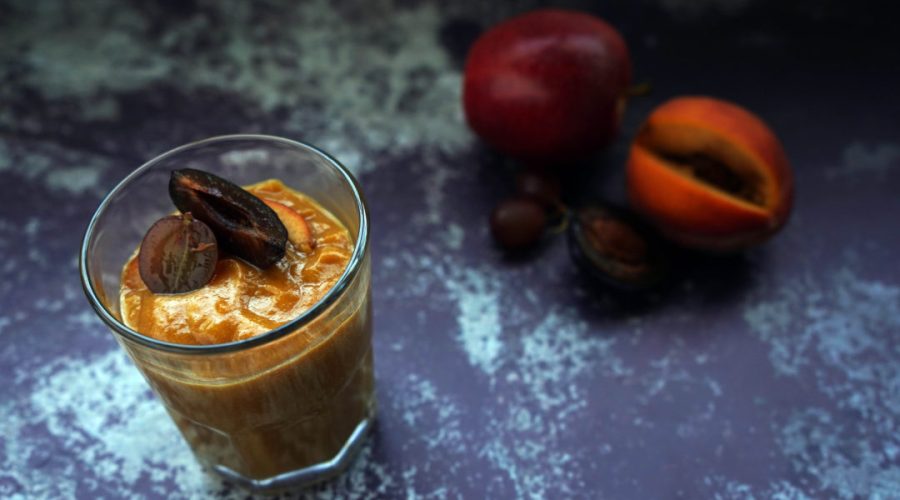
Mazamorra Cochina is a traditional Lima dessert whose peculiar name, which directly translates to “dirty porridge”, comes purely from its appearance. When you mix dark, unrefined Piloncillo (chancaca) with the starches, sweet potato, and squash, the pudding takes on a murky, opaque brown color. It is not actually “dirty” in any way; it is simply a colloquial visual description that stuck in Peruvian popular culture.
The base of this sweet is a rustic puree of yellow sweet potato and macre squash, a massive pumpkin variety heavily consumed in Peru. These ingredients are boiled with warm spices like cinnamon and cloves, sweetened with chancaca, and slightly thickened with starch. The result is a dense, earthy dessert with a deep caramel flavor.
If You Are in the US
In Peru, we use Zapallo Macre in quite a number of dishes, but it is difficult to find fresh in US supermarkets. The perfect replacement for this particular dish is Butternut Squash, as it has a very similar texture and natural sweetness. Standard yellow sweet potatoes work exactly like the Peruvian variety.
Chancaca, which is unrefined cane sugar sold in a solid block, can be found in Latin markets, often labeled as panela or piloncillo. If you do not have a Latin market nearby, you can order online.
To thicken the pudding, the original recipe requires potato starch (chuño), which is easily found in Asian supermarkets or online. If you have trouble finding it, standard cornstarch is a completely acceptable substitute, though the final texture will be slightly less glossy.
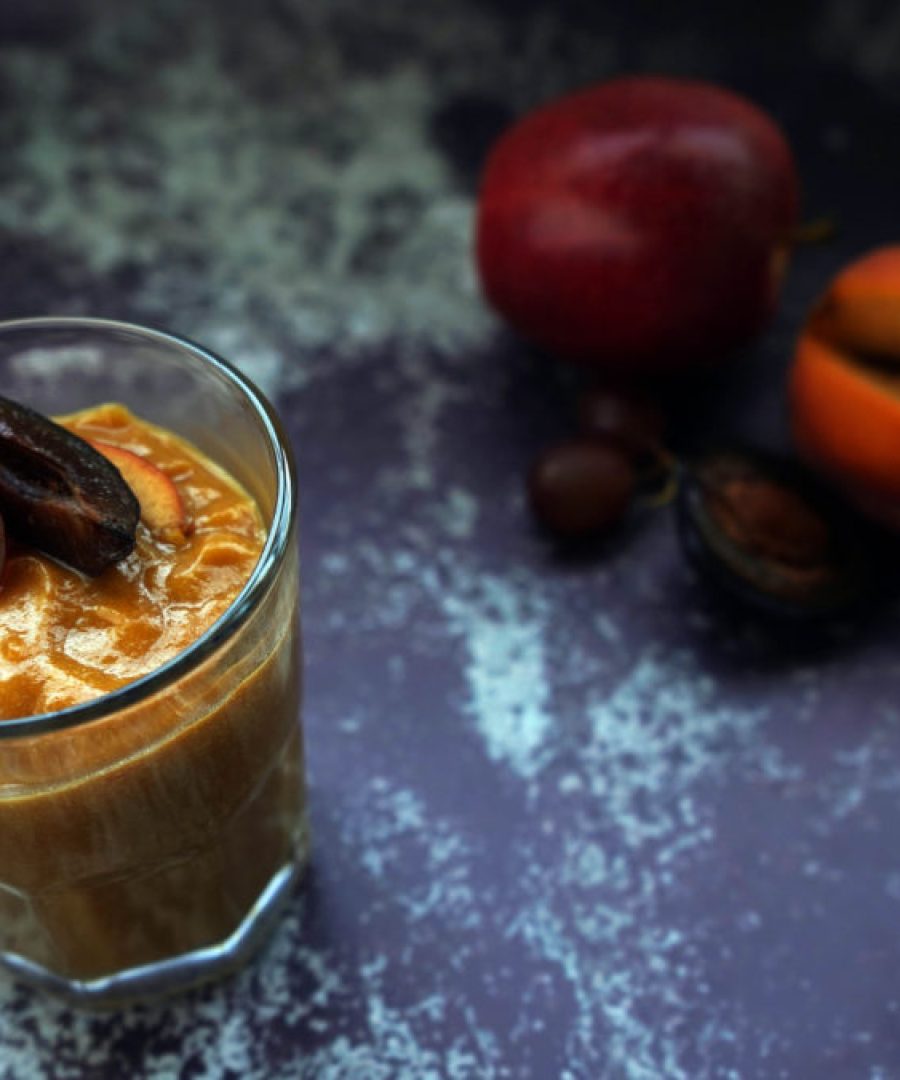
A humble and comforting traditional Peruvian dessert made from a puree of sweet potato and butternut squash, sweetened with panela, and balanced with a fresh hint of orange juice.
Course Dessert
Cuisine peruvian
Keyword Mazamorra cochina recipe, Peruvian sweet potato pudding, squash and sweet potato dessert, traditional Peruvian desserts
Prep Time 10 minutesminutes
Cook Time 35 minutesminutes
Total Time 45 minutesminutes
Servings 6people
Author Brandon Castillo
Ingredients
125grof "Chancaca" / Panelaor Raw Sugar
250grof Butternut squashno seeds, peeled and diced
250grof Sweet potatoespeeled and diced
1.5cupsof Evaporated milk
3cloves
pinchof Salt
2Ceylon cinnamon stick
1tablespoonof potato starch
Juice of one Orange
2cupsof Water
Instructions
In a pot add two cops of water , squash , sweet potatoes , cinnamon , cloves , let it cook until squash and potatoes are soft. (Save 1 cup of the squash's cooking water)
While that is cooking dissolve the "panela" with some water(1/2 cup), skip this step if you are using granulated "panela"
Once your squash & sweet potatoes are cooked, remove cinnamon and cloves, then process the squash and sweet potato on a blender, with evaporated milk and 1 cup of the "cooking water of the squash "
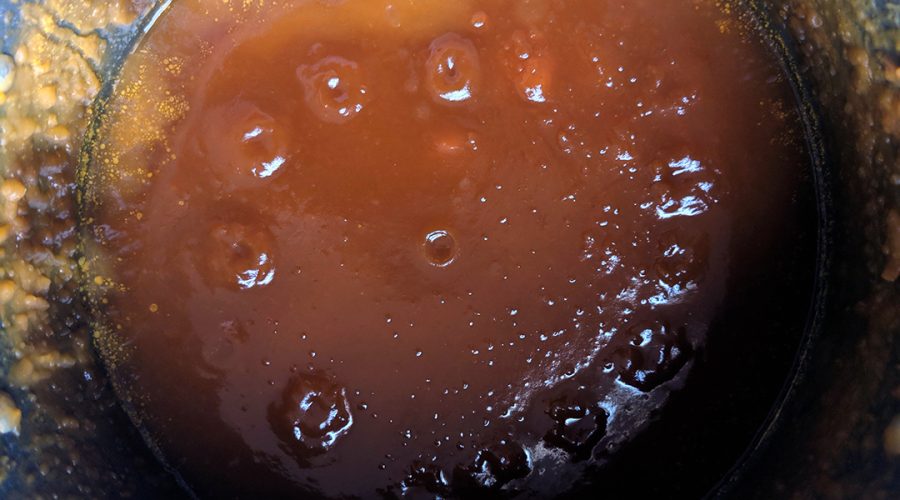
Transfer mix to a pot add the salt, starch(dissolved in a teasppon of water), panela and let it boil then finish the dish with the juice of the orange, let it rest for at least 15 min before eating , you can always add sugar (brown sugar) if you want to make it more sweet.
Notes
In Peru, we call the pumpkin "Zapallo" especially the "Macre and Loche" varieties.
This recipe can be made with Kabocha, Cucurbita moschata 'Butternut', or any pumpkin that is not fibrous and gets soft when cooked.
Other names by which Panela is known is Chancaca, Pilonsillo, Raspadura, Papelón, Raw sugar.
My go-to list of authentic ingredients and essential kitchen gear. Read the Guide
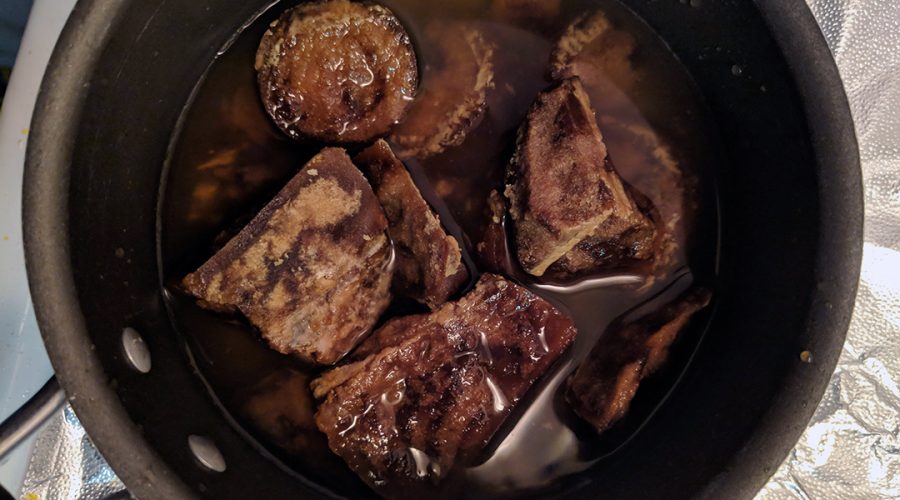
Dissolve the panela beforehand If you are using a solid block of chancaca or panela, boil it with a little water before adding it to the main pot. This prevents hard chunks of sugar from remaining undissolved in the final dessert. If you use granulated panela, you can skip this step and add it directly.
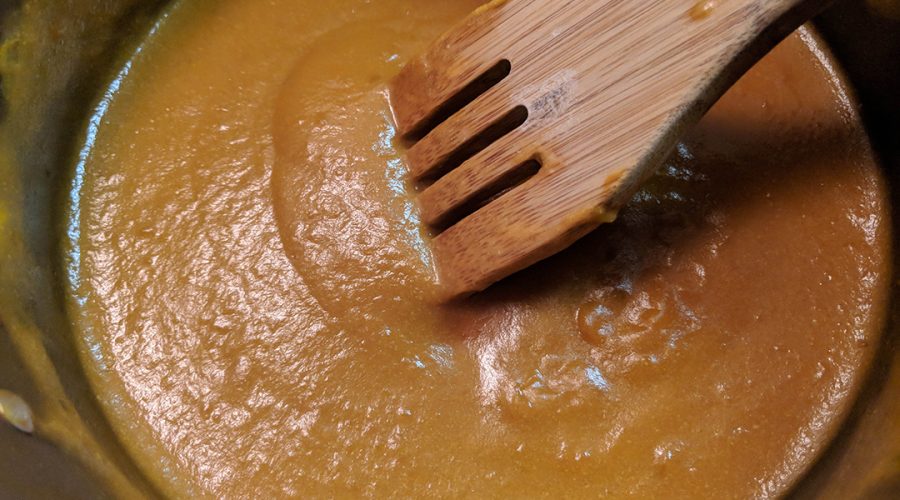
Cook the vegetables until they fall apart The squash and sweet potato must boil with the spices until they are extremely soft, almost falling apart on their own. This makes blending much easier and ensures the texture of the dessert is completely velvety with no annoying fibers.
Dilute the starch in cold water Never add dry potato starch directly to the hot pot. Form a smooth, liquid slurry with a little cold water first to prevent hard lumps of dough from forming and ruining the texture of the pudding.
Do not skip the orange juice Adding the juice of one fresh orange right after turning off the heat is a critical step. The acidity and citrus aroma balance the flavor.
Let it rest before serving This dessert needs at least 15 minutes off the heat before eating. As it loses temperature, the starch sets the texture, and the flavors of the cinnamon and clove integrate much more deeply.
Piloncillo, Panela, Chancaca, unrefined cane sugar, has a particular taste and aroma that adds a lot to a dish.
I love the aromas that are released when you are making this dish.
I love the texture of this dish, just let it rest at least 15 min so the flavors and texture set properly.
What to Serve With Mazamorra Cochina
As I used to see at the dessert carts in Lima, this pudding is rarely eaten entirely on its own on the streets. It is typically served as an accompaniment in a combined plate, resting right next to a portion of Arroz con Leche or in the same bowl with Mazamorra Morada to create a contrast of textures and acidity.
However, eating it alone in a deep bowl is my favorite way to enjoy it at home. It is served warm, sprinkled with a little ground cinnamon on top. You can pair it with some toasted nuts, like chopped pecans or walnuts, to give a crunchy contrast to the smooth texture of the puree.
Storage
Store any leftover portions in an airtight container in the refrigerator for up to 4 days. Like other desserts thickened with starch, the pudding will set and become quite firm as it spends hours in the cold.
I do not recommend freezing this dessert.
Frequently Asked Questions
Why is it called Mazamorra Cochina? The name is purely visual. The mixture of the dark chancaca with the yellow purees results in a murky brown color that, at first glance, looks “dirty” (cochina). Despite the name, it is one of the most delicious desserts in Peruvian gastronomy.
Can I use brown sugar instead of chancaca? Yes, you can replace it with dark brown sugar if you cannot find panela. However, you will lose that deep, smoky, molasses-like flavor that is the signature of this traditional dessert.
Is evaporated milk mandatory? In traditional Lima recipes, yes, as it provides a very specific cooked-milk flavor that complements the sweet potato perfectly. You can use regular whole milk, but the dessert will be slightly less rich and substantial.
Can I make this recipe without blending the ingredients? If you prefer a more rustic and irregular texture, you can simply mash the well-cooked squash and sweet potato with a fork or a potato masher instead of using the blender. It will have pleasant, chunky bites.
Will the orange juice curdle the milk? It will not curdle as long as you add it at the very end, right after turning off the heat, and integrate it by stirring quickly. If you let the orange juice boil together with the evaporated milk, you run the risk of the dairy separating.
Brandon Castillo - Peruvian Chef & Recipe Developer
Brandon Castillo is a Peruvian chef and recipe developer based in New York. Born and raised in Peru, he shares authentic Peruvian recipes adapted for home cooks in the United States. You can find him on Instagram, TikTok, and YouTube @chewinghappiness.
Tried it? Let me know. If you made this recipe at home, let me know what you thought in the comments below! And if you take a photo of your plate, tag me on Instagram at @Chewinghappiness so I can see it.
2 Comments
Leah
on October 18, 2018 at 7:14 pm
This sounds good!. Where would you buy potato starch? I don’t think I have ever seen it.



2 Comments
This sounds good!. Where would you buy potato starch? I don’t think I have ever seen it.
International Grocery store is a great place to look , if you can not find it there , you can order it on Amazon