Disclosure: As an Amazon Associate I earn from qualifying purchases. Some links in this post are affiliate links, meaning I may earn a small commission at no extra cost to you.
When I was 19, I used to sell alfajores to make extra cash.
I was a full-time student, cooking at home, taking care of the house. No full-time job, just hustle. My aunt Irma handled distribution and logistics, and together we pushed over 200 alfajores. My family kept me going and this recipe kept working.
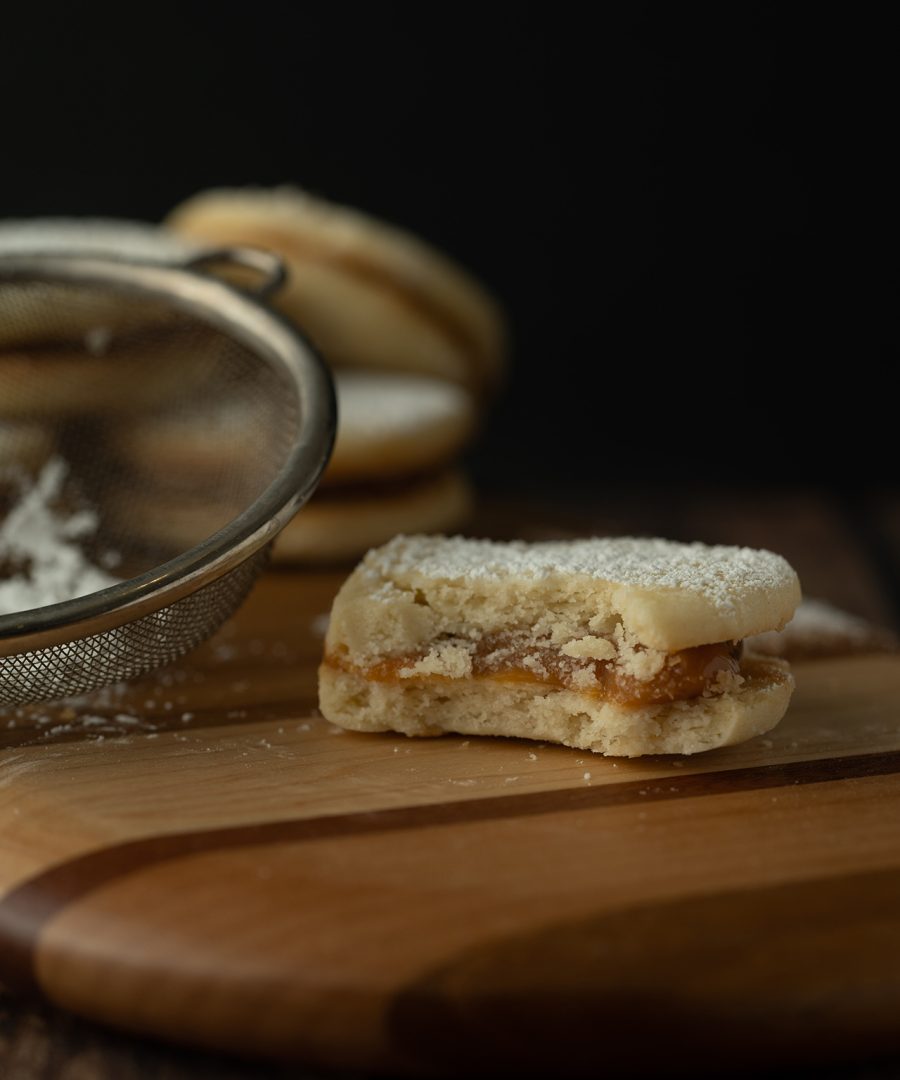
I tell you this because I need you to trust this recipe. I have made it more times than I can count. I know where it can go wrong and I know exactly what makes it right. When you bite into a good alfajor it should feel like it’s barely there, soft, crumbly, just holding together long enough to get the dulce de leche into your mouth. That texture is not an accident. It’s in the method.
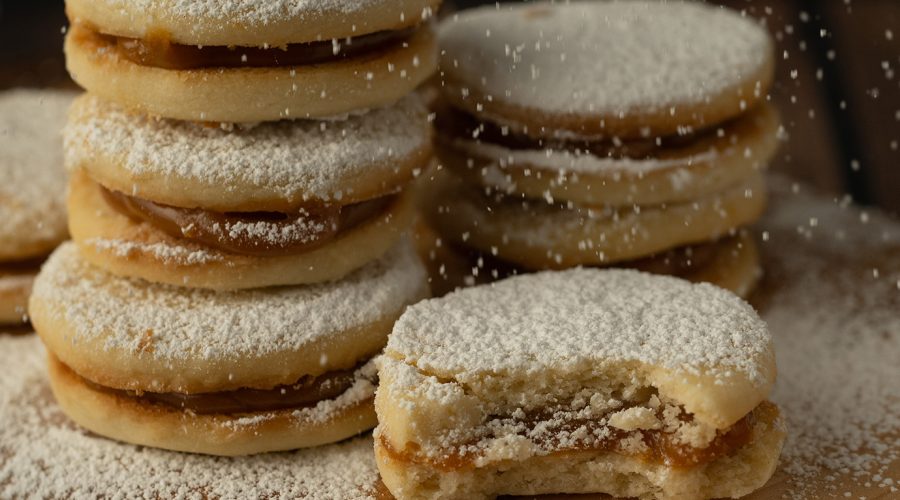
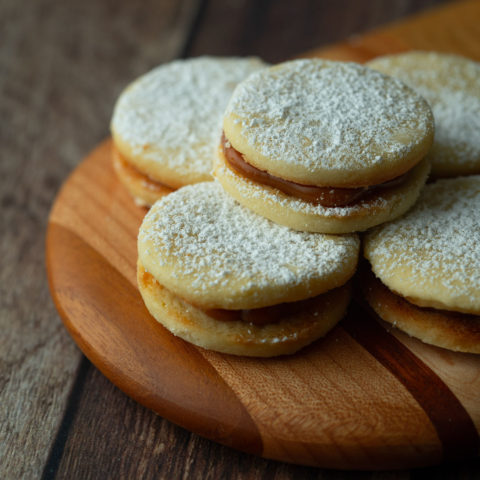
Alfajores are one of the most beloved desserts across Latin America. Two rounds of shortbread cookie, sandwiched together with dulce de leche (also called manjar blanco in Peru), and dusted with powdered sugar on top. That’s the whole thing. Simple ingredients, precise technique, unforgettable result.
Most people compare alfajores to macarons, and while they’re both sandwich cookies, the texture and flavor are completely different. Alfajores are buttery and crumbly, not chewy. The cookie itself is mild, almost neutral, so the dulce de leche is the star.
The name alfajor comes from the Arabic “al-hasú,” meaning filled or stuffed. When Spain colonized South America, they brought the recipe with them. Over time, local nuns adapted it using cheaper, locally available ingredients, and that’s how the Latin American version we know today was born. The Peruvian alfajor uses pastry flour over all-purpose flour for a delicate, crumbly dough that bakes pale and light, never golden brown.
If you’ve had alfajores before, there’s a good chance they were Argentine. Argentina’s version is everywhere in the US at Latin grocery stores, usually chocolate-coated or wrapped in white chocolate. They’re good, but they’re different.
The cookie: Peruvian alfajores use a plain shortbread dough with butter, flour, and a little sugar. Argentine alfajores use cornstarch as the main ingredient, which makes them even more crumbly and dry. Both melt in your mouth, but in different ways.
The coating: Peruvian alfajores get a simple dusting of powdered sugar. Argentine ones are often dipped in chocolate or rolled in coconut.
The filling: Both use dulce de leche, but the Peruvian version calls it manjar blanco, which is slightly lighter in color and flavor than the Argentine dulce de leche.
My recipe is the Peruvian version, the one I grew up making. If you want to try a cornstarch version, I have that post too: cornstarch-alfajores
Dulce de leche (or manjar blanco in Peru) is milk and sugar cooked slowly until it reduces into a thick, golden, deeply caramel spread. It’s not the same as caramel sauce, which is made from sugar only. Dulce de leche has milk protein in it, which gives it a creamier, more complex flavor and a thicker, spreadable consistency.
You can make it at home by simmering a can of sweetened condensed milk in water for 2 to 3 hours, but for this recipe I recommend buying it ready-made. It’s one less variable to manage when you’re already focused on getting the dough right.
Where to buy dulce de leche in the US: Most Latin grocery stores carry it. In regular supermarkets, look in the international aisle or near the peanut butter. You can also order it on Amazon with fast shipping. I recommend La Lechera or Nestlé Manjar Blanco:“La Lechera Dulce de Leche on Amazon”
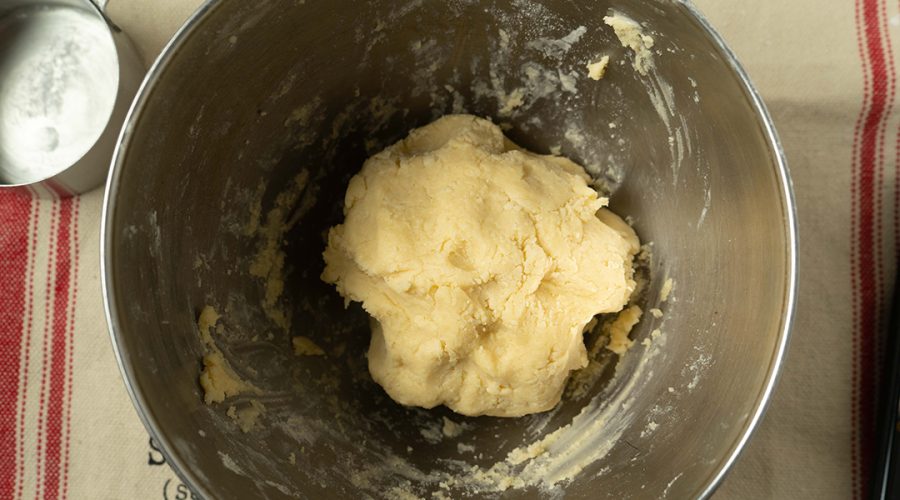
Do not overwork the dough.
This is the most important rule. The moment you start kneading or pressing too hard, you develop gluten in the flour and the cookies come out hard and tough instead of crumbly and soft. Mix until the dough just comes together, press it gently into a disc, and stop.
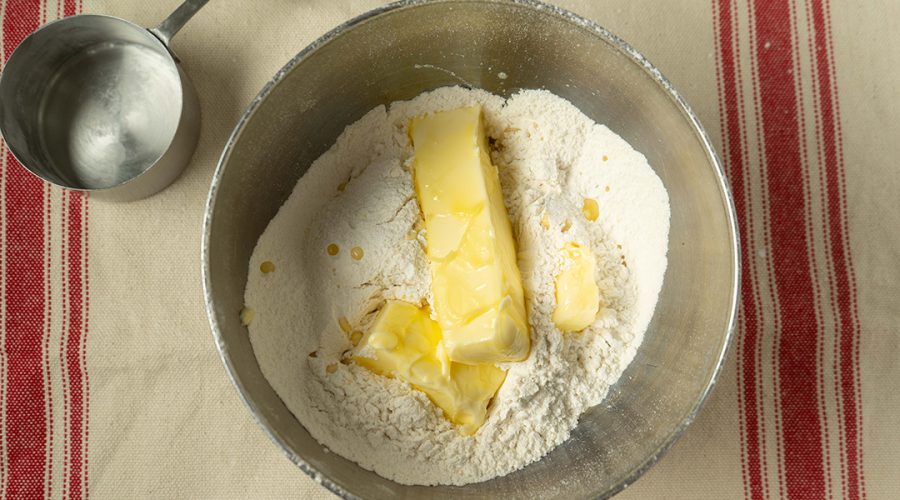
Butter must be at room temperature.
Cold butter won’t incorporate properly and warm/melted butter makes the dough greasy and flat. Room temperature means you can press your finger into it and it leaves an indent without resistance.
The dough needs to rest. 30 minutes minimum in the refrigerator after mixing.
This relaxes the gluten and firms up the butter so the cookies hold their shape in the oven. Do not skip this step.
Roll to exactly 4mm.
Too thin and they overbake and crisp up. Too thick and the ratio of cookie to filling is off. 4mm is the sweet spot. A rolling pin with thickness rings makes this easy.
Bake at 350F (180C) for 9 minutes, no more.
They should come out pale, not golden. If they look done they’re overdone. They firm up as they cool on the tray, so resist the urge to add more time.
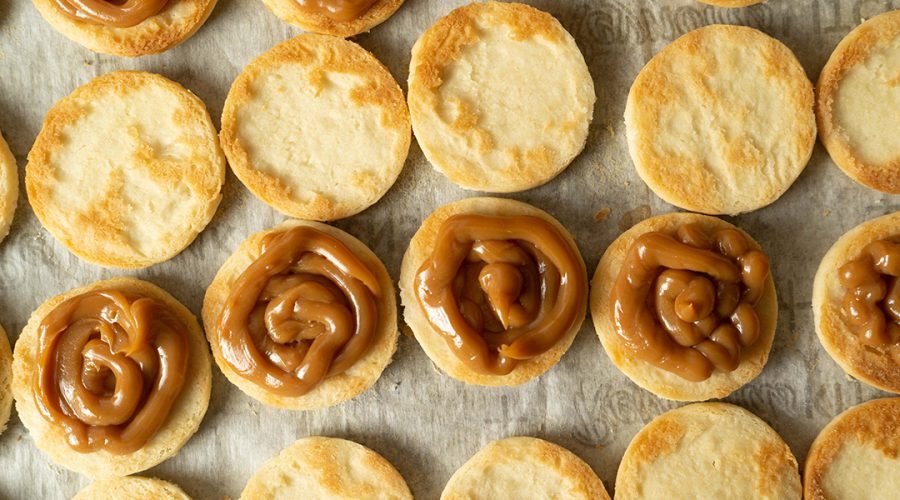
Let them cool completely before filling.
Warm cookies will melt the dulce de leche and it will run out the sides. Completely cool, then fill.
Don’t overfill. A thin, even layer of dulce de leche is enough.
Too much and it squeezes out when you bite, not what you want.
Keep the bottom rack empty.
Alfajores burn fast on the bottom. Use the middle rack and if your oven runs hot, put an empty tray on the lower rack as a heat shield.
Sifting your ingredients will remove any lumps and add some softness to the alfajores.
letting the dough rest is an important step, just make sure to not overwork the dough otherwise, the alfajores will end really hard.
Be sure the oven is at the right temp, and bake them for 9 min, then let it rest on the same tray it will be still cooking, try to keep the cookies away from the bottom part (near the fire) of the oven since they will burn really fast.
Pastry dough for alfajores can feel dry and crumbly before it comes together, especially if your kitchen is dry or your flour is very fine. This is normal. Press it together with your hands rather than adding liquid. If it absolutely won’t hold, add one teaspoon of cold water and try again.
If the dough crumbles when you cut the circles, it’s been chilled too long and is too cold. Let it sit at room temperature for 5 minutes and try again.
Unfilled cookies: Keep up to 5 days in an airtight container at room temperature. This is the best way to make ahead: bake the cookies, store them, fill them the day you serve.
Filled alfajores: Keep 3 days refrigerated in a sealed container. Bring to room temperature before serving, cold alfajores lose their crumbly texture.
Freezing: Freeze the unfilled baked cookies for up to 1 month. Thaw at room temperature and fill when ready to serve. Do not freeze filled alfajores, the dulce de leche changes texture when frozen and thawed.
Why are my alfajores hard instead of crumbly?
The dough was overworked. Once gluten develops in the flour it makes the cookies tough. Next time, mix only until the dough just comes together and handle it as little as possible.
Can I use all-purpose flour instead of pastry flour?
Yes. Pastry flour gives a slightly more delicate, crumbly result because it has less protein. All-purpose flour works well and is what most home cooks in Peru use. I mention both in the recipe card for exactly this reason.
My cookies spread in the oven. What happened?
The butter was too warm when you mixed the dough, or the dough wasn’t chilled long enough before baking. The dough needs at least 30 minutes in the refrigerator before it goes in the oven so the butter is firm and holds the shape.
Can I make the dulce de leche at home?
Yes. Submerge an unopened can of sweetened condensed milk in water in a pot, making sure the can is fully covered, and simmer for 2 to 3 hours. Let it cool completely before opening. The result is thick, golden dulce de leche. Watch the water level and top it up so the can never runs dry.
How many alfajores does this recipe make?
25 small alfajores from the base recipe. The size of your cookie cutter determines the final count. A smaller cutter gives you more cookies with a higher cookie-to-filling ratio. A larger cutter gives you fewer, more generous alfajores.
Can I add flavor to the dough?
Yes. A teaspoon of vanilla extract or a pinch of lemon zest added to the butter before mixing works beautifully. Some Peruvian versions add a drop of pisco to the dough for a subtle depth. All optional, the plain version is classic for a reason.
Why did the powdered sugar disappear after a few hours?
Humidity absorbs powdered sugar quickly. Dust them right before serving, not hours in advance. If you need to dust ahead, mix the powdered sugar with a small amount of cornstarch, which resists humidity better.
Tried it? Let me know.
Tell me how the texture came out and whether you went store-bought or homemade dulce de leche. Every comment helps other home bakers find this recipe, and I read all of them..
Trackbacks/Pingbacks