Disclosure: As an Amazon Associate I earn from qualifying purchases. Some links in this post are affiliate links, meaning I may earn a small commission at no extra cost to you.
My uncle Rolando is not a man who spends much time in the kitchen. He jokes around most of the time, which is how you know when he decides to actually cook something, it’s worth paying attention to.
He used to make budín. Not often, but when he did, everyone was happy about it. Before I got into cooking myself, I asked him to make it more than once. His version was simple, humble even, the kind of recipe that uses what you already have at home. Old bread, whole milk, a handful of spices, caramel. That’s the foundation.
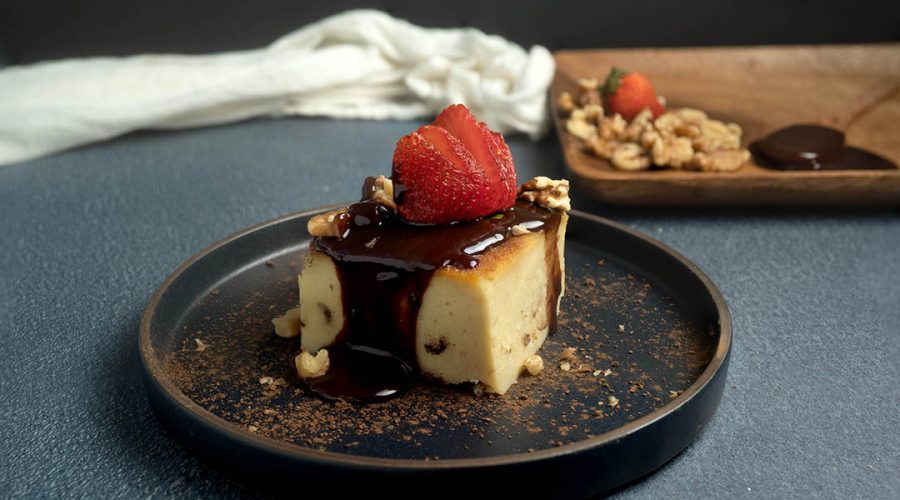
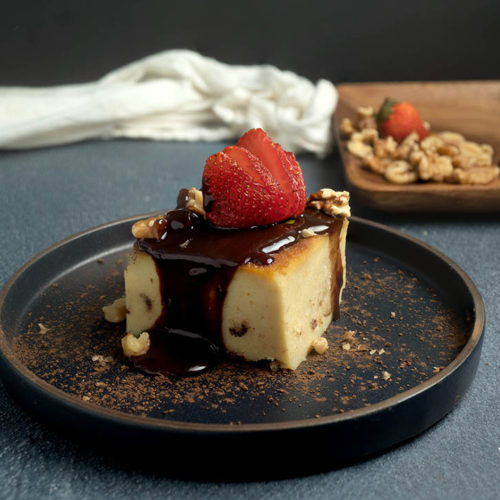
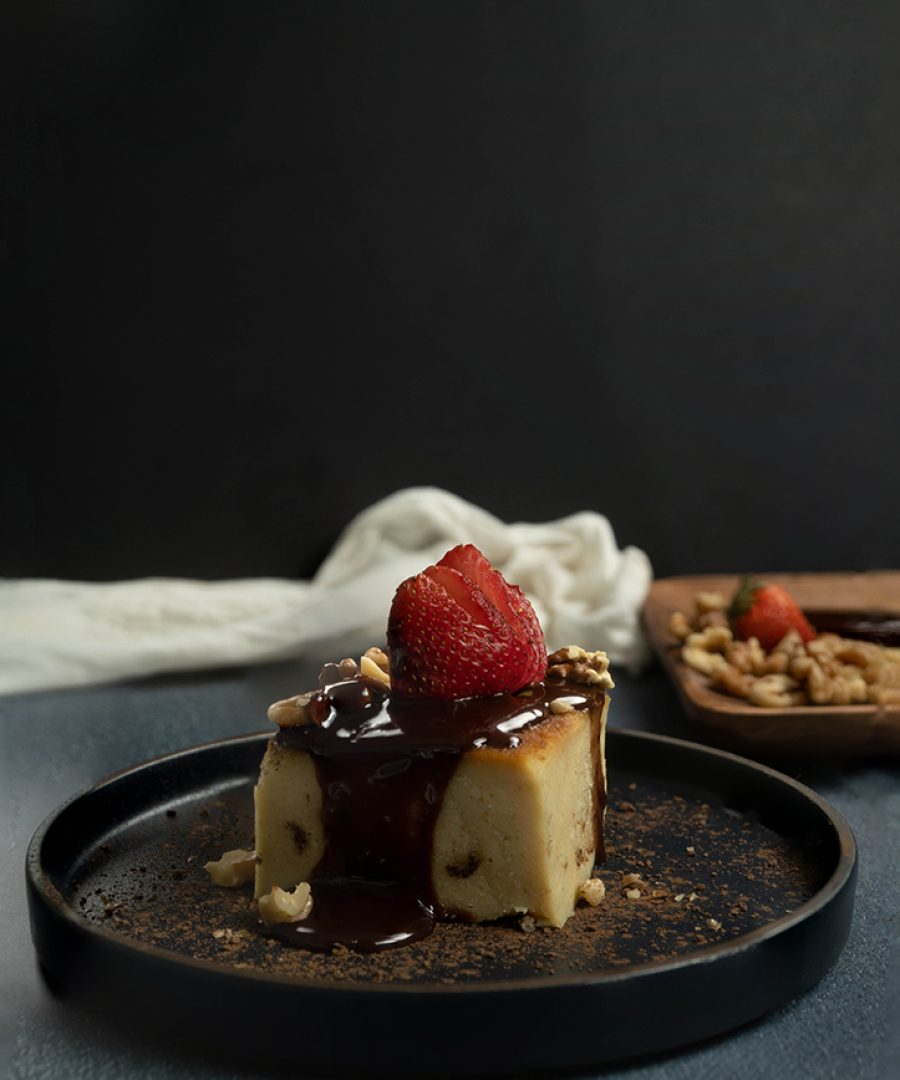
What I learned working in restaurants is that small details make the difference between a dish that’s fine and a dish that people remember. So I kept my uncle’s recipe and added a few things: infused milk with star anise, cinnamon, and cloves for depth; a proper dark caramel lining the pan; and a chocolate glaze at the end that takes it from humble to something you’d actually plate for guests.
This is still a simple dessert. It’s just a better version of a simple dessert.
In Peru, we call “Budín de pan” (pronounced boo-DEEN) a version of bread pudding. The concept is the same: stale or day-old bread soaked in sweetened milk, baked until set. But the Latin version has its own personality. The milk is infused with warm spices before the bread goes in. The pan is lined with caramel before the batter, so when you unmold it, you get a golden caramel layer on top. And in my version, you finish with a condensed milk chocolate glaze that makes it genuinely special.
It’s popular across Latin America in different forms, and every country, every family, has their version. In Peru it shows up at home kitchens and bakeries alike. It’s the kind of dessert that stretches ingredients and tastes like nothing was stretched at all.
The difference between Budín and American bread pudding comes down mostly to the caramel and the spice infusion. American bread pudding tends to be more of a custard-forward, vanilla-based dessert. Budín has more going on in the background.
You don’t need much. One pot for the milk infusion, one pan for the caramel, one baking dish for the budín, and something to get the texture smooth.
The baking dish: I use a 9×13 inch rectangular pan for this recipe. It’s the right size for 15 portions and gives you nice even slices. A 9×14 also works well. I’d recommend a good heavy pan that holds heat evenly; you can find one here: “9×14 baking pan on Amazon”.
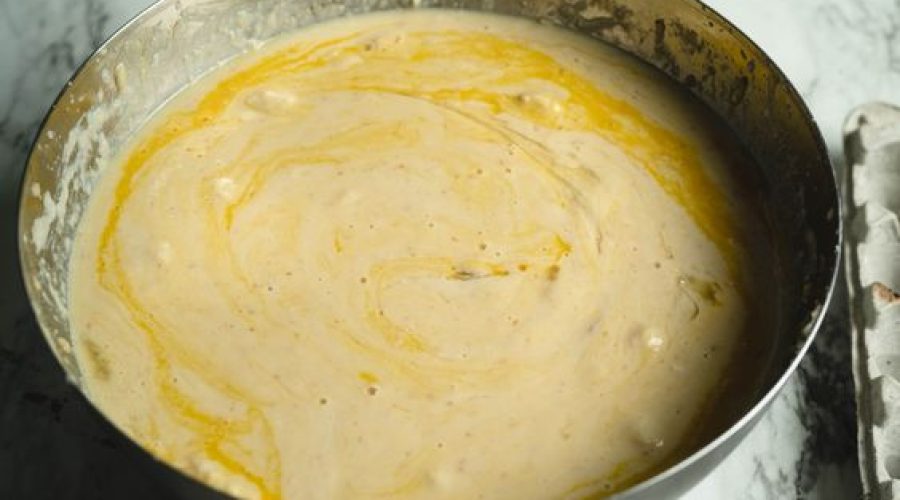
The hand blender: This is optional but I strongly recommend it. After the bread soaks in the milk it breaks down into chunks. A hand blender (immersion blender) takes 30 seconds to smooth it out completely, giving you a silky, even texture throughout. A regular blender works too, just do it in batches carefully since the mixture is warm. A hand mixer also works but won’t get it as smooth.
The caramel is the most important step, and the most intimidating.
The key is patience. Add your sugar and water to the pan, turn the heat to medium, and do not touch it. No stirring, no spoon, nothing. Just let the heat do the work. Once it starts to color at the edges, you can swirl the pan gently. Pull it off the heat when it’s a deep amber, not black. Black means bitter. Pour it into your baking pan immediately and tilt to coat the bottom before it sets.
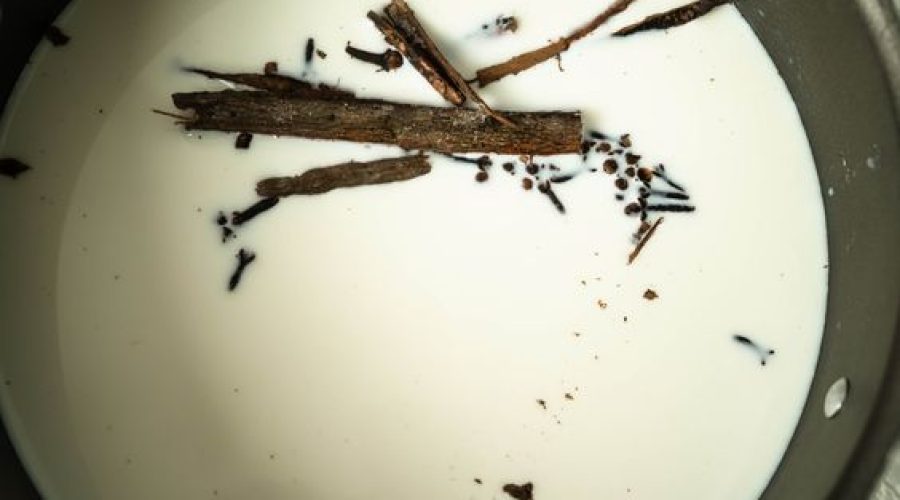
Infuse the milk properly.
Bring the milk with butter, spices, and sugar to just below a boil, then turn off the heat and let it sit for at least 15 minutes before straining. The longer it sits the more flavor you get. Don’t rush this step, it’s where most of the depth of the dessert comes from.
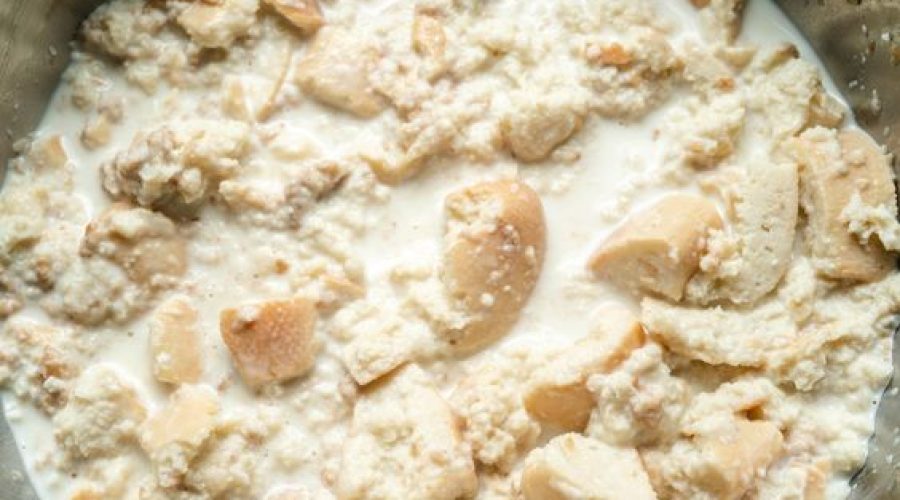
Let the bread soak until it’s completely broken down.
You want the bread to absorb as much milk as possible before it goes in the oven. Press it down, let it sit, press it again. When it starts to fall apart on its own, you’re ready. Use the hand blender here for a smoother result.
Bake in a bain marie (water bath).
Place your baking pan inside a larger pan and fill the outer pan with hot water halfway up the sides of the baking dish. This is what gives budín its silky, custard-like texture instead of a dense, dry one. Don’t skip this.
It’s done when the center is just set. Slightly jiggly in the very center is fine, it firms up as it cools. A toothpick inserted in the center should come out mostly clean.
The chocolate glaze goes on warm, not hot.
Let the budín cool for at least 20 minutes before pouring the glaze. If the budín is too hot the glaze runs off and pools at the bottom. You want it to coat and stay.
This dessert is really easy, no need to stress about it, takes time but not a lot.
Make sure to use a plain flavor bread in that way you can add the flavor profile you want.
You can go crazy and use a blender to get a flan-like texture; chunky is good, and a good “Budin de Pan” should be soft, not too dense.
They start from the same idea: don’t waste old bread, soak it in sweetened milk, bake it. But the results taste different.
American bread pudding tends to be vanilla and custard forward, often served warm with a whiskey sauce or vanilla cream. It’s a comfort food in the most straightforward sense.
“Budín de Pan” has warm spices in the background (star anise, cinnamon, cloves), a caramel base that becomes the top when you unmold it, and in my version a chocolate glaze finish. It’s more complex in its flavor profile and has a smoother, denser texture because of the hand blender step.
Also, budín is typically served cold or at room temperature in slices, more like a cake than a saucy warm pudding.
Refrigerator: Budín keeps 3 to 4 days refrigerated in a sealed container or covered with plastic wrap. The flavor actually improves after a day in the fridge as the spices settle into the texture.
Serving cold vs warm: Both work. Cold budín has a firmer, cleaner slice. Warm budín is softer and the caramel is more liquid. My preference is cold with the chocolate glaze, straight from the fridge.
Freezing: You can freeze individual slices wrapped tightly for up to 1 month. Thaw overnight in the refrigerator. Don’t microwave from frozen, it makes the texture rubbery.
Can I make budín without alcohol?
Yes. The rum is optional and is there for flavor, not structure. Leave it out entirely or replace it with a tablespoon of extra vanilla extract. The dessert works perfectly without it.
Can I use a different spice combination?
Absolutely. Star anise and cinnamon are the classic Peruvian combination. Some versions use only cinnamon and vanilla, which gives a simpler, cleaner flavor. Some add orange peel for brightness. Use what you like, just keep the quantity similar so the milk doesn’t get overwhelmed.
My caramel burned. What happened?
The heat was too high or you left it too long. Caramel goes from amber to black fast, especially at the end. Stay near the stove once it starts to color. If it smells bitter or looks very dark brown, start over. Burnt caramel is genuinely bitter and you’ll taste it through the whole dessert.
Can I make this without a bain marie?
You can, but the texture will be different. Without the water bath the outside sets faster than the center, which can give you a dry, cracked top and a denser, less silky interior. If you skip it, cover the pan with foil for the first 30 minutes of baking to trap some moisture.
Can I use low-fat milk?
Whole milk gives the richest result. 2% milk works but the texture will be slightly less creamy. Skim milk is not recommended; you need the fat for the custard to set properly.
How do I know when the budín is done?
Insert a toothpick or thin knife in the center. It should come out mostly clean with just a few moist crumbs. The center can look slightly jiggly, it will firm up as it cools. If the top is getting too dark before the center sets, cover loosely with foil and continue baking.
Can I serve it without the chocolate glaze?
Yes. The plain budín with just the caramel top is delicious on its own. The glaze is my addition and it makes it more impressive for guests, but it’s not traditional. A dusting of powdered sugar or a drizzle of condensed milk also works as a simpler finish.
Tried it? Let me know.
Leave a rating and a comment below — it helps other cooks find this recipe, and I read every single one.