Disclosure: As an Amazon Associate I earn from qualifying purchases. Some links in this post are affiliate links, meaning I may earn a small commission at no extra cost to you.
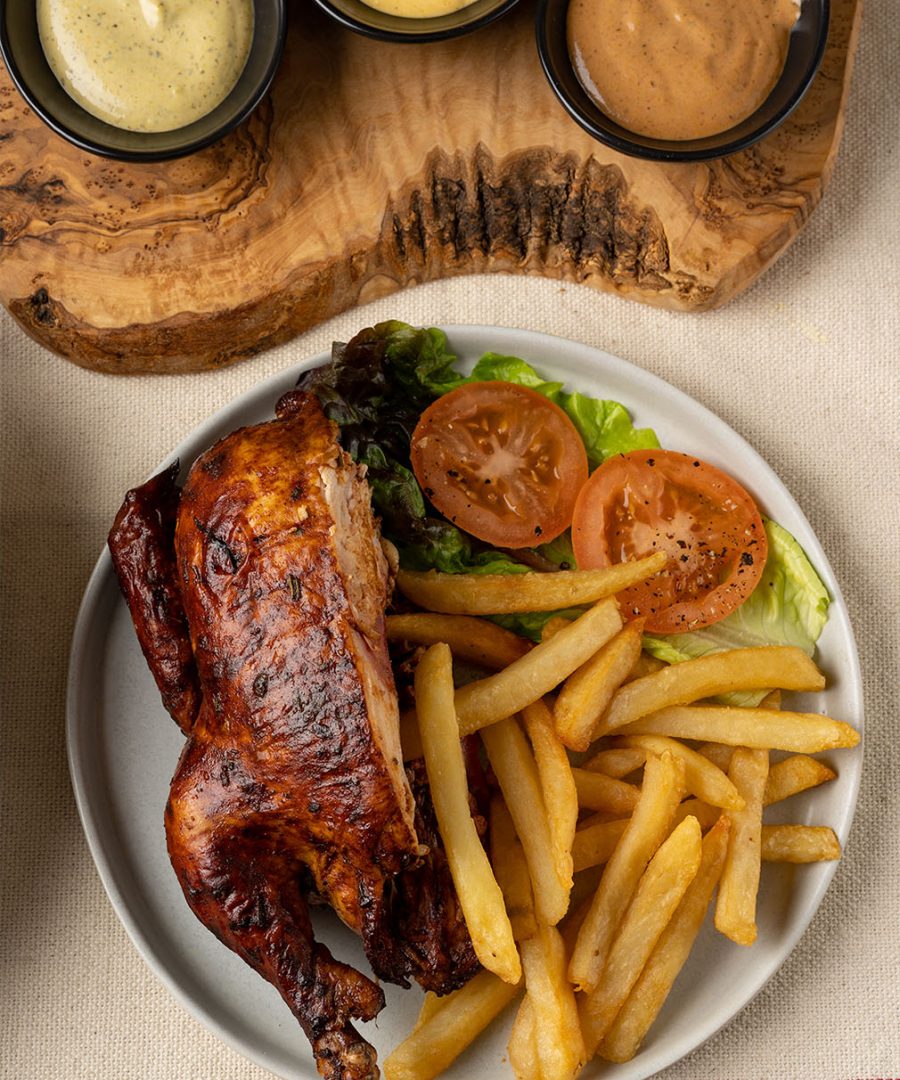
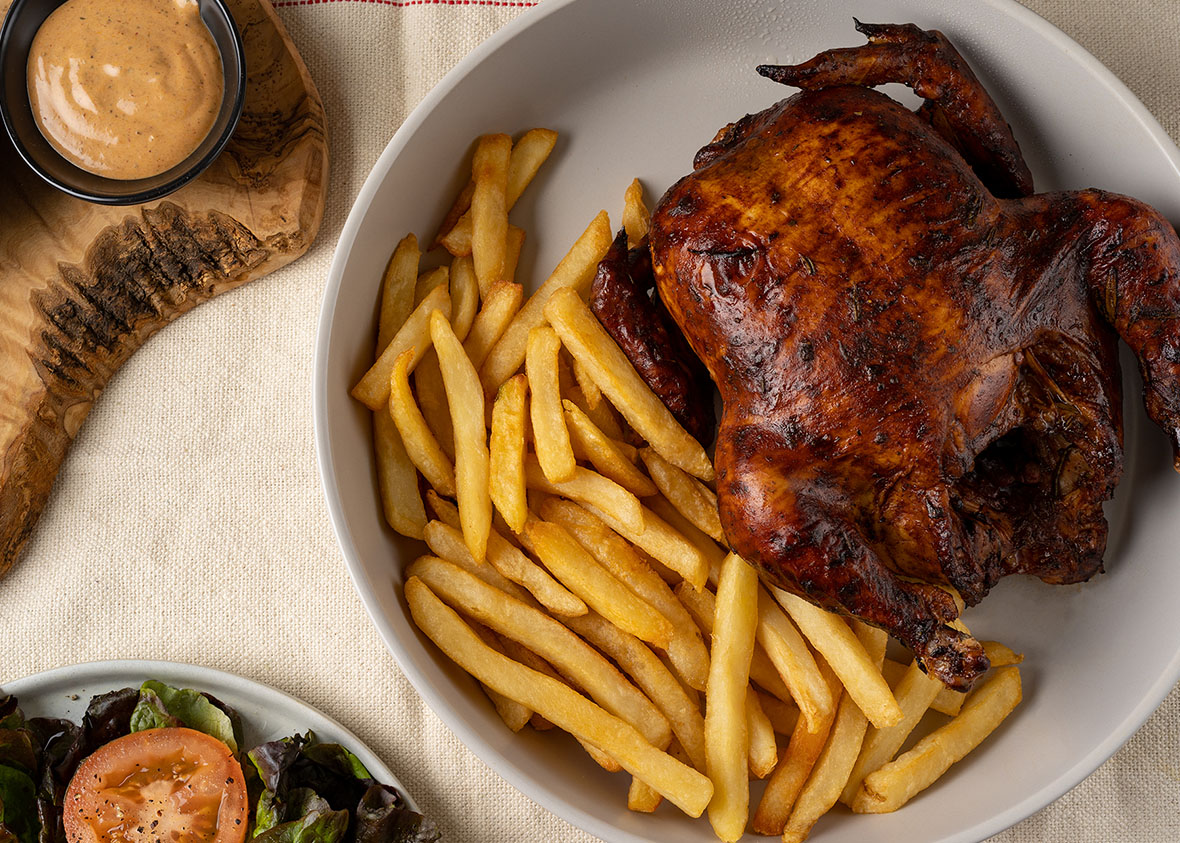
If you’ve eaten at a Peruvian pollería, you know the chicken: mahogany skin, smoky and deeply savory, served with a pile of fries and a row of sauces. I grew up on it in Lima — there’s a pollería on practically every corner, so nobody makes it at home. There’s even a national Pollo a la Brasa day. That’s how much this dish matters to us.
Then I moved to the USA, missed it badly, and tried every Peruvian restaurant I could find. None of them tasted right. So I worked out how to make it in a regular oven — no charcoal, no rotisserie, no special equipment.
The secret is the marinade: ají panca for that deep red-brown color and mild smokiness, soy sauce for savory depth, and dark beer to tenderize. Twelve hours in the fridge, then a two-stage roast that finishes hot to crisp the skin.
What Is Pollo a la Brasa?
Pollo a la brasa is Peru’s most famous chicken dish — a whole bird marinated in spices and chili paste, then roasted until the skin turns dark and crisp. In the US you’ll see it called Peruvian roast chicken, Peruvian rotisserie chicken, or sometimes blackened chicken. They all mean the same thing.
In Peru it’s traditionally cooked on a rotating spit over charcoal, which is where the “a la brasa” (over embers) name comes from. Restaurants that specialize in it are called pollerías, and it’s the closest thing Peru has to a national comfort food — the meal families order on a Sunday night without discussion.
The version below is built for a home oven. You lose a little smoke, but the marinade does the heavy lifting, and the two-stage roast gets you that crackling skin.
What Makes It Authentic
Two ingredients carry this dish, and neither is optional if you want it to taste like the real thing.
Ají panca is a dried red Peruvian chili sold as a paste. It’s mild — closer to smoky paprika than to heat — and it’s what gives pollo a la brasa its signature dark red-brown color and earthy depth. Without it you have roast chicken; with it you have pollo a la brasa. Most US grocery stores don’t carry it, but it’s widely available online and keeps for months in the fridge once opened.
Huacatay, also called Peruvian black mint, is an herb sold as a paste. It’s pungent and slightly minty, and in my marinade it cuts through the richness. It’s the flavor most Americans can’t place but immediately notice when it’s missing.
The supporting cast matters too: soy sauce brings savory depth and helps the skin darken, and dark beer tenderizes the meat while adding a faint malty bitterness that balances the chili. Cumin, paprika, oregano, rosemary, and garlic round it out.
Sourcing tip: both pastes are sold online and at Latin markets. Buy the jarred paste rather than dried whole chilies — it’s what Peruvian home cooks use, and it saves you a rehydrating step.
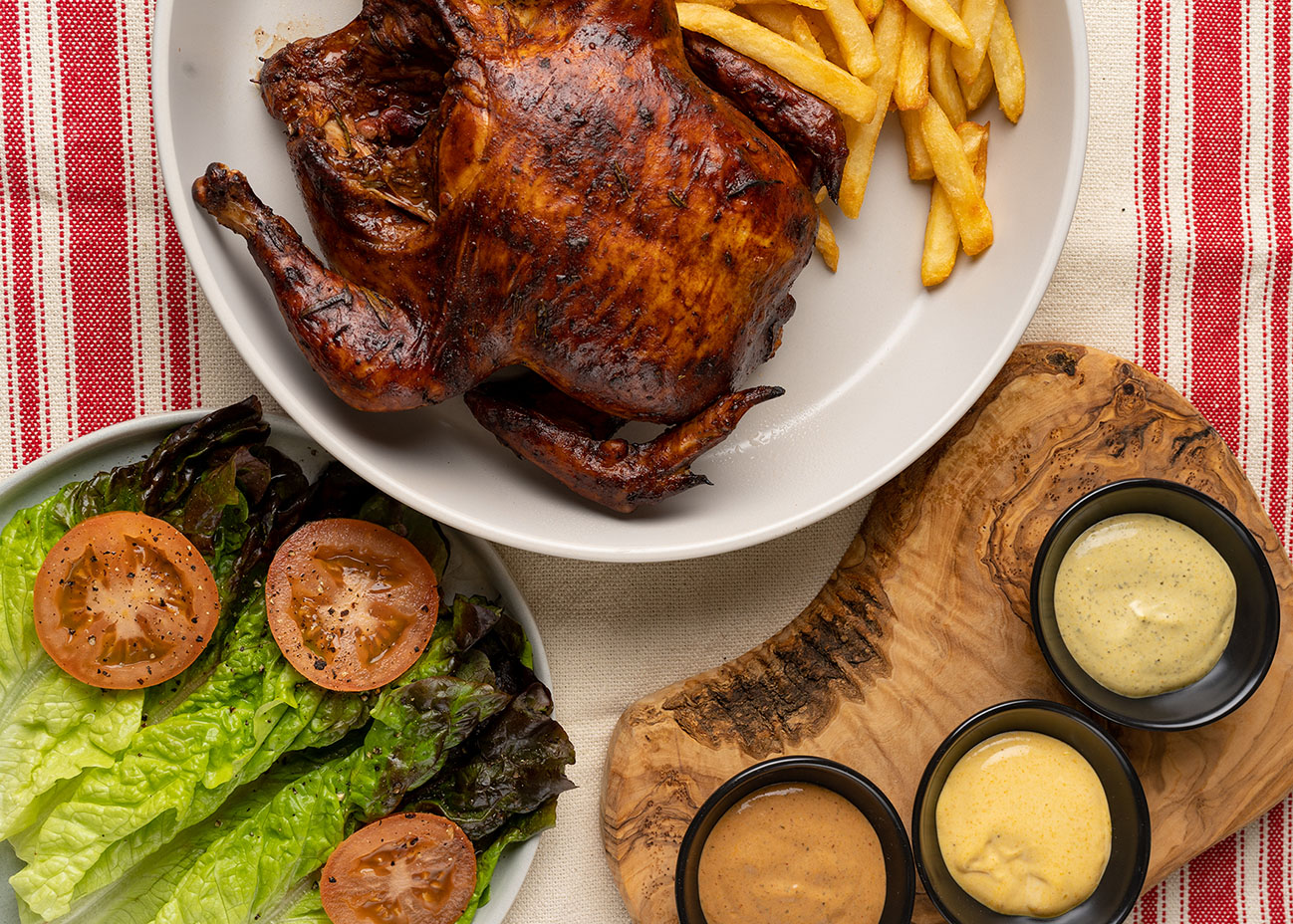
Authentic Peruvian roast chicken (pollo a la brasa) with a bold ají panca marinade — made juicy inside and crispy outside, right in your oven.
Course Main Course
Cuisine peruvian
Keyword peruvian blackened chicken, peruvian roast chicken, peruvian rotisserie chicken, pollo a la brasa, peruvian
Prep Time 5 minutesminutes
Cook Time 1 hourhour
Marinade 12 hourshours
Total Time 13 hourshours5 minutesminutes
Servings 4ppl
Author Brandon Castillo
Equipment
Blender
Meat Thermomether
Roasting Pan
Ingredients
Marinade
3tbspsVegetable Oil
2tbspsRosemary1 tbsp if using dried
2tbspOregano1 tbsp if using dried
3Garlic Cloves
2tbspsAjí Panca Paste
2tbspsHuacatay
1tbspPaprika
1tspCumin
1.5tbspsSalt
1tbspPepper
1/2cupBlack Beer
3tbspsSoy Sauce
Chicken
1Whole Chicken
Instructions
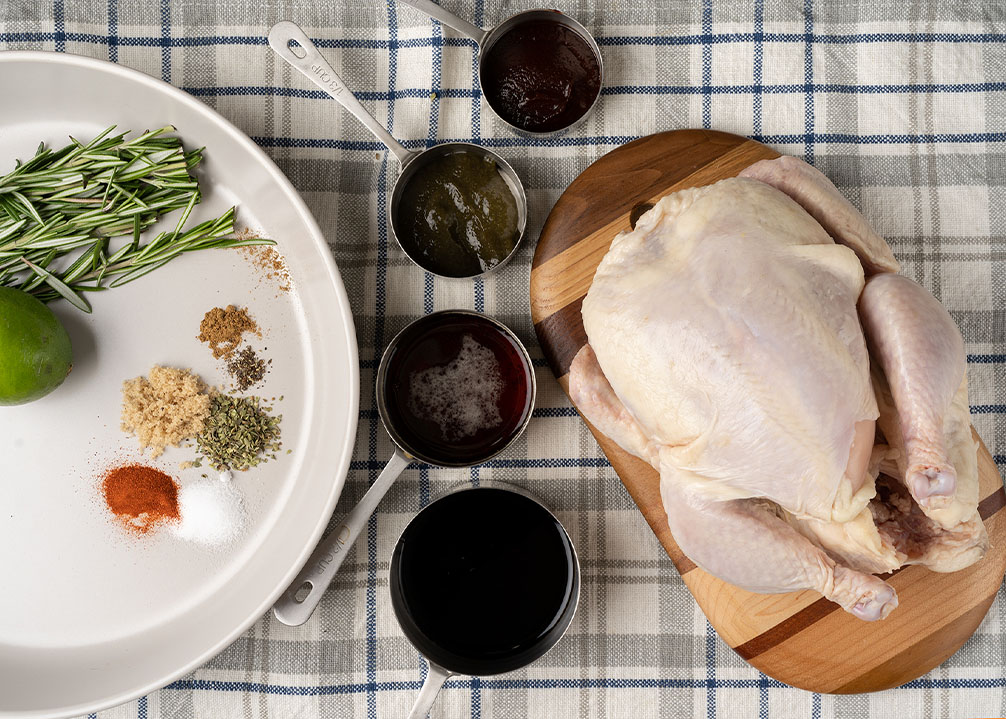
In a blender, add all the ingredients of the marinade, blend.
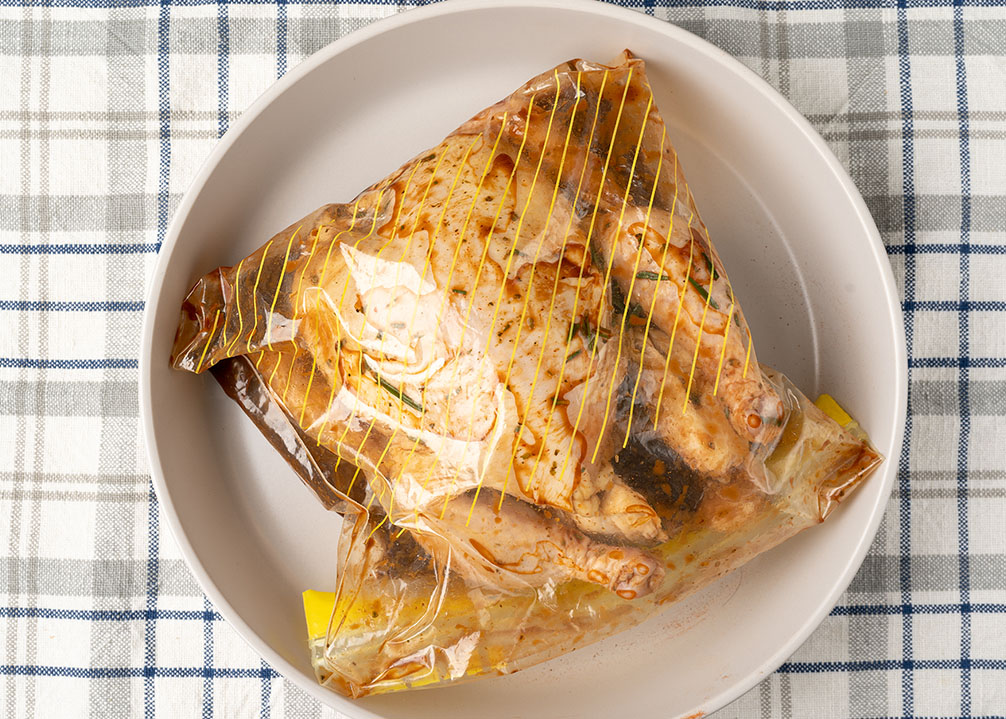
Rub the chicken with the marinade then add it to a ziplock and let it rest for at least 12 hr in your fridge.
Once the chicken rested overnight, pre-heat the oven at 350F / 180C
Remove the chicken from the marinade, put it on a roasting pan, put the marinade in a small pot, bring it to a boil, and put it aside.
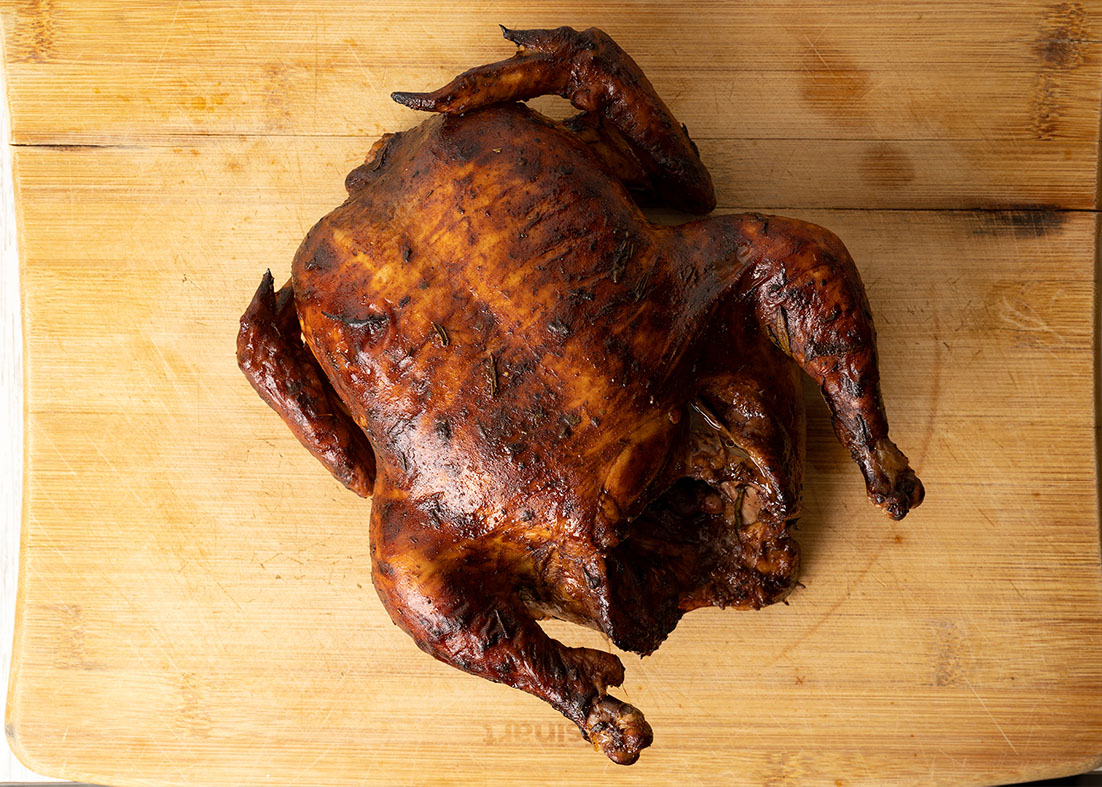
In a preheated oven at 350F /180C, bake your chicken in a roasting pan for 35 min then take the chicken out and raise the temperature to 400F /200C.
brush your chicken with the marinade and bake it for another 15 to 25 or until the internal temperature of the chicken is above 165F/74C for the breast and 175F/80C for the chicken thights
Serve with fries and salad.
Video
Notes
Brush the chicken every 5 min with the marinade (when at 400F / 200C) for better flavor and color.
My go-to list of authentic ingredients and essential kitchen gear. Read the Guide
Marinate overnight. The flavors need time to work into the meat.
But don’t go past 12 hours. Longer and the chicken starts to dry out.
Baste as it roasts. Brush with the boiled marinade every 10–15 minutes so it stays juicy and builds color.
Let it rest after it comes out of the oven. The juices redistribute and the flavor settles.
Use a meat thermometer. Pull the breast at 165°F/74°C and the thighs at 175°F/80°C — it’s the difference between juicy and guesswork.
No oven? Use the grill. This works on a grill or BBQ too — same marinade, same timing principles.
This dish is all about the chicken, let it marinate overnight to get a soft and juicy chicken.
It’s important to let your chicken marinate before cooking it.
The color and aroma of this chicken make it worth a try.
What to Serve With It
In Peru, pollo a la brasa comes with fries and a simple salad — and, critically, sauces. The green ají sauce (ají de pollería) is standard, along with a mayo-mustard blend and sometimes ají amarillo.
Salsa criolla — the sharp red onion and lime relish — is a natural pairing and cuts the richness.
For a full Peruvian spread, serve it alongside papa a la huancaína or a simple rice.
Frequently Asked Questions
Can I make this without ají panca? You can make good roast chicken, but it won’t be pollo a la brasa — ají panca is the defining flavor and color. If you truly can’t get it, a mix of smoked paprika, Mexican “chile guajillo”, “chile pasilla: and a little tomato paste gets you closest, but order the real thing when you can.
Can I use chicken pieces instead of a whole chicken? Yes. Thighs and drumsticks work especially well. Reduce the roasting time and go by internal temperature rather than the clock.
Can I grill or BBQ it instead? Absolutely — that’s closer to the original. Cook over indirect heat first, then move it closer to the coals to finish and crisp the skin.
How long should I marinate it? At least 12 hours, and no more than 12–14. Overnight is the sweet spot.
Why boil the marinade before basting? It’s been in contact with raw chicken. Boiling it makes it safe to brush on during cooking, and it thickens slightly, which helps it cling.
What’s the difference between pollo a la brasa and rotisserie chicken? Rotisserie chicken is a cooking method. Pollo a la brasa is a specific Peruvian preparation — the chili-and-spice marinade is what makes it distinct, regardless of whether it spins on a spit.
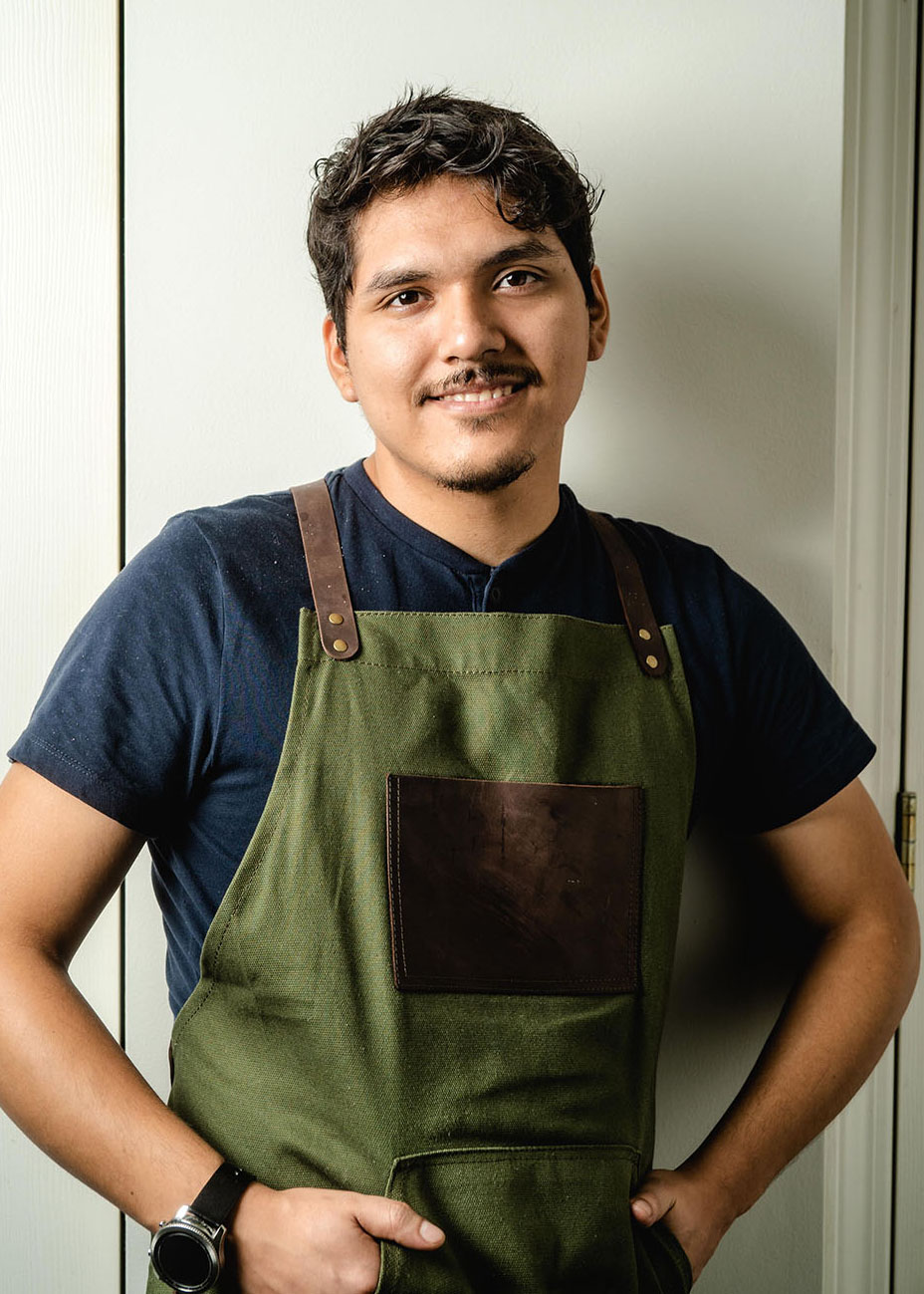
Brandon Castillo - Peruvian Chef & Recipe Developer
Brandon Castillo is a Peruvian chef and recipe developer based in New York. Born and raised in Peru, he shares authentic Peruvian recipes adapted for home cooks in the United States. You can find him on Instagram, TikTok, and YouTube @chewinghappiness.
Tried it? Let me know. Leave a rating and a comment below — it helps other cooks find this recipe, and I read every single one.
Disclosure: As an Amazon Associate I earn from qualifying purchases. Some links in this post are affiliate links, meaning I may earn a small commission at no extra cost to you.
If you’ve eaten at a Peruvian pollería, you know the chicken: mahogany skin, smoky and deeply savory, served with a pile of fries and a row of sauces. I grew up on it in Lima — there’s a pollería on practically every corner, so nobody makes it at home. There’s even a national Pollo a la Brasa day. That’s how much this dish matters to us.
Then I moved to the USA, missed it badly, and tried every Peruvian restaurant I could find. None of them tasted right. So I worked out how to make it in a regular oven — no charcoal, no rotisserie, no special equipment.
The secret is the marinade: ají panca for that deep red-brown color and mild smokiness, soy sauce for savory depth, and dark beer to tenderize. Twelve hours in the fridge, then a two-stage roast that finishes hot to crisp the skin.
What Is Pollo a la Brasa?
Pollo a la brasa is Peru’s most famous chicken dish — a whole bird marinated in spices and chili paste, then roasted until the skin turns dark and crisp. In the US you’ll see it called Peruvian roast chicken, Peruvian rotisserie chicken, or sometimes blackened chicken. They all mean the same thing.
In Peru it’s traditionally cooked on a rotating spit over charcoal, which is where the “a la brasa” (over embers) name comes from. Restaurants that specialize in it are called pollerías, and it’s the closest thing Peru has to a national comfort food — the meal families order on a Sunday night without discussion.
The version below is built for a home oven. You lose a little smoke, but the marinade does the heavy lifting, and the two-stage roast gets you that crackling skin.
What Makes It Authentic
Two ingredients carry this dish, and neither is optional if you want it to taste like the real thing.
Ají panca is a dried red Peruvian chili sold as a paste. It’s mild — closer to smoky paprika than to heat — and it’s what gives pollo a la brasa its signature dark red-brown color and earthy depth. Without it you have roast chicken; with it you have pollo a la brasa. Most US grocery stores don’t carry it, but it’s widely available online and keeps for months in the fridge once opened.
Huacatay, also called Peruvian black mint, is an herb sold as a paste. It’s pungent and slightly minty, and in my marinade it cuts through the richness. It’s the flavor most Americans can’t place but immediately notice when it’s missing.
The supporting cast matters too: soy sauce brings savory depth and helps the skin darken, and dark beer tenderizes the meat while adding a faint malty bitterness that balances the chili. Cumin, paprika, oregano, rosemary, and garlic round it out.
Sourcing tip: both pastes are sold online and at Latin markets. Buy the jarred paste rather than dried whole chilies — it’s what Peruvian home cooks use, and it saves you a rehydrating step.
Authentic Peruvian roast chicken (pollo a la brasa) with a bold ají panca marinade — made juicy inside and crispy outside, right in your oven.
Course Main Course
Cuisine peruvian
Keyword peruvian blackened chicken, peruvian roast chicken, peruvian rotisserie chicken, pollo a la brasa, peruvian
Prep Time 5 minutesminutes
Cook Time 1 hourhour
Marinade 12 hourshours
Total Time 13 hourshours5 minutesminutes
Servings 4ppl
Author Brandon Castillo
Equipment
Blender
Meat Thermomether
Roasting Pan
Ingredients
Marinade
3tbspsVegetable Oil
2tbspsRosemary1 tbsp if using dried
2tbspOregano1 tbsp if using dried
3Garlic Cloves
2tbspsAjí Panca Paste
2tbspsHuacatay
1tbspPaprika
1tspCumin
1.5tbspsSalt
1tbspPepper
1/2cupBlack Beer
3tbspsSoy Sauce
Chicken
1Whole Chicken
Instructions
In a blender, add all the ingredients of the marinade, blend.
Rub the chicken with the marinade then add it to a ziplock and let it rest for at least 12 hr in your fridge.
Once the chicken rested overnight, pre-heat the oven at 350F / 180C
Remove the chicken from the marinade, put it on a roasting pan, put the marinade in a small pot, bring it to a boil, and put it aside.
In a preheated oven at 350F /180C, bake your chicken in a roasting pan for 35 min then take the chicken out and raise the temperature to 400F /200C.
brush your chicken with the marinade and bake it for another 15 to 25 or until the internal temperature of the chicken is above 165F/74C for the breast and 175F/80C for the chicken thights
Serve with fries and salad.
Video
Notes
Brush the chicken every 5 min with the marinade (when at 400F / 200C) for better flavor and color.
My go-to list of authentic ingredients and essential kitchen gear. Read the Guide
Marinate overnight. The flavors need time to work into the meat.
But don’t go past 12 hours. Longer and the chicken starts to dry out.
Baste as it roasts. Brush with the boiled marinade every 10–15 minutes so it stays juicy and builds color.
Let it rest after it comes out of the oven. The juices redistribute and the flavor settles.
Use a meat thermometer. Pull the breast at 165°F/74°C and the thighs at 175°F/80°C — it’s the difference between juicy and guesswork.
No oven? Use the grill. This works on a grill or BBQ too — same marinade, same timing principles.
This dish is all about the chicken, let it marinate overnight to get a soft and juicy chicken.
It’s important to let your chicken marinate before cooking it.
The color and aroma of this chicken make it worth a try.
What to Serve With It
In Peru, pollo a la brasa comes with fries and a simple salad — and, critically, sauces. The green ají sauce (ají de pollería) is standard, along with a mayo-mustard blend and sometimes ají amarillo.
Salsa criolla — the sharp red onion and lime relish — is a natural pairing and cuts the richness.
For a full Peruvian spread, serve it alongside papa a la huancaína or a simple rice.
Frequently Asked Questions
Can I make this without ají panca? You can make good roast chicken, but it won’t be pollo a la brasa — ají panca is the defining flavor and color. If you truly can’t get it, a mix of smoked paprika, Mexican “chile guajillo”, “chile pasilla: and a little tomato paste gets you closest, but order the real thing when you can.
Can I use chicken pieces instead of a whole chicken? Yes. Thighs and drumsticks work especially well. Reduce the roasting time and go by internal temperature rather than the clock.
Can I grill or BBQ it instead? Absolutely — that’s closer to the original. Cook over indirect heat first, then move it closer to the coals to finish and crisp the skin.
How long should I marinate it? At least 12 hours, and no more than 12–14. Overnight is the sweet spot.
Why boil the marinade before basting? It’s been in contact with raw chicken. Boiling it makes it safe to brush on during cooking, and it thickens slightly, which helps it cling.
What’s the difference between pollo a la brasa and rotisserie chicken? Rotisserie chicken is a cooking method. Pollo a la brasa is a specific Peruvian preparation — the chili-and-spice marinade is what makes it distinct, regardless of whether it spins on a spit.
Brandon Castillo - Peruvian Chef & Recipe Developer
Brandon Castillo is a Peruvian chef and recipe developer based in New York. Born and raised in Peru, he shares authentic Peruvian recipes adapted for home cooks in the United States. You can find him on Instagram, TikTok, and YouTube @chewinghappiness.
Tried it? Let me know. Leave a rating and a comment below — it helps other cooks find this recipe, and I read every single one.