Disclosure: As an Amazon Associate I earn from qualifying purchases. Some links in this post are affiliate links, meaning I may earn a small commission at no extra cost to you.
My mother is not the kind of person who asks for much at a restaurant. She looks at the menu, considers her options, and then orders the same things, every time she goes to a restaurant that has seafood in Peru she orders: Jalea Mixta.
It doesn’t matter what restaurant, it doesn’t matter what city. If it’s a seafood place,if they have it, she’s getting the jalea. She knows she can put it in the middle of the table, share it with everyone, and make it last. That’s what Jalea Mixta is, really. It’s a sharing dish. It’s loud, it’s crispy, it’s piled high, and everyone reaches in.
I grew up in Lima, right on the coast, and somehow I was not a seafood fan as a kid. I know. But these big seafood restaurants would bring out enormous plates of jalea with fried yucca and sauces covering the whole table, and even I couldn’t say no to that. The smell of the batter hitting hot oil, the sarza criolla on top, the lime on the side. It converts people.
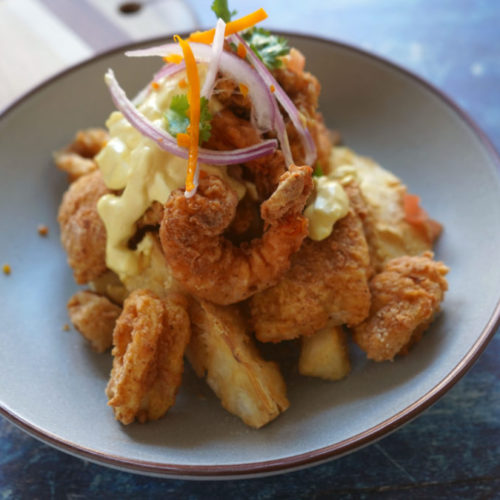
This is my version, the one I make here in the US, with a beer batter that gives the seafood a crunch and flavor that plain flour never will. The ají mayo on top is my own addition, and it’s the thing people always ask about first.
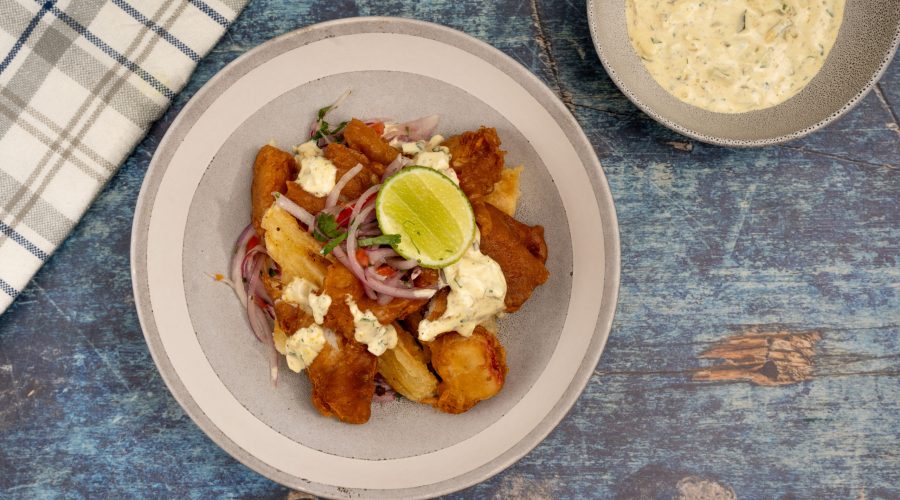
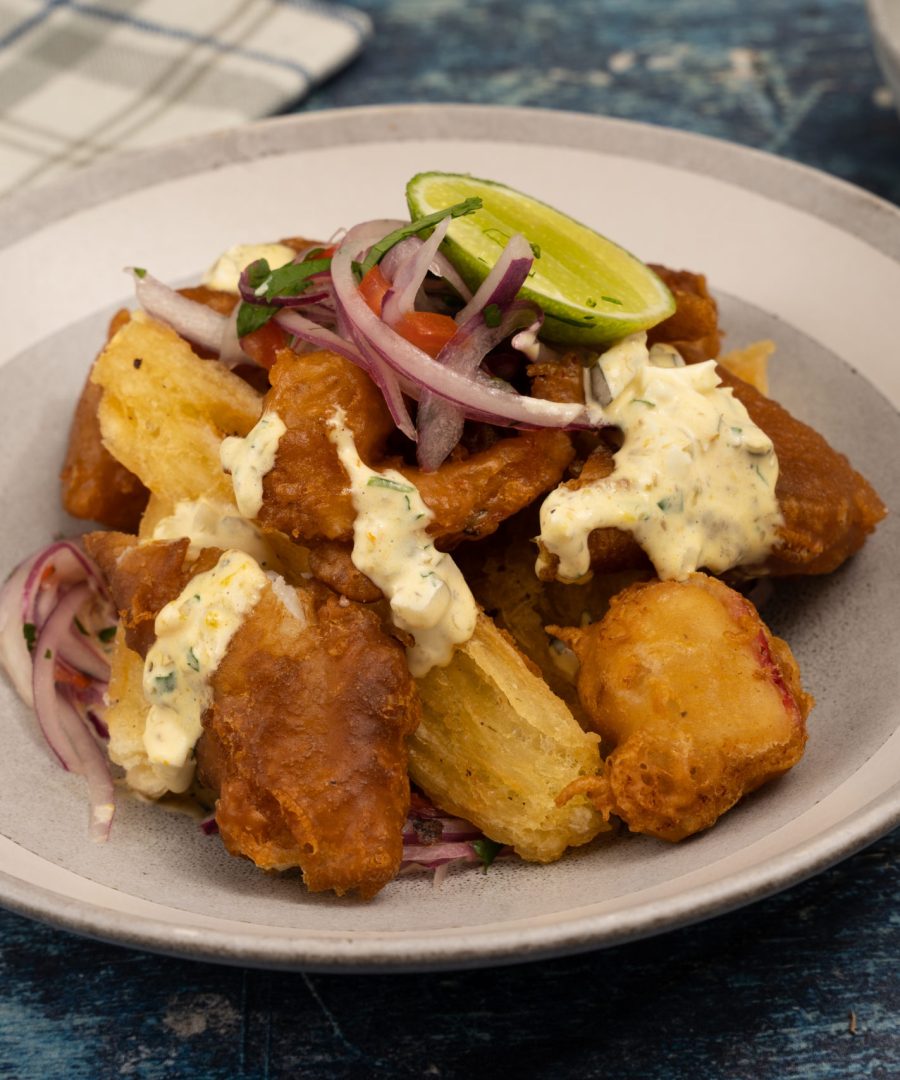
Jalea Mixta is Peru’s version of a mixed fried seafood platter, but calling it just a “platter” undersells it. It’s fish fillets, shrimp, and squid rings fried in a seasoned batter until crispy, served over a pile of sarza criolla (pickled red onion salad), with fried yucca on the side and sauces for dipping. Every seafood restaurant on the Peruvian coast has a version of it, and every family has an opinion about whose is best.
The word “jalea” technically means jelly in Spanish, which confuses a lot of people. This dish has nothing to do with jelly. The name in this context refers to the coating, the thin batter that clings to the seafood and fries up golden and crispy. It’s also sometimes called chicharrón de mariscos, though purists will say there’s a technical difference between the two.
The dish originates from Peru’s northern coast, in the regions of Lambayeque and Piura, where the fishing culture runs deep. It eventually became a staple of Lima’s seafood restaurants and has been one of the most ordered dishes at cebicherías ever since.
Most recipes for jalea use plain flour or cornstarch for the batter. Both work, but they produce a coating that’s thin and fairly neutral. My version uses a beer batter, and that changes everything.
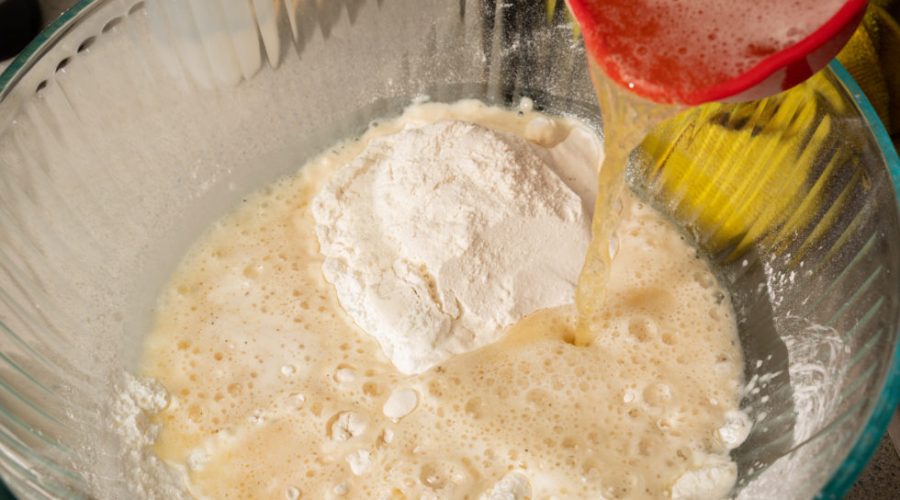
The beer adds carbonation, which lightens the batter and makes it puff slightly when it hits the oil. The result is a crust that’s genuinely crispy and has flavor of its own, not just a shell around the seafood. I also add a small amount of Pisco to the batter, which is optional but adds a subtle depth that works especially well with the squid.
The ají mayo is my addition to the classic. Traditional jalea comes with tartar sauce and sarza criolla. I keep both of those, and I also make a quick sauce with ají amarillo paste, huacatay paste, mayo, and lime. It takes five minutes and it’s the thing people scrape the bowl for at the end.
Your jalea is only as good as what you start with. This is the honest truth of this dish. The batter can be perfect and the oil can be at the right temperature, but if the seafood is old, you’ll taste it.
In the US, here’s what I look for:
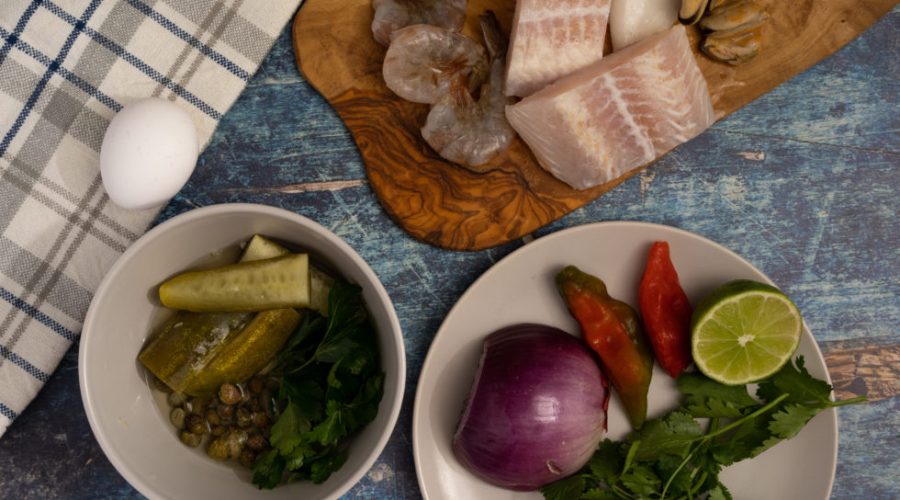
Fish: A firm white fish holds up best in hot oil. Cod, tilapia, mahi-mahi, and grouper all work well. Avoid anything too delicate or flaky; it will fall apart in the batter. If you can find fresh, great. If not, high-quality frozen fish thawed overnight in the refrigerator is completely fine for this dish.
Shrimp: Medium or large, peeled and deveined. Fresh is ideal but good frozen shrimp is available everywhere, just make sure to thaw it fully and pat it completely dry before battering. Any moisture left on the shrimp makes the batter slide off in the oil.
Squid: Most supermarkets sell cleaned frozen squid rings or tubes. Tubes that you slice into rings yourself tend to have better texture than pre-cut rings. Thaw, dry, batter.
The single most important step for all three: dry everything with paper towels before it goes in the batter. Moisture is the enemy of crispy.
The ají mayo is what makes this recipe yours and not just any fried seafood. You need two Peruvian ingredients for it:
Ají Amarillo Paste: The base of the sauce. It brings a fruity heat and a bright orange-yellow color. I use Inca’s Food, a Peruvian brand that ships fast on Amazon. Order it here: “Inca’s Food Ají Amarillo Paste“
Huacatay Paste: This is the one people don’t know. Huacatay is Peruvian black mint, and the paste has an herbal, slightly anise-like flavor that you don’t get from any other ingredient. It’s essential for an authentic ají mayo. You can also find it on Amazon:”Inca’s Food Huacatay Paste” or look for it at any Latin grocery store.
Oil temperature is everything.
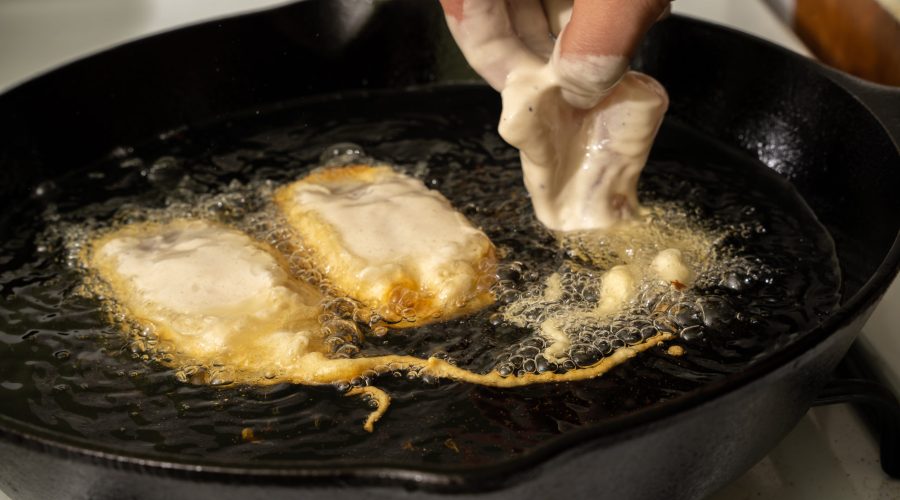
350F (180C) before the seafood goes in. If the oil isn’t hot enough, the batter absorbs fat and comes out greasy instead of crispy. Use a thermometer, not a guess. Let the oil recover between batches.
Fry in small batches.
Adding too much seafood at once drops the oil temperature fast. Four to five pieces at a time, not twelve. Crowding the pot is the most common mistake and it kills the crust.
Dry the seafood twice.
First when you take it out of the package, then again right before it goes in the batter. Any moisture on the surface of the seafood will cause the batter to steam instead of fry, and it won’t stick properly.
Batter consistency matters.
The beer batter should be thick enough to coat the seafood and hold, but not so thick it’s doughy. Think pancake batter. If it’s too thick, add a splash more beer. If it’s too thin, add a tablespoon of cornstarch.
Salt after frying
Season the seafood lightly before battering, but do the final salt right when it comes out of the oil. Salt draws moisture out of the seafood while it fries, which works against the crispy crust.
They’re ready when they float. Seafood cooks fast. Watch for it to float to the surface and turn golden, that’s usually 2 to 3 minutes. Pull it out then, it keeps cooking for a moment on the paper towels.
I love this dish, it is so simple and yet you can always add little things to make it even better.
The beer batter adds some flavor and texture that I love
Put some effort and this dish will come out nicely, there is a time to rush and there is a time to wait, just make sure you cook your seafood/fish properly.
The classic plate has three components alongside the seafood: sarza criolla, fried yucca, and at least one sauce. This is not optional, the acidity of the sarza criolla against the fried seafood is the point of the dish.
Sarza criolla: Thinly sliced red onion, ají amarillo in strips, lime juice, salt, and a little cilantro. “Here’s my full sarza criolla recipe“. Make it first so it can marinate while you fry.
Fried yucca: Boil yucca until just tender, then fry at the same temperature as the seafood. Or use frozen yucca fries if you’re short on time, they’re widely available at Latin supermarkets.
Ají mayo: Mayo, ají amarillo paste, huacatay paste, lime juice, salt. Five minutes, done. This is my signature addition and I’ll stand by it.
Tartar sauce: A good store-bought tartar sauce on the side is completely fine. but make a quick one if you can.
Jalea Mixta is one of those dishes that is genuinely best eaten immediately, right out of the fryer while the crust is still crackling. That said:
Leftover fried seafood: Keeps 1 day refrigerated. Reheat in an air fryer at 400F for 3 to 4 minutes or in an oven at 425F on a wire rack. Do not use the microwave, it makes the batter completely soft and the seafood rubbery.
The ají mayo: Keeps up to 5 days refrigerated in a sealed container. Make extra, it goes on everything.
The sarza criolla: Best same day, but keeps 1 to 2 days refrigerated. The onion softens as it sits, which some people actually prefer.
What is the difference between jalea and ceviche?
Both are Peruvian seafood dishes but they’re completely different. Ceviche is raw fish cured in lime juice, served cold. Jalea Mixta is battered and fried seafood, served hot and crispy. They’re both on every cebichería menu in Lima, but they’re not the same thing at all.
What is the difference between jalea mixta and chicharrón de mariscos?
Technically, chicharrón de mariscos uses a lighter coating (sometimes just flour or starch) and is fried until very dry and crunchy. Jalea uses a thicker batter and is served with more accompaniments. In practice, at restaurants in Lima you’ll see both names used for essentially the same dish. I call mine jalea mixta because of the sarza criolla and the full plate of sides.
Can I use other seafood?
Yes. Octopus, scallops, and crab all work well if you can find them fresh. Octopus needs to be pre-cooked before it goes in the batter, otherwise it won’t cook through in the time it takes the batter to brown. Scallops fry beautifully and are worth including when available.
Can I bake or air fry instead of deep frying?
You can air fry with decent results, though the batter behaves differently without submersion in oil. Brush or spray the battered seafood with oil and air fry at 400F for about 8 to 10 minutes, turning once. The crust won’t be quite the same, but it works as a lighter version.
Do I have to use beer?
No, but I’d encourage you to try it at least once before substituting. The carbonation is what makes the batter light and the flavor is real. If you can’t use beer, sparkling water works similarly, though without the flavor contribution. Plain water makes a fine batter, just a less interesting one.
What kind of beer works best?
A dark beer or a lager with some body. Avoid very bitter IPAs, the bitterness comes through in the batter. A Peruvian Cusqueña is ideal if you can find it; otherwise any amber ale or dark lager works well.
Is this dish spicy?
The jalea itself is not spicy. The batter has paprika for color and flavor but no heat. The ají mayo has some heat from the ají amarillo paste, which is a medium heat, fruity pepper. You control the spice level through the sauces on the side.
Tried it? Let me know.
Leave a rating and a comment below — it helps other cooks find this recipe, and I read every single one.
Trackbacks/Pingbacks