Kam Lu Wantan Recipe (Peruvian Chifa Sweet and Sour Stir Fry)
Disclosure: As an Amazon Associate I earn from qualifying purchases. Some links in this post are affiliate links, meaning I may earn a small commission at no extra cost to you.
When my little brother was a kid, he was not a Chifa person. Every time our family went to a Chinese-Peruvian restaurant in Lima, he would look at the menu and order the same thing every single time. Kam Lu Wantan. That was the one dish he trusted. He did not want the noodles, he did not want the fried rice, he did not want anything else. Just Kam Lu.
Because portions at Chifas in Peru are generous, we usually split a dish between two people. So I always ended up eating half of his order. That is how I fell in love with it. Not by choosing it myself, but by being next to someone who always did.
Years later I started making it at home and realized why it works so well. The tamarind sauce does most of the heavy lifting. Sweet, sour, slightly sticky, with a quiet heat from the ají amarillo underneath. The crispy wontons at the base soak up the sauce from the bottom. The vegetables stay bright and crunchy on top. Every bite has something different going on.
What Is Kam Lu Wantan?
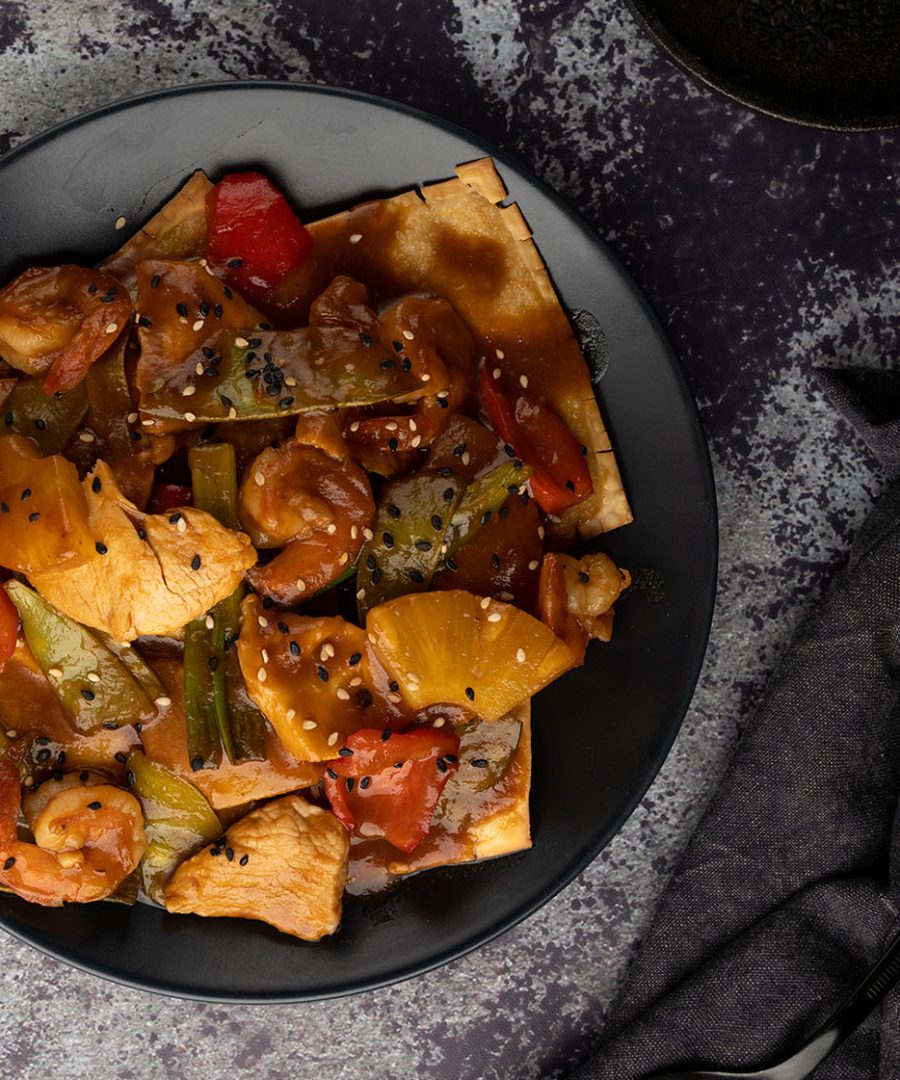
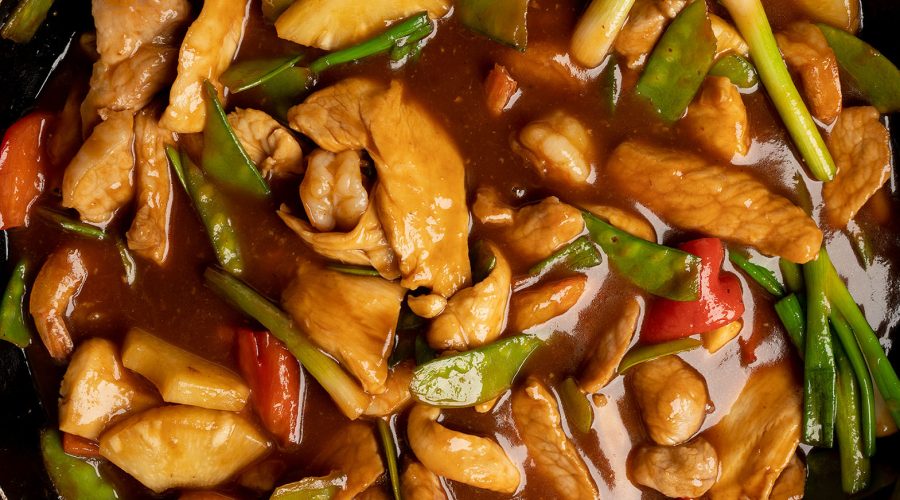
Kam Lu Wantan is a dish from Chifa cuisine, the culinary tradition born from Chinese immigration to Peru that permanently changed how Peruvians eat. The dish combines stir fried mixed meats and vegetables with fried wontons, all brought together with a bittersweet tamarind sauce.
The name comes from Cantonese. Kam Lu refers to the sweet and sour sauce style, and Wantan refers to the wontons that form the base of the dish. In most Chifa restaurants in Lima, the protein is a combination of chicken, pork, shrimp, and sometimes duck, all cooked quickly over high heat and finished in the sauce.
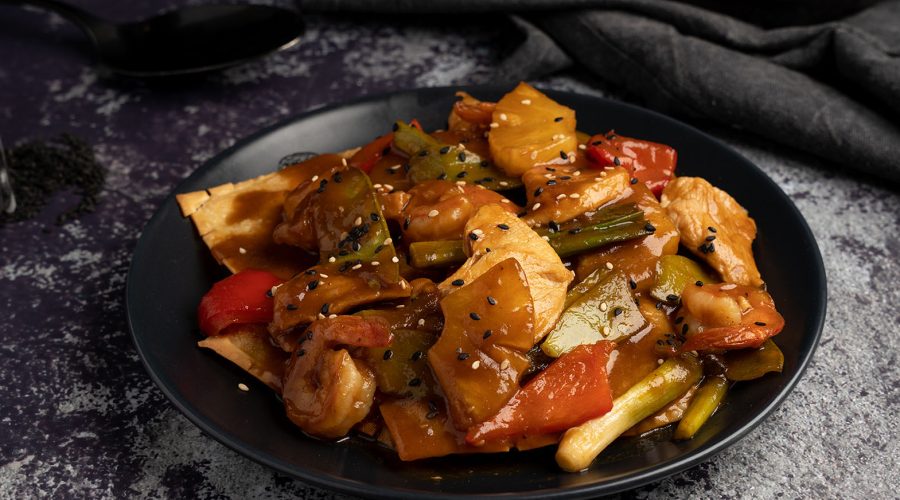
It is one of the more festive dishes in Chifa cooking, the kind of thing that arrives at the table looking abundant and colorful. The contrast of textures, crispy wontons, tender meat, crunchy vegetables, and the glossy tamarind sauce coating everything is what makes it distinctive.
Where to Find the Peruvian Ingredients in the US
The ingredient that requires the most attention here is tamarind. Fresh tamarind pods are available at some Latin and Asian grocery stores but inconsistent. Tamarind paste in a block or concentrate in a jar is the practical solution and what I use. The paste gives a deep, dark color and a clean sourness that matches what you get in a Chifa. (Amazon link: tamarind paste)
Ají amarillo adds the Peruvian element to the sauce. It brings fruity heat and warmth without overpowering the tamarind. Fresh ají amarillo is ideal but the paste works well here since it goes directly into the sauce. (Amazon link: ají amarillo paste)
Wonton wrappers are easy to find at any Asian grocery store and most large supermarkets in the Asian foods aisle.
Kam Lu Wantan is a Peruvian Chifa dish of stir fried mixed meats and vegetables served over crispy fried wontons with a bittersweet tamarind sauce. A festive, flavor-packed dish from Lima's Chinese-Peruvian culinary tradition.
Course Main Course
Cuisine Chifa, peruvian
Keyword kam lu, kamluwantan
Prep Time 10 minutesminutes
Cook Time 35 minutesminutes
Total Time 45 minutesminutes
Servings 4people
Author Brandon Castillo
Ingredients
Vegetable Oil
1tbpsSesame Oil
250grChicken breast (0.6lb)sliced
250grShrimp about 1/2 lb
250grPorkabout 1/2 lb
Half Pineapplein chunks
2cupsof Snowpeas
2Red bell pepperschopped
3cupsof Spring onions chopped
16Wontonsfried
Tamarind Sweet Sauce:
1Ají Amarilloany mild chili
1tbsp of minced girger
3Garlic clovesminced
250grTamarind paste
1/4cupof Ketchup
1/4cupof Brown Sugar
1tspsof Cornstarch
Instructions
Tamarind Sauce
In a pot add tamarind, 2 cups of water, garlic, sugar, ginger, ají Amarillo, bring to a boil until the tamarind start to fall apart and the sugar is dissolved, let the tamarind get soft, strain the liquid, and set it aside.
Transfer the liquid to a clean pot then add ketchup, a pinch of salt, and cornstarch (dissolved in a tablespoon of water), stir, bring to a boil, and then save it for later.
Ka lum
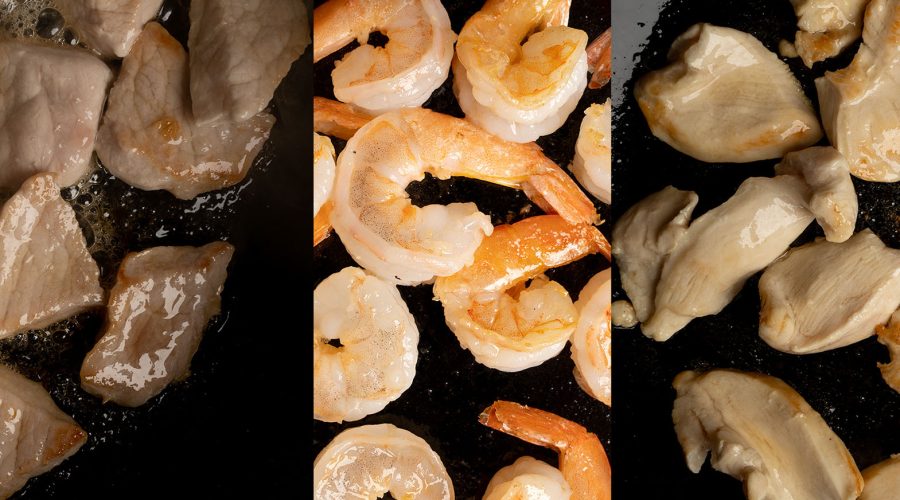
In a hot pan stir fry the meats, until fully cooked then reserve.
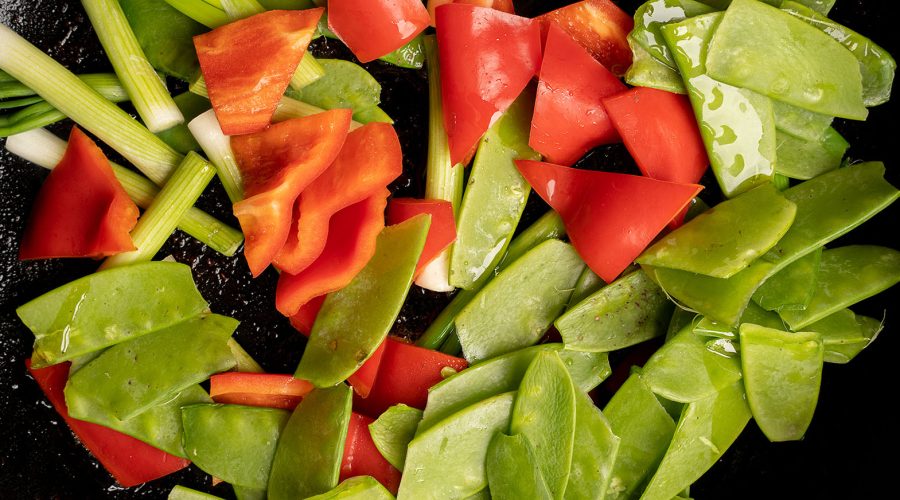
In the same pan, stir fry your veggies (Onions, Bell pepper, Snow peas), add a teaspoon of salt then reserve.
add the meat back, tamarind sauce, veggies, add pineapple, add salt, pepper (cornstarch if necessary).
Fry your wontons and then reserve.
Plating
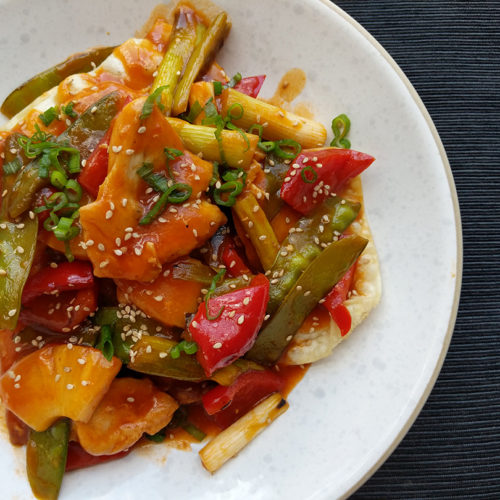
On a big plate put fried wontons at the base then pour the tamarind sauce with veggies and meats on top, sprinkle some chopped spring onions (green part) & some sesame seeds on top, it can be also be served with fried rice on the side.
My go-to list of authentic ingredients and essential kitchen gear. Read the Guide
Build the tamarind sauce first: The sauce needs time to develop and should be ready before anything goes into the wok. Simmer the tamarind with water, garlic, ginger, sugar, and ají amarillo until the tamarind fully softens, then strain and finish with ketchup and cornstarch. Taste it before it goes in the dish and balance the sweet and sour to your preference.
Do not get too much color on the meat: You want the proteins cooked through but not deeply browned. They will finish cooking in the sauce and pick up more flavor there. A light sear is enough.
Cook in batches: Meat first, set aside. Vegetables next, set aside. Everything comes back together at the end with the sauce. A crowded wok steams instead of sears and you lose the texture contrast that makes this dish work.
Add the pineapple last: Pineapple softens fast and releases a lot of juice under heat. Stir it in at the very end just to warm it through. You want it to stay firm enough to bite into.
Fry the wontons fresh: Do not fry them far in advance. They soften quickly once the sauce hits them, which is part of the dish, but you want them to start crispy so the bottom layer has some structure when you plate.
Adjust the cornstarch at the end: If the sauce is thinner than you want after everything is combined, dissolve a small amount of additional cornstarch in cold water and stir it in over heat until it tightens up.
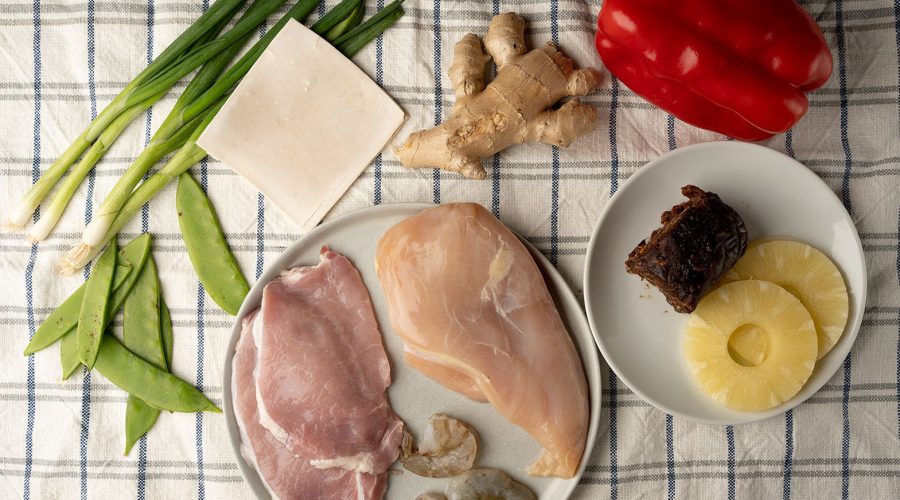
Ingredients for this dish are not so hard to get; most of the flavor comes from the tamarind sauce.
Try not to get so much color on your meats, you could finish them in the sauce
Veggies are the best part of the dish; they add color and texture to the Kam Lu Wantan.
What to Serve With It
Kam Lu Wantan is a complete dish but it pairs naturally with Arroz Chaufa on the side. The fried rice soaks up any extra tamarind sauce and turns this into a full Chifa spread at home. Plain steamed rice works as a simpler alternative. (find our Chaufa recipe here)
For a fuller Chifa table, serve it alongside Tallarin Saltado. The two dishes share the same wok technique and complement each other well.
Storage
Store leftovers in an airtight container in the refrigerator for up to 3 days. The wontons will soften completely overnight as they absorb the sauce, which is not a bad thing but changes the texture significantly. If you want to preserve the crunch, store the wontons separately and add them fresh when reheating. Reheat the stir-fry in a hot skillet with a splash of water to loosen the sauce.
Frequently Asked Questions
What does Kam Lu mean? Kam Lu comes from Cantonese and refers to the sweet and sour sauce style used in the dish. Wantan refers to the wontons. Together the name describes exactly what you are eating, a sweet and sour dish served with wontons.
What meats work best in Kam Lu Wantan? Traditional Chifa versions use a combination of chicken, pork, shrimp, and duck. Any combination of those four works. For a simpler version at home, chicken and shrimp together cover the flavor range well without requiring multiple proteins.
Can I make this without tamarind? Tamarind is central to the sauce and there is no direct substitute that tastes the same. If you cannot find it, a combination of lime juice and a small amount of Worcestershire sauce gets closer than anything else, but the dish will taste different. Finding tamarind paste online or at an Asian market is worth the effort for this recipe.
Can I bake the wontons instead of frying them? You can, but the texture changes considerably. Baked wontons are crispier and drier, which means they absorb the sauce differently. Fried wontons stay slightly chewy at the center while the edges crisp up, which is the correct texture for this dish.
Is Kam Lu Wantan spicy? Not significantly. The ají amarillo in the sauce adds warmth and fruity flavor more than heat, especially with the sweetness of the brown sugar and pineapple balancing it. If you want more heat, add a second ají amarillo or a small amount of chili paste to the sauce.
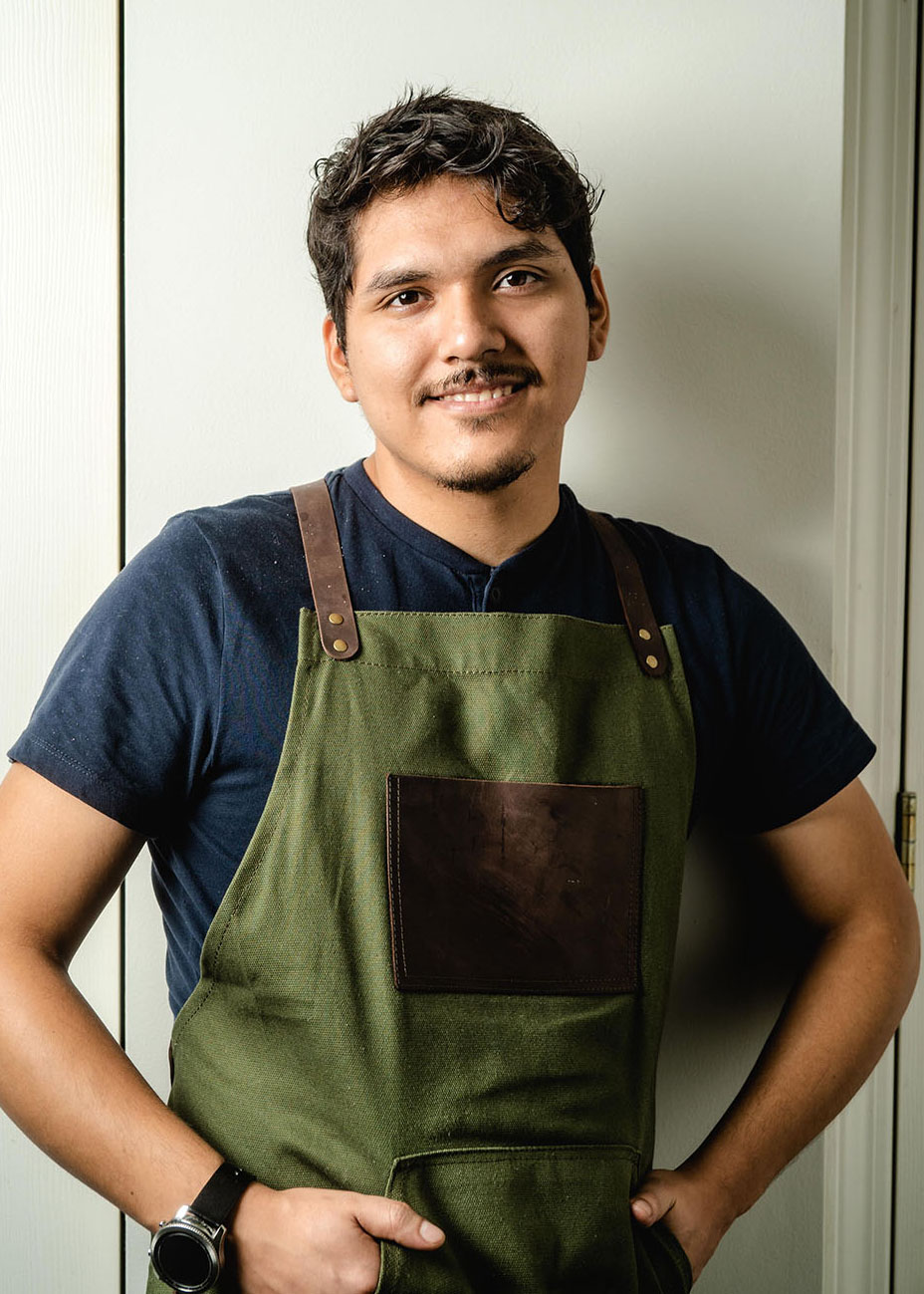
Brandon Castillo - Peruvian Chef & Recipe Developer
Brandon Castillo is a Peruvian chef and recipe developer based in New York. Born and raised in Peru, he shares authentic Peruvian recipes adapted for home cooks in the United States. You can find him on Instagram, TikTok, and YouTube @chewinghappiness.
Made this at home?
Tag @ChewingHappiness on Instagram. If you want to keep exploring Chifa cooking, the Tallarin Saltado and Arroz Chaufa recipes use the same wok technique and come together fast.