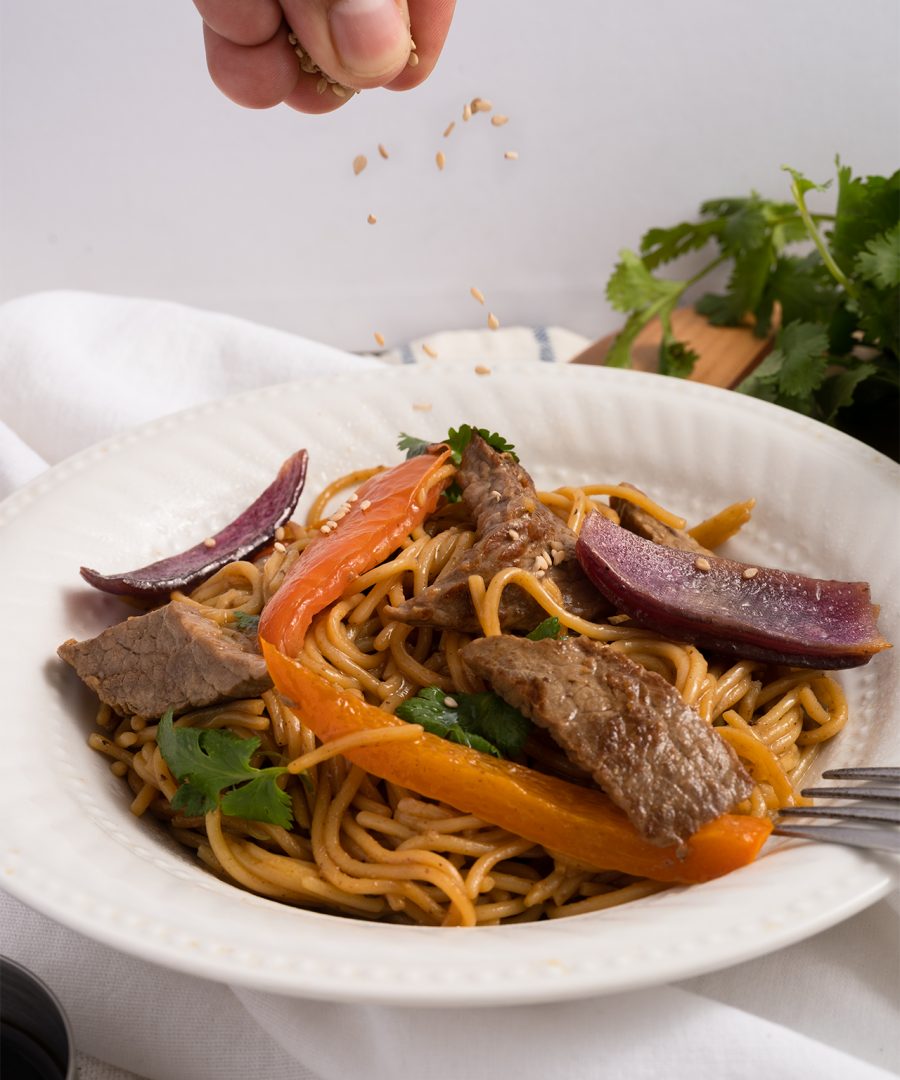
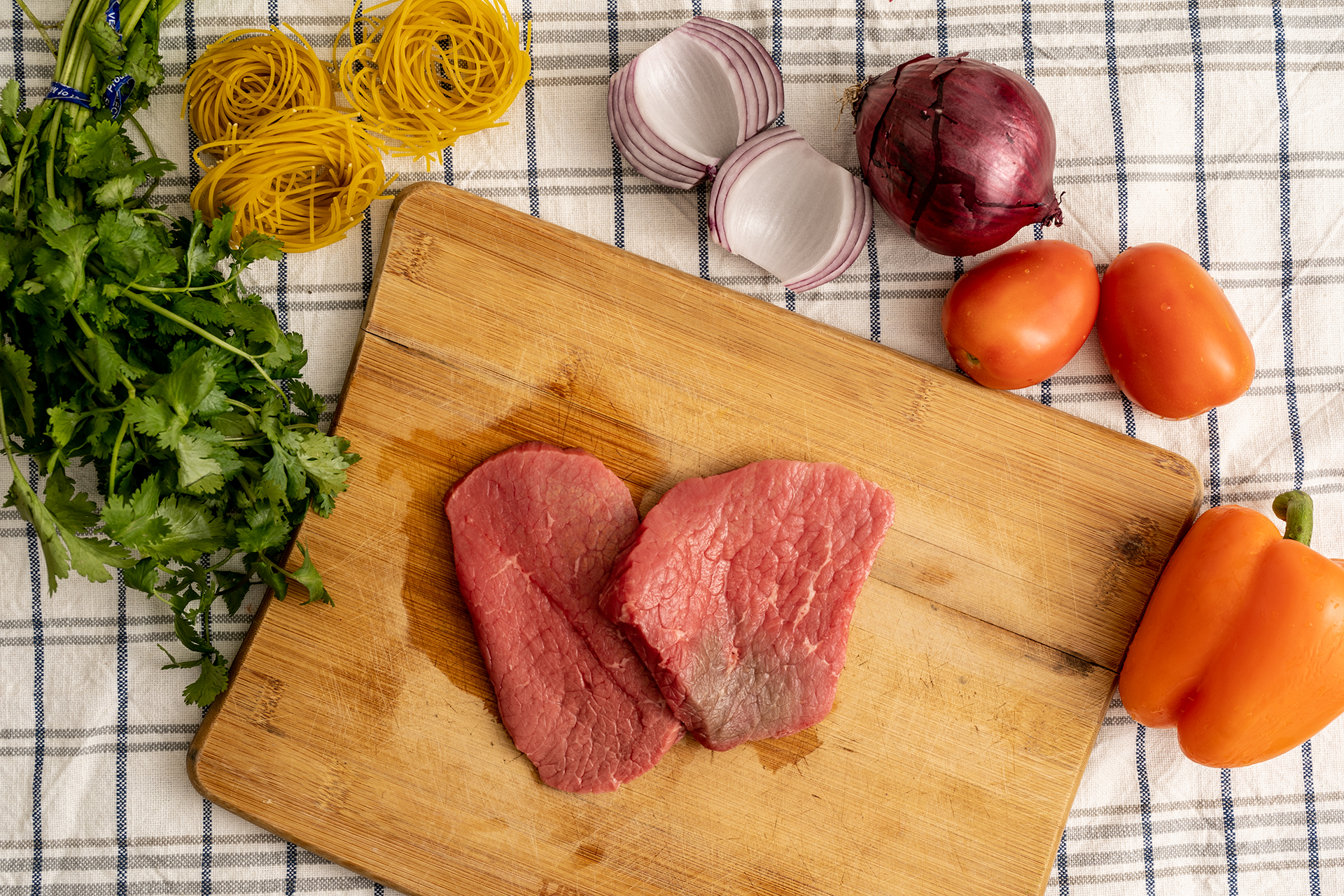
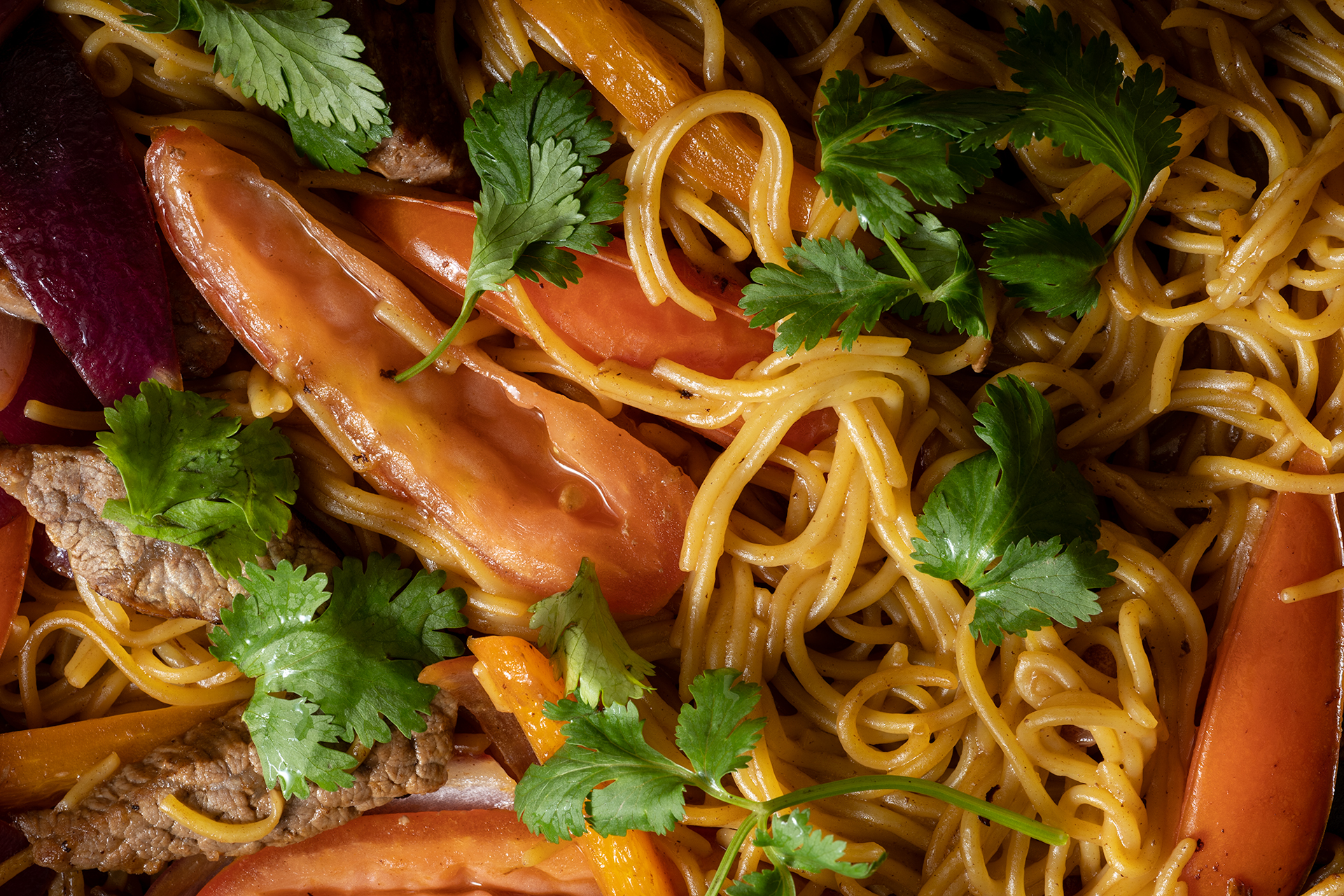
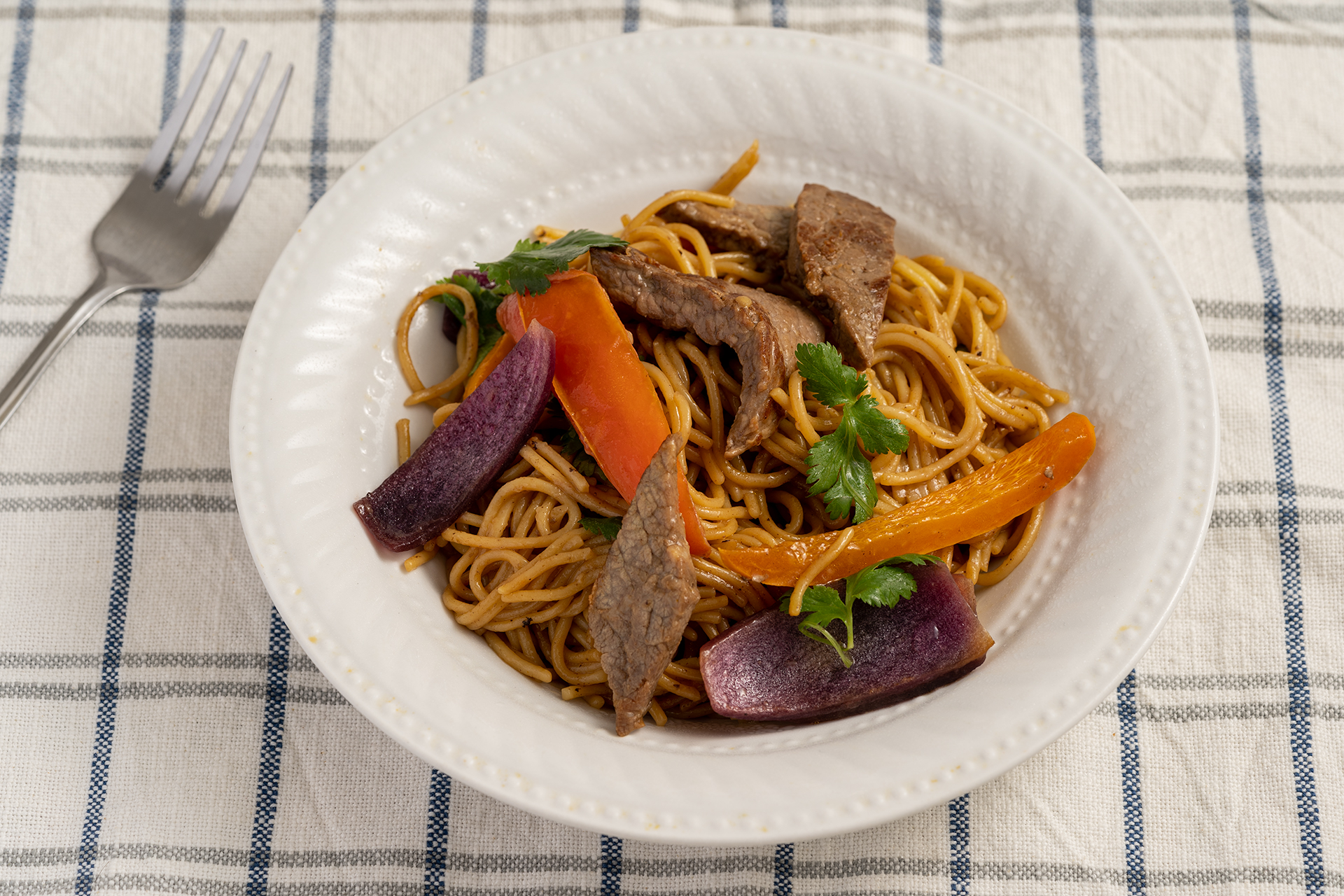
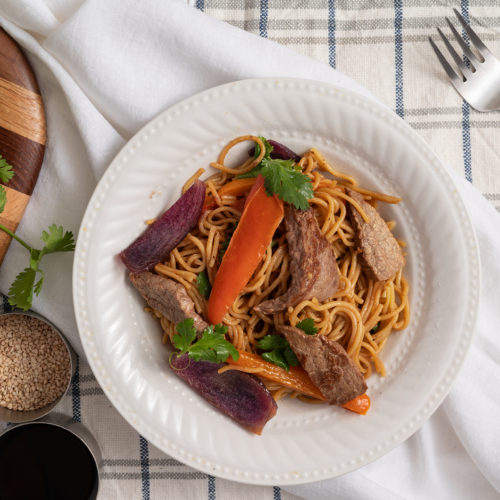
Take lomo saltado — Peru’s famous beef stir-fry — and swap the fries for noodles. That’s tallarín saltado, and if you like quick stir-fried pasta dishes, this one belongs in your rotation. Beef, onions, tomatoes, ají amarillo, and noodles, all hit fast in a screaming-hot pan.
It comes together in about 35 minutes, most of which is prep. The actual cooking is quick, because that’s the whole point of a saltado.
What Is Tallarín Saltado?
Tallarín saltado is a Chifa dish — Peruvian-Chinese cooking, the fusion that grew out of Chinese immigration to Peru in the 19th century. Saltado means “stir-fried” or “jumped,” from the tossing motion in a hot wok, and tallarín just means noodles.
It’s a close cousin of lomo saltado — same technique, same core flavors of soy sauce, vinegar, and ají amarillo — but with noodles carrying the dish instead of the usual fries and rice.
There are two versions: the homestyle one (this recipe) and the restaurant Chifa version, which is a bit different. If you want that one, here’s my Chifa-style tallarín saltado.
Why I Make This One a Lot
My dad and brother love lomo saltado — but you can’t eat lomo saltado every day. This tastes close enough to scratch the same itch, so it became a regular at our house. It’s the kind of dish you make on a weeknight when you want something fast that feels like more effort than it took.
The One Rule of a Good Saltado: High Heat
A saltado is defined by the sear. If your pan isn’t hot enough, you’re making a stew, not a stir-fry. A few things make the difference:
Get the pan screaming hot before anything goes in. A wok is ideal, but a large heavy skillet works.
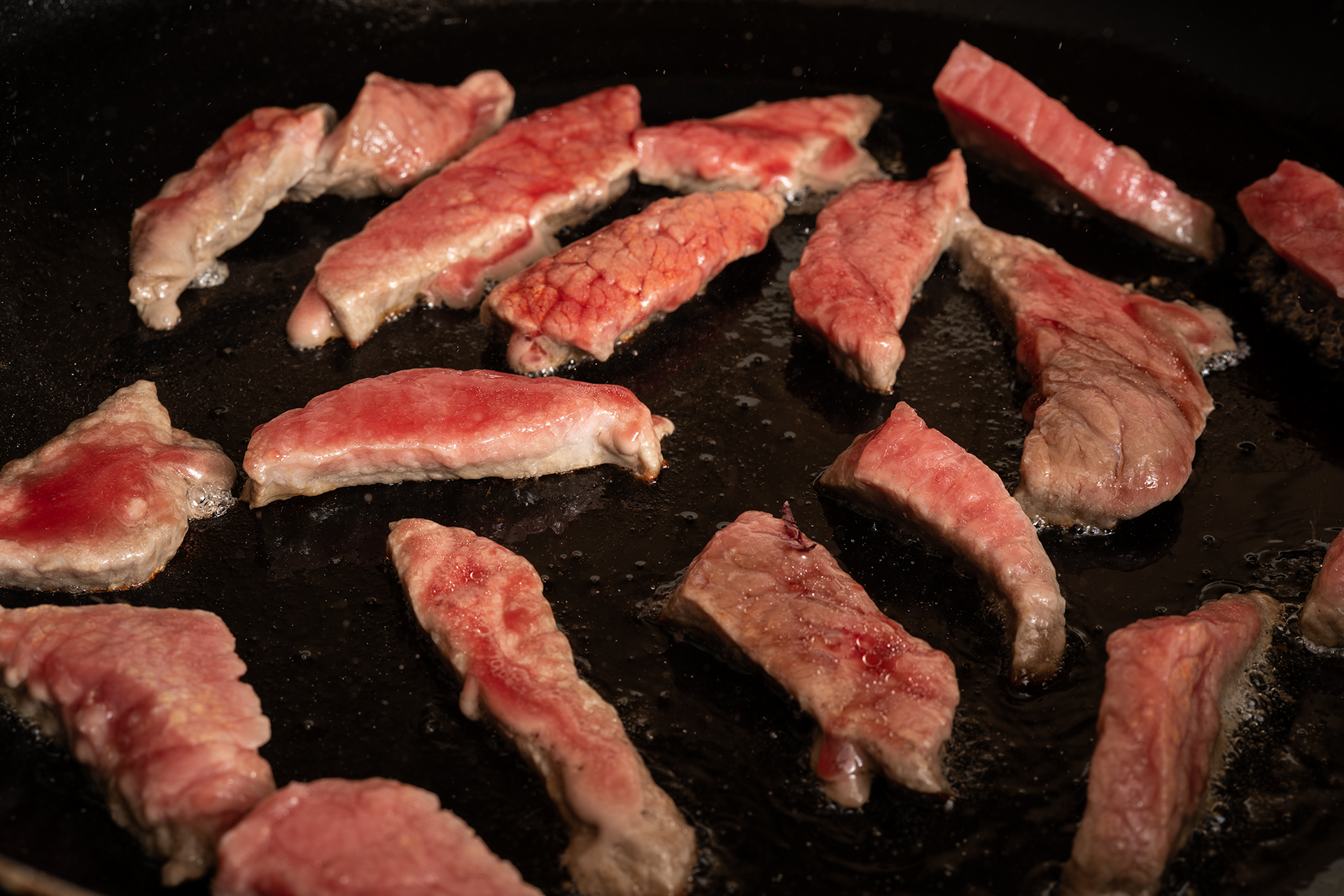
Cook in batches. Crowd the pan and the temperature drops, the food steams, and you lose the sear. Sear the beef, pull it, then build the rest.
Cut everything into bite-size pieces before you start. Once you’re cooking there’s no time to chop — a saltado moves fast.
Have everything ready and within reach. Prep it all first. This is not a dish you can prep as you go.
A Note on the Beef
Use a tender cut you can sear fast — sirloin, flank, or skirt all work. Cut it into strips against the grain.
If your cut is on the tough side, tenderize it: a quick marinade in papaya, pineapple, or honey breaks down the fibers. Even 20–30 minutes helps.
In a hot pan add 3 tablespoons of vegetable oil, cook your meat 2 min per side, and reserve.
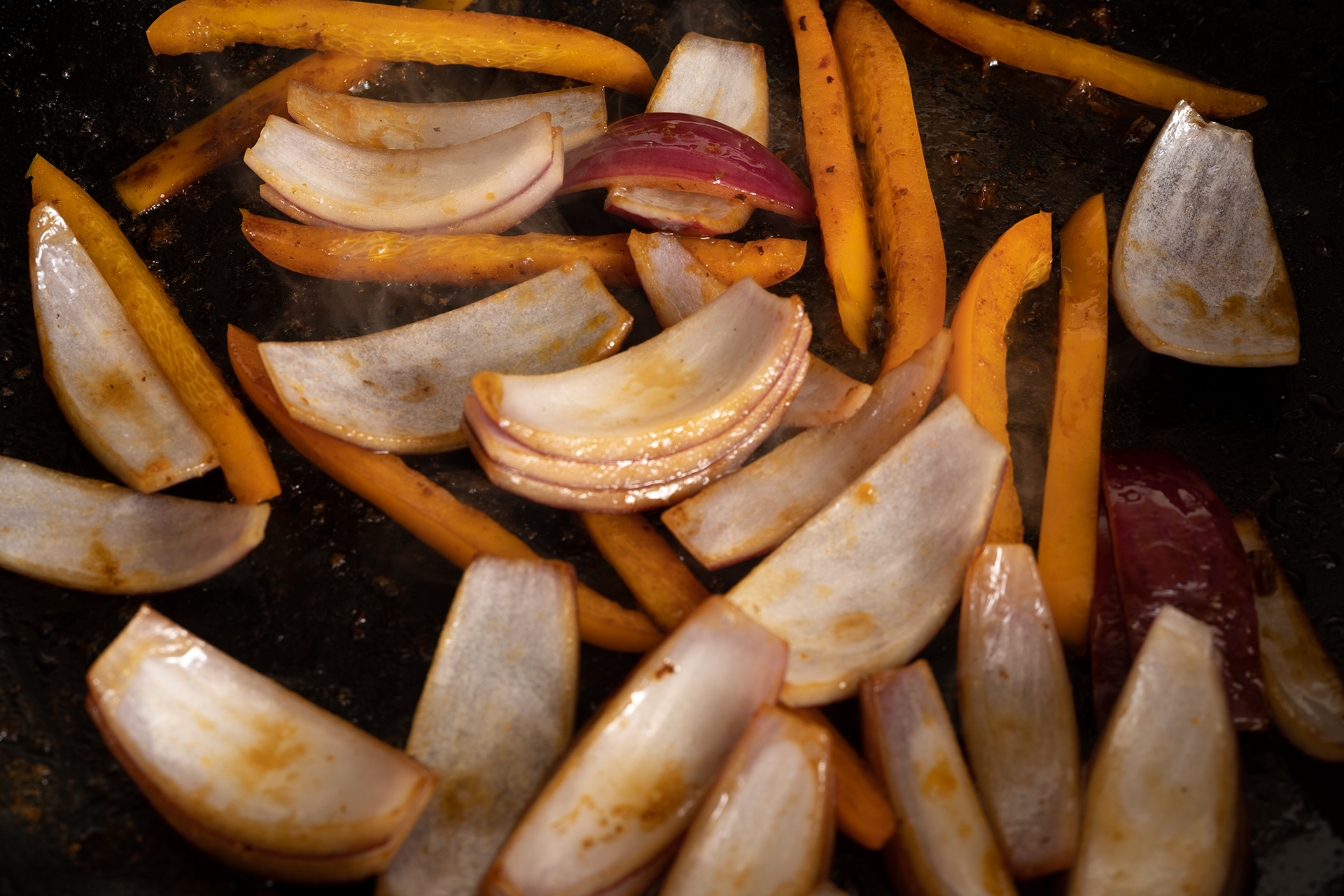
In the same pan add garlic, ginger they will cook fast 1 min then add onions, pepper or "Ají Amarillo" and Ají Amarillo paste, Stir fry and let it cook for about 2 min.
After that add tomatoes, the cooked meat, pasta/noodles, soy sauce, oyster sauce, vinegar, beef stock and let it cook for 1 min then turn off the heat add salt pepper, cilantro, sesame oil, give it a good stir and its good to go!
Video
My go-to list of authentic ingredients and essential kitchen gear. Read the Guide
Pickle the onions if their raw bite bothers you. Toss the wedges with 2 tbsp sugar and 5 tbsp vinegar in a bowl before cooking — it tames the sharp onion flavor.
Add salt last, after tasting. Soy sauce brings a lot of sodium and it varies by brand. Salt at the start and you risk an inedibly salty dish.
Fix an over-salted saltado by adding more noodles or a spoon of tomato paste to absorb it.
Any noodle works — egg noodles, fettuccine, spaghetti, whatever you have. Cook them just short of done; they finish in the pan.
Serve it immediately. A saltado is meant to be eaten the moment it’s done. It doesn’t hold.
Having the right cut of meat will make the job easier; however, you can always marinate your meat in papaya/lechosa seeds, pineapple, or honey to make it tender.
If you are not a fan of onions due to their strong taste, you can quickly “pickle” them with 2 tablespoons of sugar and 5 tablespoons of vinegar in a bowl; this will remove some of the “onion” flavor.
When using soy sauce, always add salt at the end after tasting, because some brands of soy sauce have a lot of sodium and if you add salt at the beginning, you might end up with a super salty dish; if that happened to you, you could fix it by adding more pasta or a little tomato paste.
What Kind of Pasta Should I Use?
Whatever you’ve got. Egg noodles are traditional-ish, but fettuccine or spaghetti are completely fine. Cook them al dente — slightly underdone — since they’ll take on more heat when they hit the pan with the sauce.
Frequently Asked Questions
Is tallarín saltado the same as lomo saltado? Nearly — same technique and flavors, but tallarín saltado uses noodles where lomo saltado uses fries. Think of them as siblings.
Is it spicy? Not really. Peruvian food has warmth but this isn’t a hot dish. The ají amarillo is more fruity than fiery, especially with seeds removed.
Can I make it vegetarian? Yes. Skip the beef and use mushrooms or firm tofu; keep the soy, vinegar, and ají amarillo for the flavor base.
What can I use instead of ají amarillo? Fresh: an orange bell pepper for color plus a little heat from another chili. Or a teaspoon of ají amarillo paste, sold jarred online.
Why did mine turn out like a stew? The pan wasn’t hot enough, or it was overcrowded. Crank the heat and cook in batches.
Tried it? Let me know. Leave a rating and a comment below — it helps other cooks find this recipe, and I read every single one.