Disclosure: As an Amazon Associate I earn from qualifying purchases. Some links in this post are affiliate links, meaning I may earn a small commission at no extra cost to you.
My grandmother Ismelda made soup every single day. Hot weather, cold weather, didn’t matter. Soup was on the stove.
She had her staples. Vegetable soup, semolina soup, the ones that rotated through the week. But the one everyone waited for, the one that felt different from the rest, was the Caldo de Gallina.
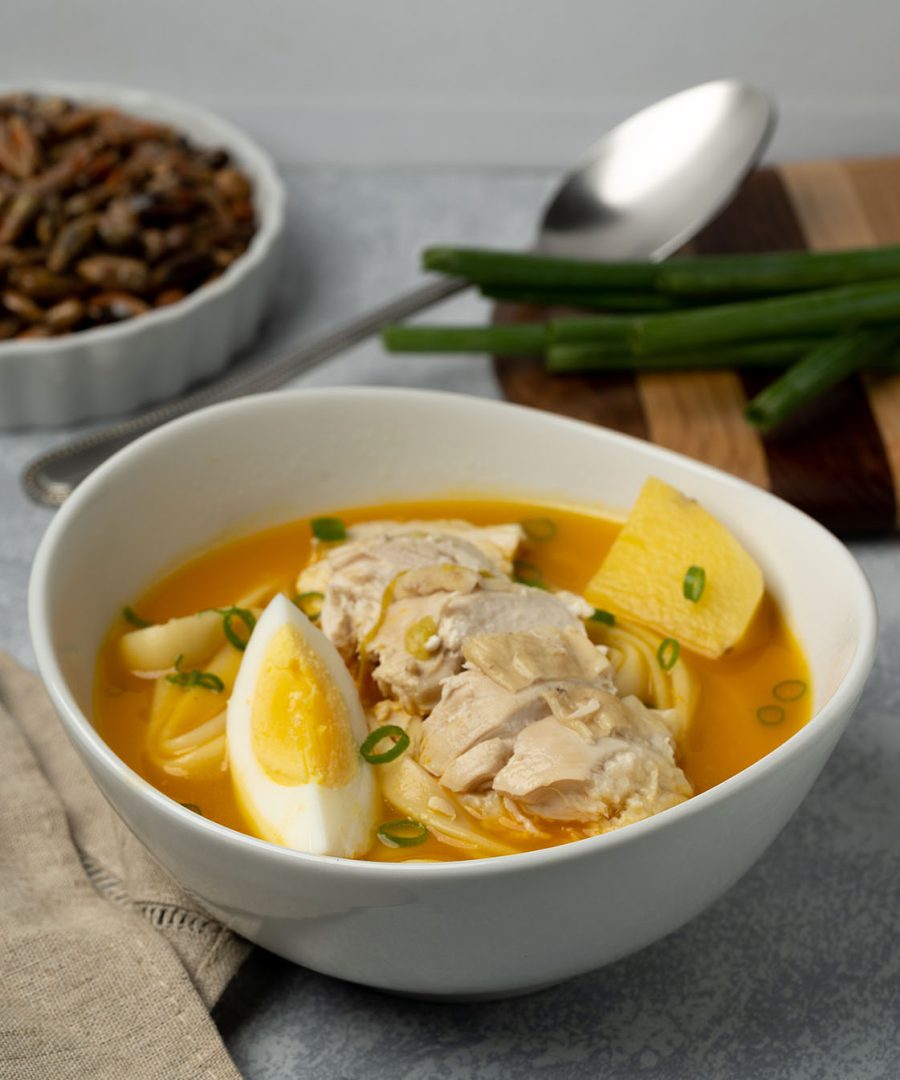
As kids we each had our favorites. Mine were Sopa Criolla and Crema de Zapallo. But when my abuela made Caldo de Gallina, nobody complained. Because this isn’t just a soup. It’s a meal. The broth is deep and aromatic, the kind that fills the whole kitchen before it even hits the bowl. She served it with thick spaghetti, a creamy yolk boiled egg, and a soft overcooked yellow potato that had absorbed every bit of flavor from the broth. Finished with chopped scallions, a wedge of lime, and if you wanted heat, her rocoto sauce on the side.
You ate it soplando soplando, blowing on every spoonful because it was always too hot to wait.
People say Caldo de Gallina is hangover food, sick day food. In Lima you’ll find it at markets and small restaurants early on weekends for exactly that reason. But at my grandmother’s house it was just another afternoon. Comfort food in the truest sense.
This recipe uses hen, which is traditional and gives a richer, deeper broth than regular chicken. If you can’t find hen, chicken works, but give it extra time on the stove. The patience is worth it.
Caldo de Gallina is Peru’s most famous hen soup, and one of the few soups that counts as a complete meal on its own. A deep, slow-simmered broth loaded with tender hen, thick noodles, soft potato, and a hard boiled egg.
In Peru it has a reputation as recovery food. You’ll find it at markets and small restaurants early in the morning, especially on weekends, feeding people who need to bounce back from a long night or shake off a cold. There’s a saying that a good Caldo de Gallina can bring anyone back to life.
But it’s not just medicine food. It’s everyday comfort. The broth alone, rich from the hen and its bones, is worth the wait. This is the kind of soup where the aroma tells you it’s ready before the clock does.
The traditional version uses hen (gallina), not chicken (pollo), and the difference is real.
Hens are older birds. That means tougher meat, but far more flavor. The broth from a hen comes out deeper, richer, and more golden than anything you can get from a young chicken. That’s the entire soul of this soup.
The trade-off is time. A hen can take 2 hours or more to become tender, sometimes longer depending on age. A chicken is done in a fraction of that.
My honest advice: if you can find hen, use hen. If you can’t, chicken makes a good soup, just not quite the same soup. Add the chicken later in the cooking process so it doesn’t fall apart, and consider adding extra bones to compensate for the flavor.
Toast the peppercorns.
Before they go into the pot, toast them briefly in a dry pan. It wakes up the aroma and gives the broth a deeper flavor.
Be patient with the simmer.
A good soup can’t be rushed. Bring it to a boil, then drop it to a simmer and let time do the work. The hen is ready when the meat is almost falling off the bone.
Blend the carrot and squash.
Once they’re soft, pull them out, blend them with some broth, and return the mix to the pot. This gives the soup its golden color and a little body without any cream.
Older hens take longer.
If your hen is taking forever, that’s normal. A pressure cooker cuts the time significantly, though the flavor develops a bit differently. It will still do the trick.
Cook the noodles in the broth.
They absorb flavor as they cook and release starch that makes the soup feel fuller.
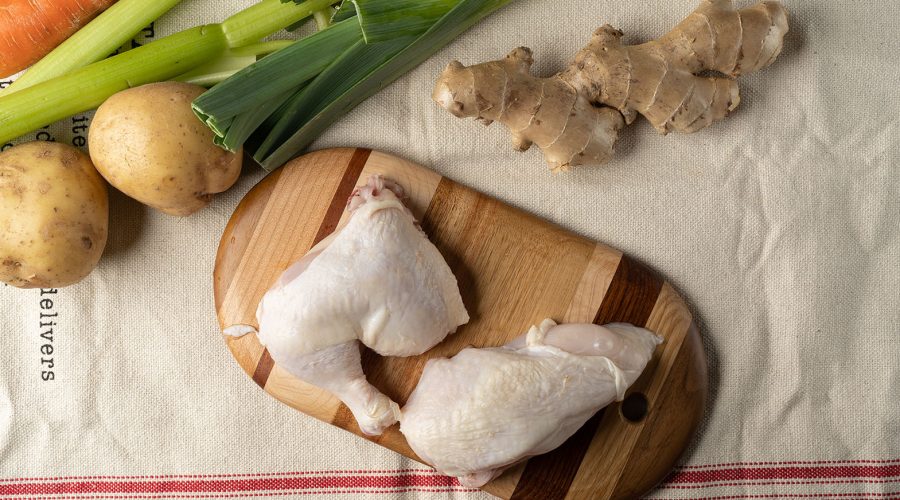
The ingredients for this soup are easy to get, carrots & pumpkin will provide some color to the soup.
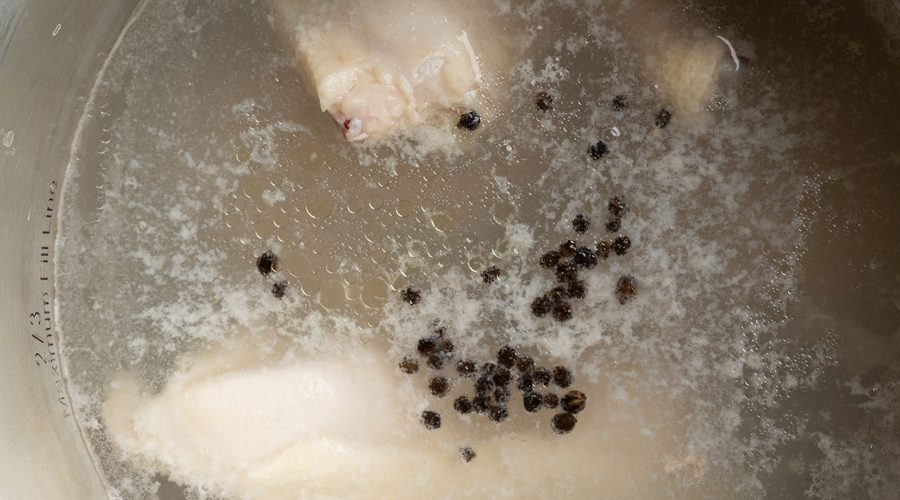
I love the flavor provided from the peppercorns, flavor will be better if you toast them before adding them to the soup.
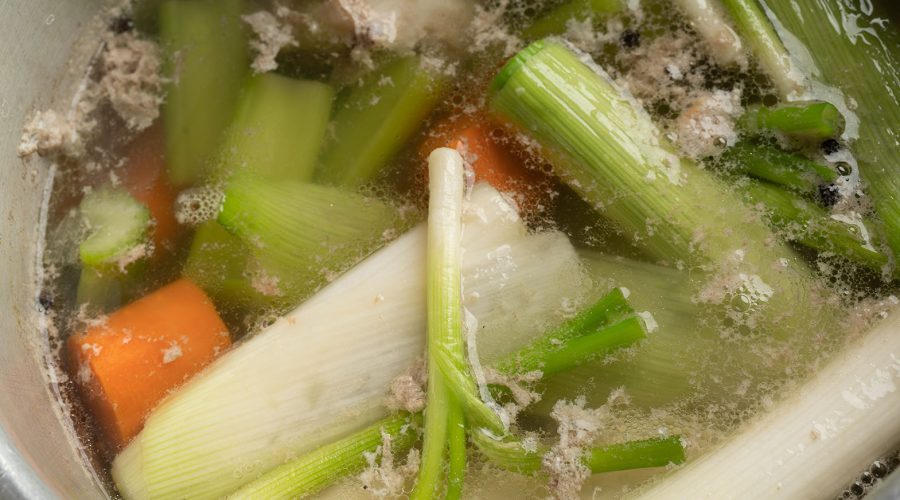
A good soup needs patience, there is no rushing here, let it simmer and let the aroma and flavor develop.
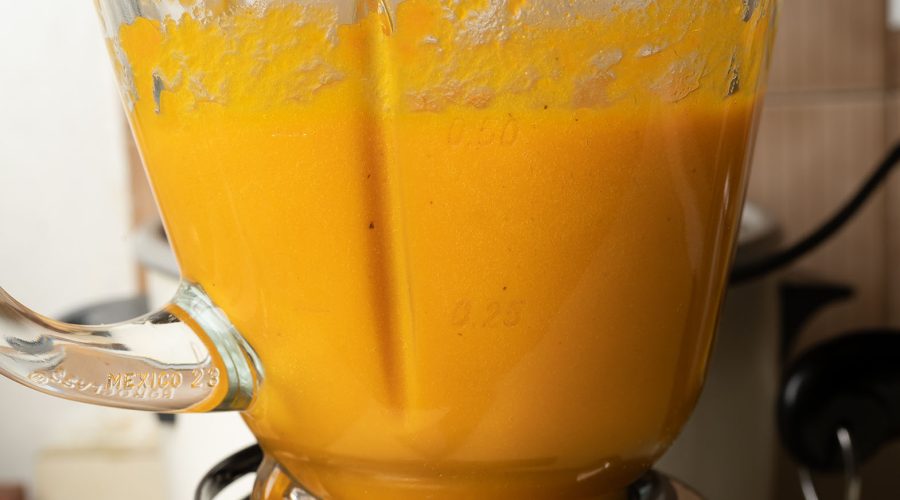
Blending the carrot & Pumpkin will add some thickness and color to the soup making it even better!
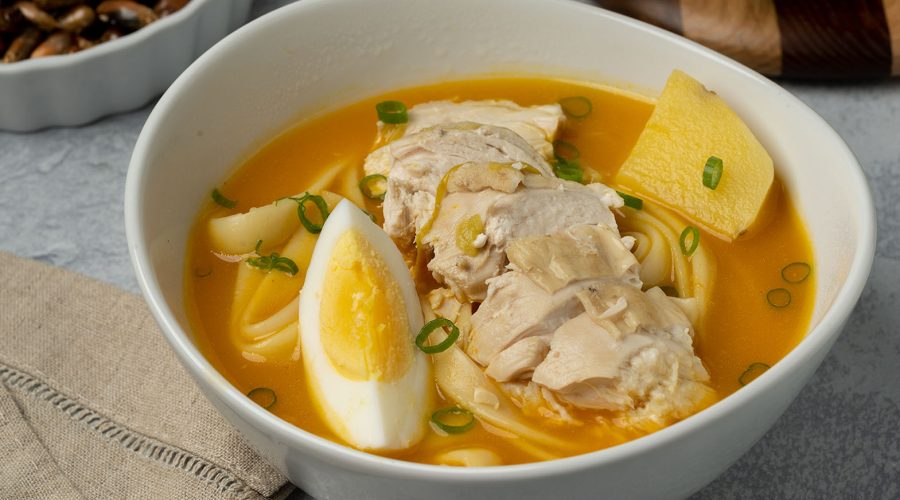
At my grandmother’s table, Caldo de Gallina came fully loaded. This is the classic plate:
Thick spaghetti or fettuccine in the bowl. A soft, overcooked yellow potato that soaks up the broth. A hard boiled egg with a creamy yolk, added right at serving. Chopped scallions on top. A lime wedge on the side to squeeze over everything.
And if you like heat, a spoonful of rocoto sauce. My abuela always had some ready, and it adds the perfect touch of spiciness without taking over the soup.
Peruvian popcorn (canchita) on the side is also common, people drop it right into the broth.
Caldo de Gallina keeps well in the fridge for 3 to 4 days in a sealed container. Store the noodles separately if you can, they keep absorbing broth and turn soft if left in the soup.
The broth freezes for up to 3 months. Freeze it without the noodles, potato, or egg, and add those fresh when you reheat.
To reheat, bring it back to a gentle simmer on the stove. Add a splash of water if the broth has reduced too much. Fresh scallions and a new lime wedge bring it right back to life.
Can I use chicken instead of hen?
Yes. The broth will be lighter and less rich, but it works. Add the chicken pieces later in the cooking process so they don’t overcook, and use extra bones if you can for more flavor.
Can I make it in a pressure cooker?
Yes, and it saves serious time with a tough hen. The flavor develops slightly differently than a slow open simmer, but it will do the trick when you’re short on time.
What noodles should I use?
Thick spaghetti or fettuccine is the classic choice. You want a noodle with some bite that can hold up in hot broth. Angel hair works in a pinch but goes soft fast.
How do I know when the hen is done?
The meat should be tender and nearly falling off the bone. Depending on the age of the hen, this can take 2 hours or more. If it’s still tough, keep simmering.
Is Caldo de Gallina spicy?
No, the soup itself has no heat. The spice comes on the side, traditionally a rocoto sauce that each person adds to taste.
If you love Peruvian comfort food, try my Estofado de Pollo or Arroz con Pollo, two more classics that taste like home.
Did you make this recipe?
Leave a star rating and a comment below. Tell me how you served it, with lime, with rocoto, or your own twist. I read every single one.