Disclosure: As an Amazon Associate I earn from qualifying purchases. Some links in this post are affiliate links, meaning I may earn a small commission at no extra cost to you.
Tacu Tacu is one of my favorite dishes to share with people who have never tried Peruvian food. Not because it is the most complex or the most dramatic. Because of the reaction when I tell them what it is made of.
I made this dish twice at an international food festival at a college in Illinois. I shaped the Tacu Tacu into small balls and served them with Salsa Criolla. People kept coming back for more, and every time I told them it was just rice and beans, they did not believe me. I prepared about 130 servings that day and ran out in minutes.
This version uses lentils instead of the traditional beans. The technique is the same, the result is equally good, and lentils have one advantage: no overnight soaking. You can decide to make this in the morning and have it on the table the same night.
Tacu Tacu is a Peruvian dish made from cooked rice and beans mixed together with a sofrito base of onion, garlic, and ají amarillo, then shaped and pan fried until the outside is golden and crispy while the inside stays dense and creamy. It is one of the oldest dishes in Peruvian home cooking, traditionally a way to use leftover rice and beans from the day before.
The lentil version follows the same logic. Cooked lentils replace the beans, and the result is a Tacu Tacu with a slightly earthier, less starchy flavor than the traditional version. Lentils absorb more of their cooking liquid than beans do, which means seasoning that liquid well is important. The flavor you build into the lentils while they cook becomes part of the final dish.
What makes this version different from the traditional one is not the technique but the flavor profile. Lentils bring their own character to the mix, and the ají amarillo in the sofrito ties everything together the same way it does in the original.
Lentils are easy to find in any grocery store. Green or brown lentils both work here. Do not use red lentils as they break down too completely when cooked and will not give you the texture you need to shape the Tacu Tacu.
Ají amarillo paste is the ingredient that makes this taste Peruvian rather than just a generic rice and lentil cake. It goes into the sofrito base and is non-negotiable for the flavor. (Amazon link for Ají amarillo paste)
Season your lentil cooking water: This is the most important tip in the whole recipe. Lentils absorb most of the liquid they cook in, which means the seasoning in that water becomes the seasoning of the lentil itself. Add cumin, black pepper, a few chili flakes, paprika, and garlic powder to the water before the lentils go in. Plain water gives you plain lentils.
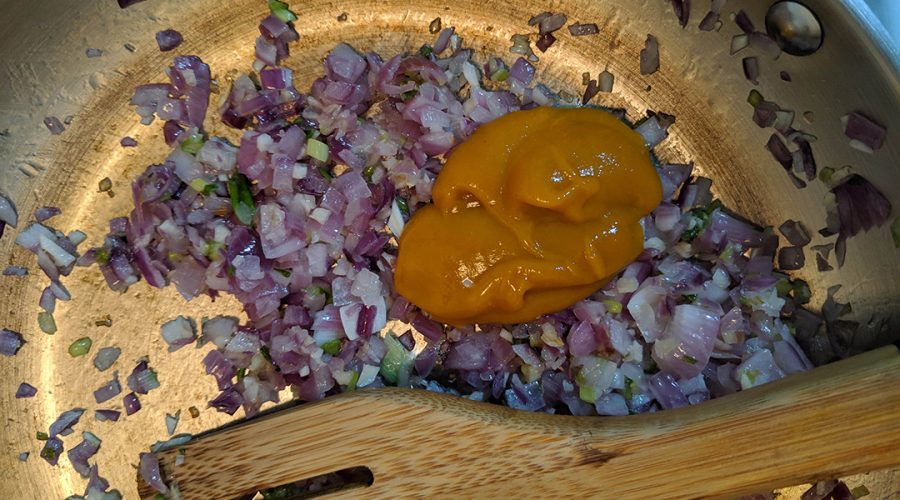
Cook the sofrito properly: The aderezo, the base of onion, garlic, and ají amarillo, needs to cook at low to medium heat until it caramelizes and the raw smell is completely gone. At least five minutes. Burned onion will overpower everything else and ruin the Tacu Tacu. This step cannot be rushed.
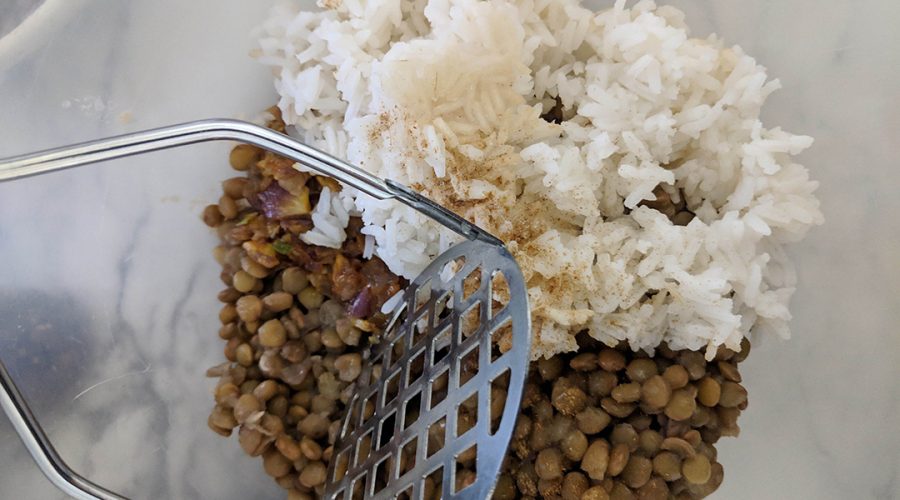
Mash but do not puree: You want the rice and lentils combined into a dough that holds its shape, not a smooth paste. Use a potato masher and work until everything is integrated but still has some texture. The chunkiness is what gives you the contrast between the crispy outside and the dense inside.
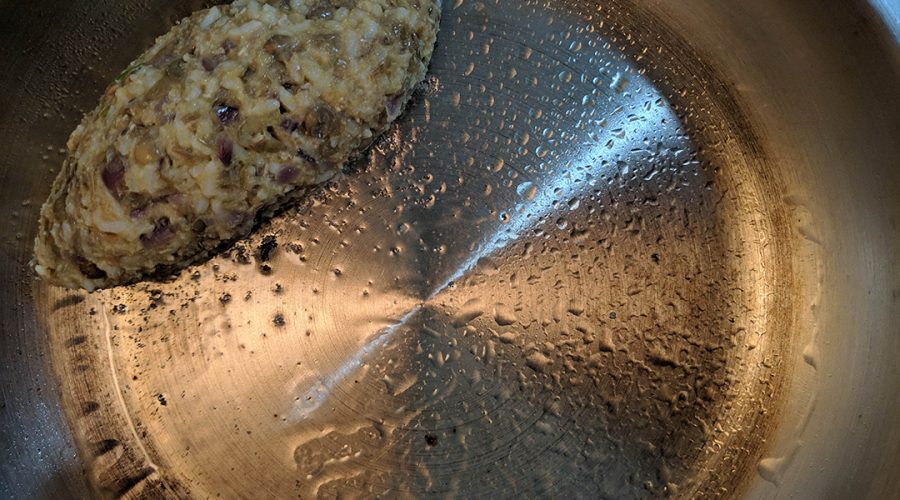
Shape them firmly: Whether you go with the traditional oval football shape or smaller balls, press firmly so they hold together in the pan. A loose Tacu Tacu will fall apart when you flip it.
Use enough oil and let the pan get hot before they go in: Three tablespoons of oil in a properly heated pan gives you the golden crust. Do not move them once they are in the pan. Two minutes per side undisturbed, then flip carefully.
The key for many Peruvian dishes is a properly cooked “Aderezo”, let the onions, garlic, and Ají Amarillo paste cook properly; in that way, they will caramelize and add more flavor to your dishes., Be sure to cook them over low-to-medium heat; burned onion can overpower almost any flavor, and it might ruin your Tacu Tacu.

Be gentle with your seasoning; do not hesitate to add more if you feel like it.
Salsa Criolla is the classic pairing and the one I used at the food festival. The acidity and freshness of the onions and lime cut through the richness of the fried Tacu Tacu perfectly.
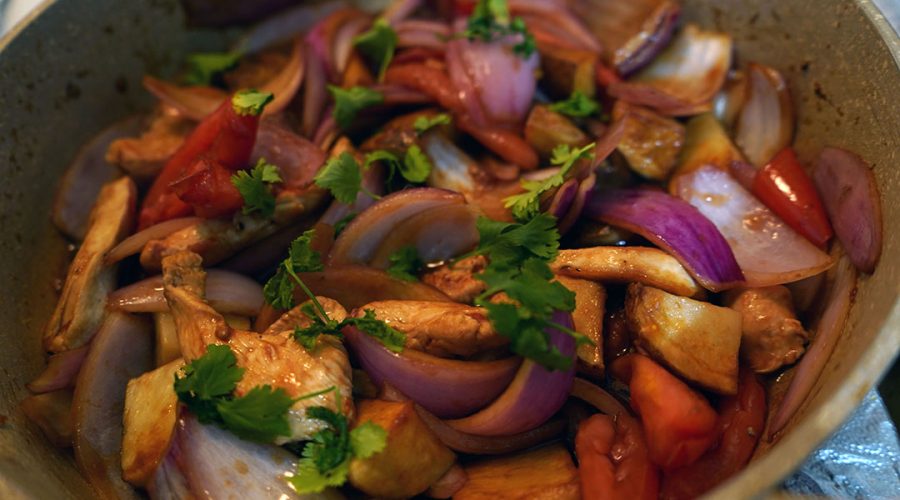
For a fuller plate, serve alongside Lomo Saltado or Pollo Saltado. The sauce from either saltado poured over the Tacu Tacu is one of the best combinations in Peruvian home cooking.
If you want to keep this fully vegetarian, the Vegan Lomo Saltado works as a complete meal alongside it.
Store uncooked shaped Tacu Tacu in the refrigerator for up to 2 days before frying. Once cooked, store in an airtight container for up to 3 days. Reheat in a lightly oiled pan over medium heat rather than the microwave to bring back the crispy exterior. The microwave will soften the crust and you will lose the texture contrast that makes the dish.
Do I need to soak the lentils overnight?
No, and this is one of the advantages of the lentil version over the traditional bean Tacu Tacu. Lentils cook in 20 to 25 minutes without any soaking. You can start this recipe from scratch on the same day.
What is the difference between Tacu Tacu de Lentejas and regular Tacu Tacu?
The main difference is flavor. Traditional Tacu Tacu uses beans, typically canary beans or black beans, which are starchier and milder. Lentils have a more earthy, slightly mineral flavor and absorb more of their cooking liquid, which means seasoning the water is more important here than with beans.
Can I make these ahead and freeze them?
Yes. Shape the Tacu Tacu before frying, lay them flat on a tray lined with parchment paper, freeze until solid, then transfer to a bag. Fry from frozen over medium heat with a lid on for the first two minutes to heat through, then remove the lid to crisp the exterior.
What lentils work best?
Green or brown lentils hold their shape best after cooking and give you the texture you need for shaping. Red lentils cook down to a puree and will not work here. French green lentils also work well and have a firmer texture than standard green lentils.
Can I make this vegan?
It already is. The only thing to check is your ají amarillo paste, most brands are vegan but it is worth confirming on the label.

Tried it? Let me know.
If you make this, tag @ChewingHappiness on Instagram. And if you want to try the original version, the classic Tacu Tacu recipe with beans is right here.