Jump to Recipe Print Recipe

Pastel de Acelga: Swiss Chard Pie (Peruvian Style)

Disclosure: As an Amazon Associate I earn from qualifying purchases. Some links in this post are affiliate links, meaning I may earn a small commission at no extra cost to you.

    • My grandmother’s name is Guadalupe — everyone calls her Lupe. When my dad’s family immigrated to the United States, we stayed in Peru, and for years she was this figure I knew mostly through stories and the few times she managed to visit. When I finally got to spend real time with her, one of the first things she showed me was her cookbook — a handwritten collection of recipes she had cooked her whole life.

      This Pastel de Acelga was in there.

      I found the recipe, made it exactly as she had written it, and then — because I’m a foodie and I can’t help myself — I tweaked it. Added more flavor, refined the bechamel, dialed in the cheese combination. But the soul of it is hers. It’s a recipe my family has made for longer than I’ve been alive, and every time I make it, I think of her.

      Pastel de Acelga is a Swiss chard pie — a double-crusted, savory pie with a creamy bechamel and chard filling, whole hard-boiled eggs baked inside, and a golden egg-washed crust that comes out of the oven looking like it took far more effort than it actually did. It’s the kind of dish that impresses at a potluck without making you regret bringing it. Nobody else will have brought this.

What Is Pastel de Acelga?

“Pastel de Acelga” translates literally to “Swiss chard cake” or “Swiss chard pie” — depending on who you ask. In Peru, “pastel” refers to any savory or sweet dish baked in a mold, so this is a fully enclosed pie: bottom crust, filling, top crust, sealed and baked until golden.

It’s a dish with Italian and European influence — Peru has a long history of immigration from Italy and other European countries, and dishes like this one reflect that cross-cultural cooking that defines so much of Peruvian cuisine. But the Peruvian version has its own character: the filling is built on a bechamel base rather than just eggs and cream, which gives it a richness and creaminess that most other Swiss chard pies don’t have.

The hard-boiled eggs baked into the filling are also distinctly Peruvian — whole eggs placed on top of the filling before the top crust goes on, so when you slice the pie each piece has a cross-section of egg running through it. It looks beautiful and adds a protein element that makes this a complete meal rather than a side dish.

What makes it different from a quiche: it has a top crust. What makes it different from a spanakopita: the bechamel filling instead of ricotta/feta. What makes it different from every other Swiss chard pie recipe you’ll find: it comes from a grandmother’s handwritten cookbook.

What Makes This Version Different From Other Swiss Chard Pies

If you search “swiss chard pie recipe” you’ll mostly find two versions: the Mediterranean approach (ricotta, feta, similar to spanakopita) and the French approach (cream, bacon, sherry). Both are good. This is neither.

The Peruvian version has three things that set it apart:

The bechamel base. Instead of just wilting the chard and binding it with eggs and cream, you make a proper bechamel — butter, flour, milk — and fold the cooked chard into that. The result is a filling that’s creamy, cohesive, and rich in a way that holds together perfectly when you slice it. No watery filling, no crumbly pieces. Just clean, even slices.

The whole hard-boiled eggs. They go in before the top crust, placed on top of the filling. When the pie bakes, the eggs become part of the structure. When you slice it, you get a cross-section through the egg in every piece — vivid yellow yolk against the green filling and golden crust. It looks intentional. It looks like someone who knows what they’re doing made this.

The double crust. Most savory chard pies are open-faced — more quiche than pie. This one is fully enclosed, which means the filling steams inside the crust as it bakes, staying moist and creamy while the outside gets golden and flaky. It also means it travels well — take it to a potluck intact, slice it there.

Ingredients — What You Need and Where to Find It

Most ingredients for this recipe are easy to find at any American supermarket. Swiss chard is widely available in the produce section — look for bunches with firm, bright stems and unwilted leaves. Red or rainbow chard works just as well as green; the color of the stems doesn’t affect the flavor, only the look of the filling.

A few notes on the cheese: I use mozzarella for texture (it melts into the bechamel and gives the filling body) and parmesan for flavor and aroma. Freshly grated parmesan is noticeably better than pre-grated for this recipe — the pre-grated versions have anti-caking agents that affect how they melt. If you can find a block and grate it yourself, do that.

For the crust, you need all-purpose flour, cold butter, salt, and ice water. I make mine from scratch — it’s a 10-minute process and the result is significantly better than store-bought. But if you need to save time, a store-bought refrigerated pie crust works fine for this recipe.

One tool that makes a real difference for this pie is a good 9-inch pie dish — deep enough to hold the filling and the eggs without overflowing. I use a ceramic pie dish [Link] which distributes heat evenly and gives you that golden bottom crust.

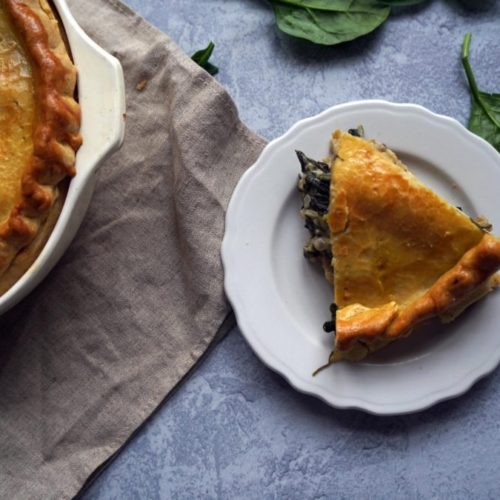
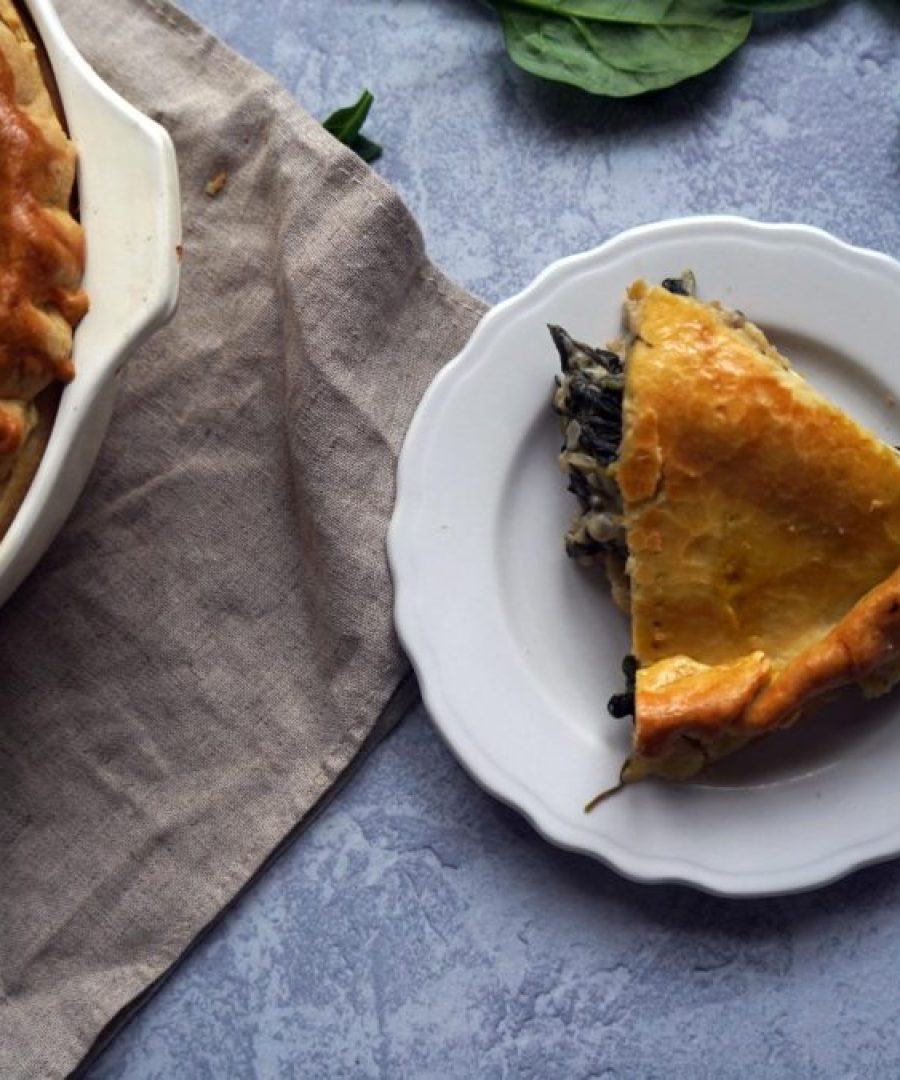
Pastel de Acelga baked - golden Peruvian swiss chard pie with egg wash crust

Pastel de Acelga — Peruvian Swiss Chard Pie

A Peruvian-style Swiss chard pie with homemade buttery crust, creamy bechamel and chard filling, whole hard-boiled eggs baked inside, and two cheeses. From my grandmother's cookbook, tweaked by a Peruvian chef in the US.
Course Entrée
Cuisine peruvian
Keyword acelga, pastel, pastel de acelga, pie
Prep Time 10 minutes
Cook Time 20 minutes
Resting time 30 minutes
Total Time 1 hour
Servings 6 people
Author Brandon Castillo

Equipment

  • 9 Inch pie pan

Ingredients

Crust

  • 2 1/4 cups of Ap - Flour just regular flour
  • 3 tsps of Baking Powder
  • 1/2 tsp of Salt
  • 100 gr Unsalted Butter at room temperature
  • 2 Egg yolks at room temperature
  • 2 - 5 tbsp of Cold water

Egg Wash

  • 1 Yolk beaten

Pie Filling

  • 6 cups Spinach
  • 8 cups Swiss Chard leaves
  • 2 tablespoons of Butter at room temperature
  • 2 tablespoons of Flour
  • 2 cups of Evaporated Milk
  • 1/2 cup of Shredded Mozzarella
  • 1/4 cup of Shredded Parmesan
  • 1 Red Onion diced
  • 2 Garlic Cloves minced
  • Salt and Pepper
  • 3 Hard boiled Eggs cut into 4's

Instructions

Crust

  •  Sift all the dry ingredients, then integrate butter and flour with the help of a fork (you should end with something that looks like oats), add a yolk at the time, integrate them. finish with two tablespoons of water or more (if needed), just integrate do not over knead, shape the dough like a ball, wrap it on plastic and let it rest on a fridge for at least 30 min.

Filling

  • In a pot with boiling water blanch your Spinach and Chard for 30 seconds after that, strain them, chop them, and then reserve.
  • In a different Pot add butter and cook onions, garlic then add flour, let it cook for 2 minutes, stir your ingredients all the time then add milk, the two cheese, spinach, chard, salt, and pepper, let it cook for 3 min or until the juices are reduced, turn off the heat and let it rest.
  • cut in half your dough, then roll it and put half on an oiled casserole or pie pan. Then add the filling, put the cooked eggs on top and cover with the other half of the dough, make some cuts on the top and bake at 325 F/ 160 C for 15 min. Then egg washes your dough and let it cook for another 5 min or until golden.

Notes

  • Blanching is a  cooking term, consist of submerging "raw" ingredients into a boiling liquid for a very short period of time, is like pre-cooking.
  • Blanching your Spinach and Swiss Chard will make them more "green" and soft.
  • On squeezing the chard: This is the most important step in the recipe. Swiss chard releases a significant amount of water when cooked. If you don't squeeze it thoroughly, that water goes into the filling and then into your crust. A soggy bottom crust is almost always caused by insufficient squeezing. Use a clean kitchen towel, wrap the chard in it, and twist firmly over the sink until no more water comes out.
  • On the bechamel thickness: The filling should be thick enough to hold its shape when spooned — not runny. If your bechamel seems too thin after adding the chard, return to medium-low heat and stir constantly until it thickens. A loose filling will overflow when you add the top crust.
  • On the hard-boiled eggs: Cook them in boiling water for exactly 10 minutes, then transfer to an ice bath immediately. This gives you fully set yolks with no grey ring around them. Halve them just before assembling so they don't dry out.
  • On resting before slicing: 15 minutes minimum. The filling needs time to set after coming out of the oven. If you slice immediately the filling will run and you'll lose that clean cross-section look. If you're making this for a potluck, make it the night before and reheat — it actually slices better cold.
 
Did you make this recipe?Tag @Chewinghappiness on instagram and hashtag it #Chewinghappiness

Chef Tips for Perfect Pastel de Acelga

Don’t skip the rest time for the dough

The 30-minute refrigerator rest is the difference between dough that rolls out perfectly and dough that springs back, tears, and frustrates you. During resting, the gluten relaxes and the butter firms up again. You can make the dough up to 2 days ahead and keep it in the refrigerator — it actually gets easier to work with the longer it rests.

Squeeze the chard until you think you’ve squeezed enough, then squeeze more

I cannot overstate this. Swiss chard is mostly water. When you blanch it and squeeze it, you’ll be shocked by how much liquid comes out of what looked like a small amount of greens. Use a clean kitchen towel for best results — wrap the chard in it and twist over the sink. The filling should feel almost dry before it goes into the bechamel. If it’s still wet, your crust will be soggy and your filling will be loose.

Cold butter makes flaky crust

Cut your butter into small cubes and put them back in the freezer for 15 minutes before you start the dough. Cold fat = steam = flaky layers. Warm fat = mealy, dense crust. Work quickly with your hands when mixing the butter into the flour — body heat melts butter fast. If the dough starts feeling warm and greasy, put it in the refrigerator for 10 minutes before continuing.

The egg wash is not optional

That deep golden color in the photos comes from the egg wash. Skipping it gives you a pale, dull crust that looks underbaked even when it isn’t. Brush it on generously and evenly — including the crimped edges, which are the first thing people see when you set the pie on the table.

Make it the day before

This pie is genuinely better the next day. The filling sets completely overnight, the flavors deepen, and you get perfectly clean slices without any filling running. If you’re making this for a gathering, make it the night before, refrigerate it, and reheat at 350°F for 20 minutes before serving. Your future self will thank you.

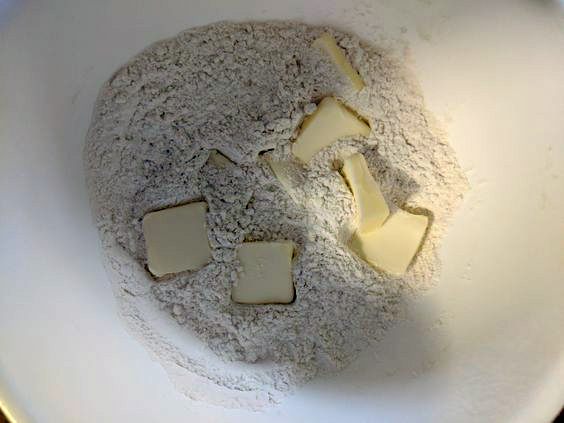
Pastel de Acelga pie dough ingredients - flour and butter cubes for Peruvian swiss chard pie crust

it starts like any other pie, flour, butter, some salt. 

 
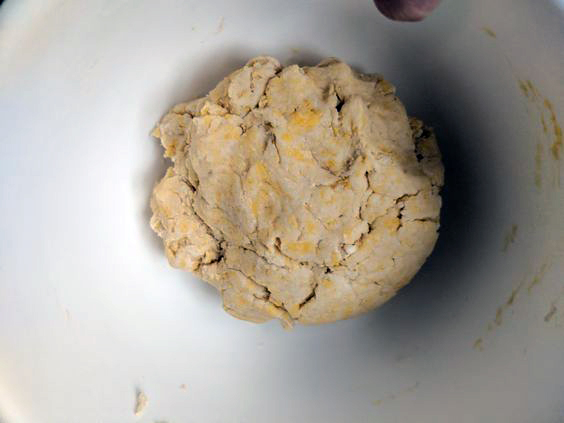
Pastel de Acelga pie dough formed - homemade crust for Peruvian swiss chard pie

Not overworking the dough is the key to a soft (inside) and crisp (outside) pie.

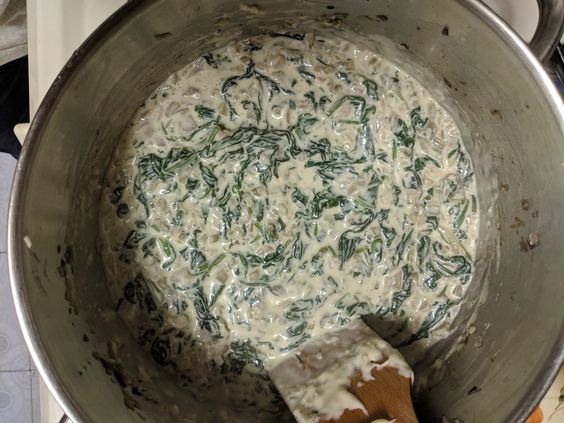
Pastel de Acelga filling - swiss chard in bechamel sauce for Peruvian style pie

Bechamel is the filling that complements the best for this pie, you could add any cheese of your preference I used mozzarella for some texture and parmesan for some flavor and aroma.

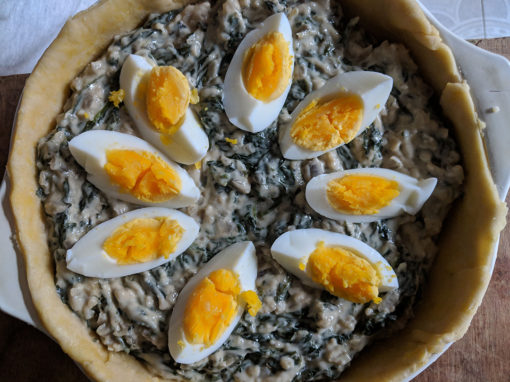
Pastel de Acelga with eggs - swiss chard bechamel filling with hard boiled eggs before top crust

Be sure to leave some room for the eggs, otherwise, you will end with big lumps. 

 
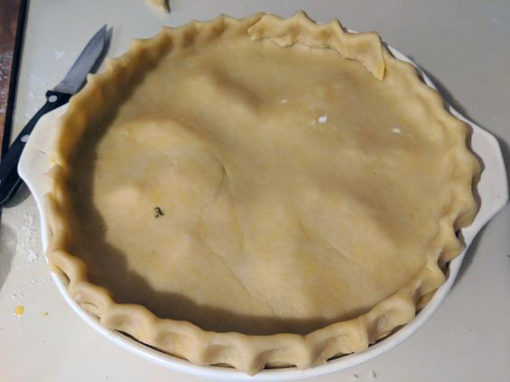
Pastel de Acelga baked - golden Peruvian swiss chard pie with egg wash crust

What to Serve With This Pie

Pastel de Acelga is substantial enough to be a main course on its own — the bechamel, cheese, and eggs make it protein-rich and filling. But it pairs well with simple sides that don’t compete with the richness of the filling.

A simple green salad with a sharp vinaigrette cuts through the richness of the bechamel beautifully. Tomatoes, cucumber, and red onion in a lemon dressing is the classic Peruvian pairing.

As a potluck dish, bring it whole and slice at the table — it travels better than most dishes and holds its temperature well. 

Storage and Make-Ahead

Pastel de Acelga keeps beautifully — one of its best qualities for busy home cooks.

Refrigerator: Once cooled, cover the pie with foil or plastic wrap and refrigerate for up to 4 days. The filling actually sets more firmly overnight, making it easier to slice cleanly than on the day it was made.

Reheating: Individual slices reheat well in the microwave (2 minutes) or in a 350°F oven (15 minutes, covered with foil to prevent the crust drying out). The oven method keeps the crust crispier.

Freezing: Yes, this pie freezes well. Wrap the whole baked pie (or individual slices) tightly in plastic wrap followed by foil. Freeze for up to 2 months. Thaw overnight in the refrigerator and reheat in a 350°F oven until warmed through, about 25-30 minutes for a whole pie.

Make-ahead options:
The dough can be made up to 2 days ahead and refrigerated, or frozen for up to 1 month.
The filling can be made up to 1 day ahead and refrigerated — assemble and bake the next day.
The full assembled, unbaked pie can be refrigerated overnight and baked the next day — add 5-10 minutes to the baking time since it starts cold.

Frequently Asked Questions

Can I use store-bought pie crust?

Yes. A refrigerated store-bought pie crust (like Pillsbury) works fine for this recipe and saves about 30 minutes. You’ll need two crusts — one for the bottom and one for the top. The homemade version has better flavor and texture, but the store-bought version is perfectly good and makes this recipe much more approachable for weeknight cooking.

Can I add spinach instead of Swiss chard?

Yes — spinach works well as a substitute or in combination with chard. Use the same amount and squeeze it just as thoroughly (spinach actually releases even more water than chard). The flavor is slightly milder than chard but the texture and result are very similar. You can also use a mix of spinach and chard if you have both on hand.

What can I use instead of bechamel?

If you want to skip the bechamel, you can bind the filling with 3 beaten eggs and ½ cup of heavy cream instead — this gives you something closer to a quiche filling. It works, but the texture is different: the bechamel version is thicker and more cohesive; the egg version is more custardy and delicate. I prefer the bechamel for this pie because it holds its shape better when sliced.

Does it need to be served hot?

No — and this is one of its best qualities. Pastel de Acelga is excellent hot from the oven, at room temperature, and cold from the refrigerator. Many people prefer it at room temperature or slightly warm, when the crust is still flaky but the filling has fully set. This makes it ideal for potlucks, picnics, or packed lunches where it will sit out for a while.

Can I make this vegetarian / without eggs in the filling?

It’s already vegetarian. If you want to skip the hard-boiled eggs in the filling, you can — the pie will still be delicious, just without that visual element when sliced. The bechamel and cheese provide enough protein and richness that the eggs aren’t structurally necessary. They’re more of a traditional Peruvian touch than a functional requirement.

What’s the difference between this and a quiche?

Three things: quiche has no top crust, quiche filling is egg-and-cream based, and quiche is typically open-faced and shallow. Pastel de Acelga has a top crust (fully enclosed), a bechamel-based filling, and is deeper and more substantial. It’s closer to a British-style pie or an Italian torta than a French quiche — the Peruvian version just uses chard, bechamel, and hard-boiled eggs as the filling components.
Made This Pie? Tell Me How It Went.

I’d love to hear how it came out. Did you make the crust from scratch or use store-bought? Did you add anything to the filling? Did anyone at your table ask what it was?

Leave a star rating on the recipe card above ⭐ — it helps other home cooks find a recipe that’s genuinely different from the usual Swiss chard pie options out there.

Questions about the technique? Drop them in the comments below. I read every one.

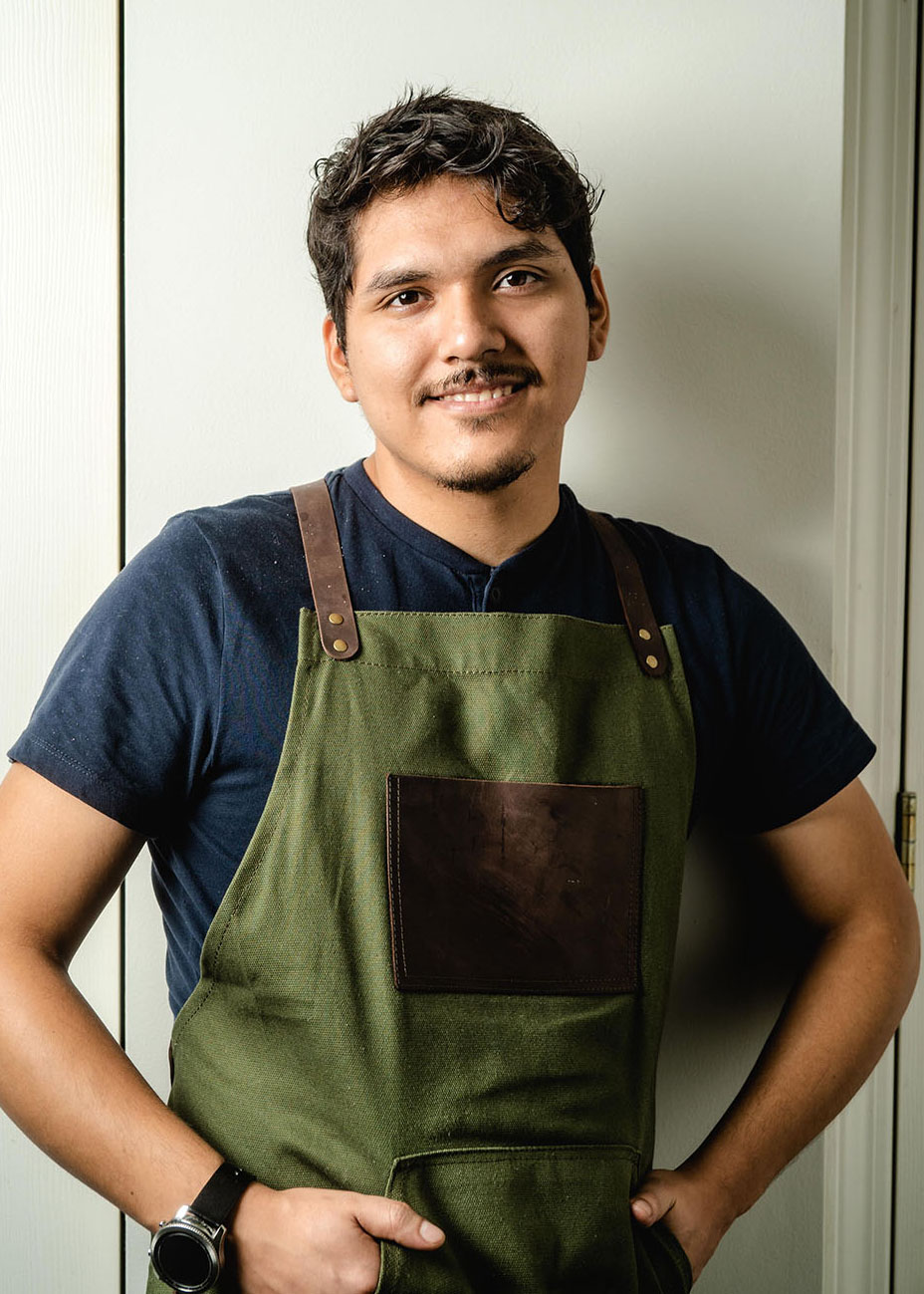
Peruvian Chef Brandon Castillo owner of Chewinghappiness in an apron

Brandon Castillo - Peruvian Chef & Recipe Developer

Brandon Castillo is a Peruvian chef and recipe developer based in New York. Born and raised in Peru, he shares authentic Peruvian recipes adapted for home cooks in the United States. You can find him on Instagram, TikTok, and YouTube @chewinghappiness.

Submit a Comment

Your email address will not be published. Required fields are marked *

Recipe Rating


© 2026 Chewing Happiness. All rights reserved